
Think You Need Hip FAI Surgery? The Research Tells a Different Story
Ever been told by a doctor that your hip pain is due to bad bone shapes, and surgery might be your only hope?
New research has something to say about that.
Doctors often diagnose hip FAI based on an X-ray or MRI alone and rush people into surgery. But research shows that many people have FAI without any hip pain at all.
So what is really going on here? Let's dig in.
What Is Hip FAI, Anyway?
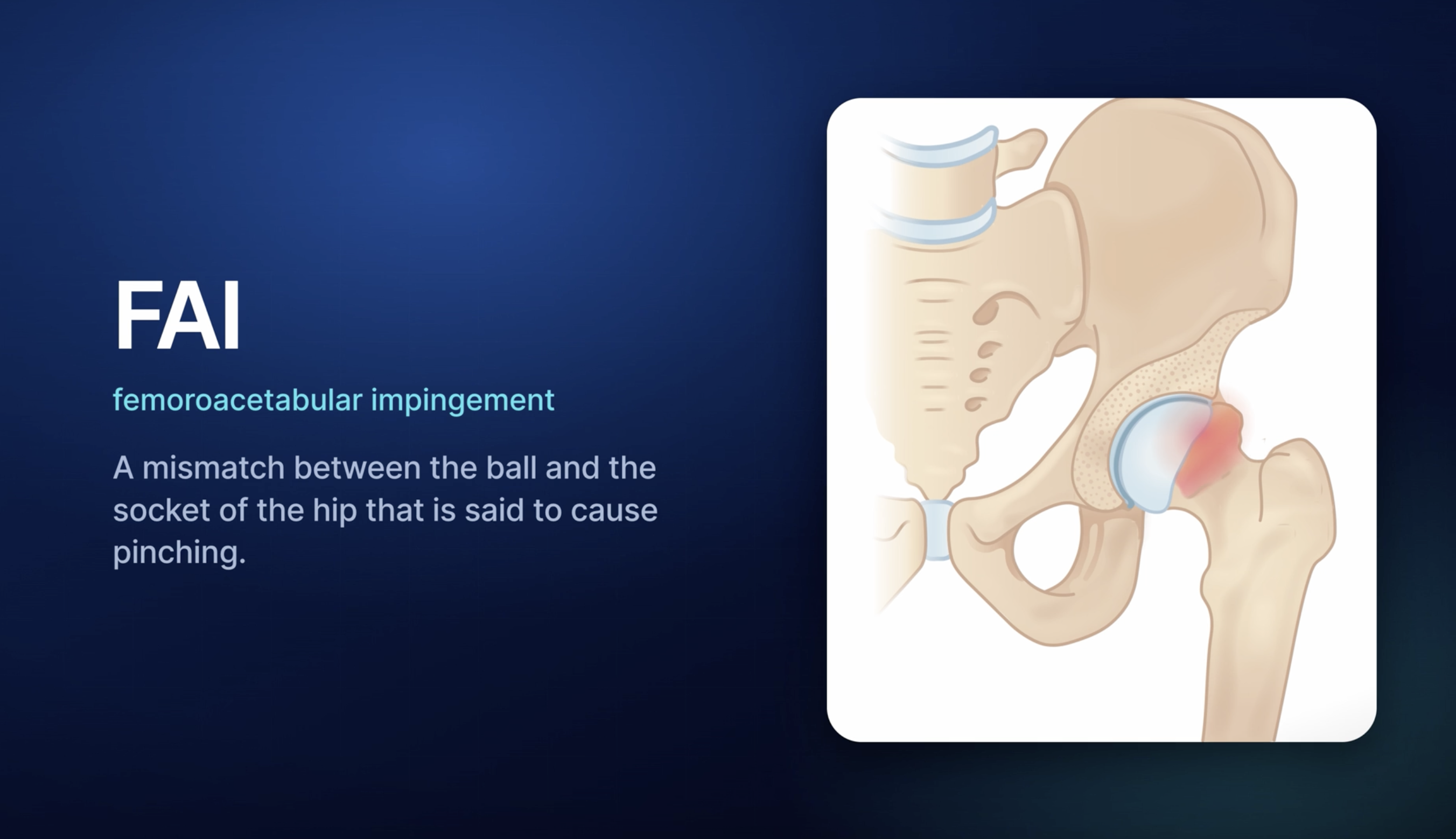
FAI stands for femoroacetabular impingement. It is a mismatch between the "ball" and the "socket" in the hip joint that causes impingement, or pinching. There are two types:
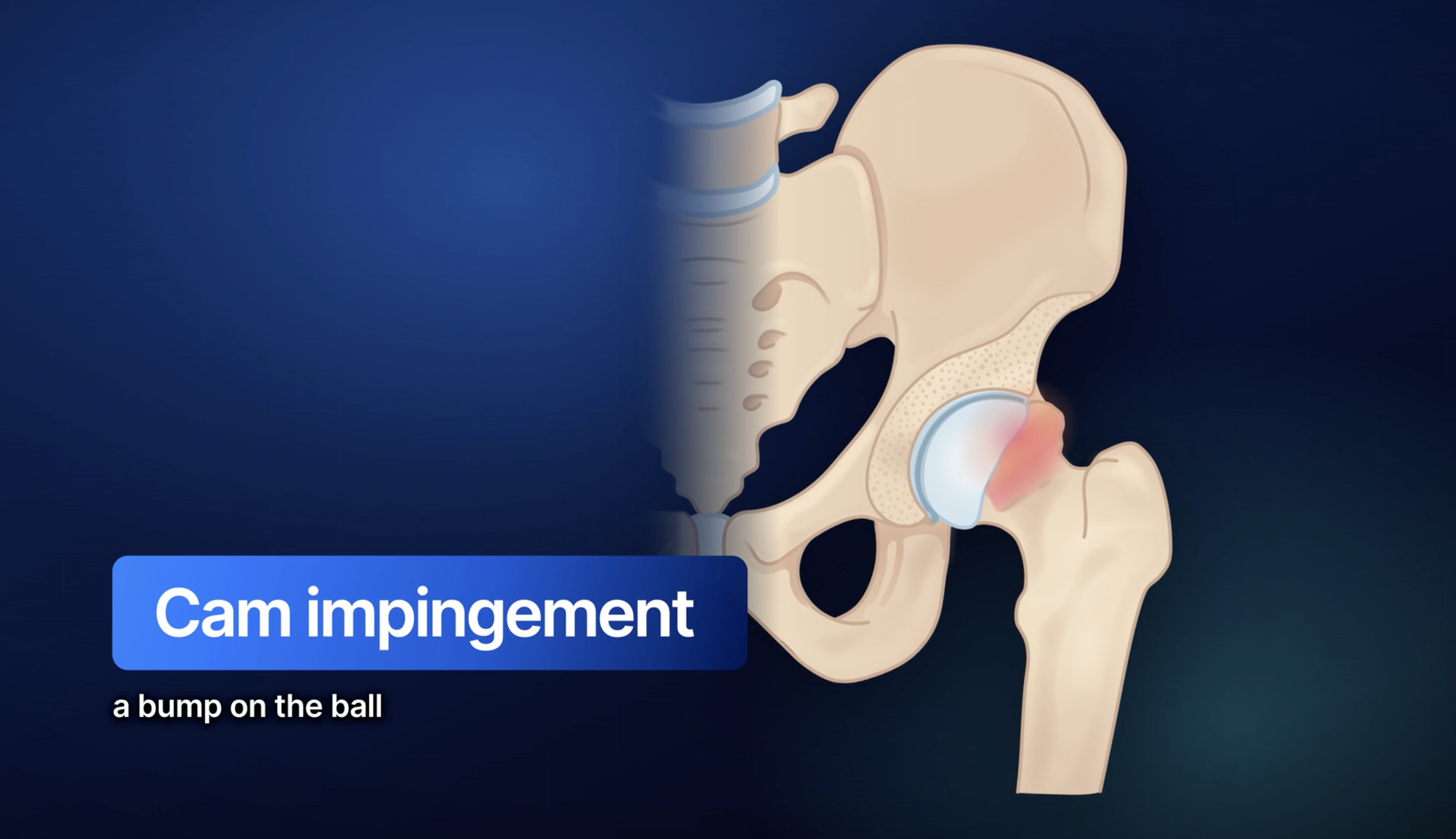
Cam Impingement: Imagine a golf ball that isn't perfectly round. Instead of being smooth, there's a bump on it, theoretically causing it to pinch against the socket.
Pincer Impingement: Now imagine the socket is a little too deep, and when the ball rotates, it theoretically pinches against the edges.
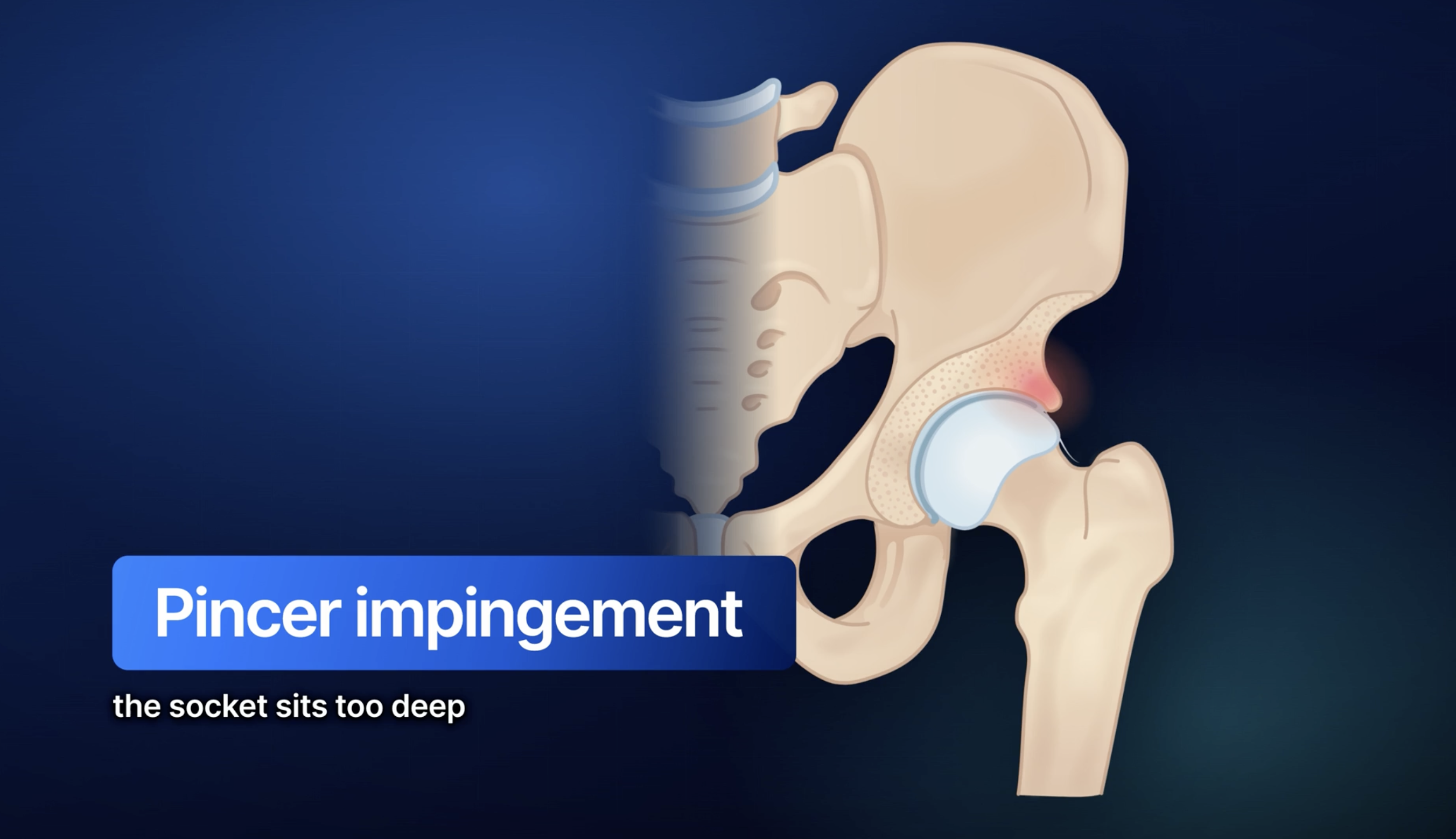
Surgeons often believe these bumps or deep sockets are damaging the labrum, the cushiony ring around the socket.
But here's the catch: these variations might just be normal. So why are we rushing people into surgery?
FAI and Hip Pain: What the Research Actually Shows
If FAI is common in people without hip pain, is it really the cause of everyone's discomfort? Here's what the studies found:
A Norwegian study checked 2,081 young adults who had no hip pain. More than 50% had some sign of hip FAI, and a quarter had other common FAI indicators too.
A U.S. study found that about a quarter of people without hip pain still had FAI. Those two studies were strike one and two against the "bad bones cause hip pain" theory. But what does the newest research show?
New Research: Surprising Insights
A 2021 study analyzed 1,878 hips from people who had no hip pain. Three radiologists reviewed the images to make sure nothing was missed. The average age was 31, and here's what they found:
Cam impingement: 30% of people had it. Pincer impingement: 24% of people had it. That means almost one in three people had FAI, even though they had no hip pain at all. In fact, the researchers found all kinds of bony variations in this completely pain-free population.
As the researchers summarized their findings:
"We demonstrated by radiographic findings that the characteristics suggestive of FAI, both the cam and pincer variants, were common in a population of healthy young adults... As the available literature on the cause of FAI suggests that it is multifactorial, we believe that these findings may reflect anatomic variations rather than true pathological abnormalities."
In plain English: your "bad bone shapes" are probably not bad at all.
The Real Problem With FAI Diagnosis
If FAI is so common in people without hip pain, how useful is it as a diagnosis when someone does have hip pain? Hip pain can come from many sources, like the lower back, tendons, or the SI joint. So how many people diagnosed with FAI are actually suffering from it?
Diagnostic Accuracy: Flipping a Coin?
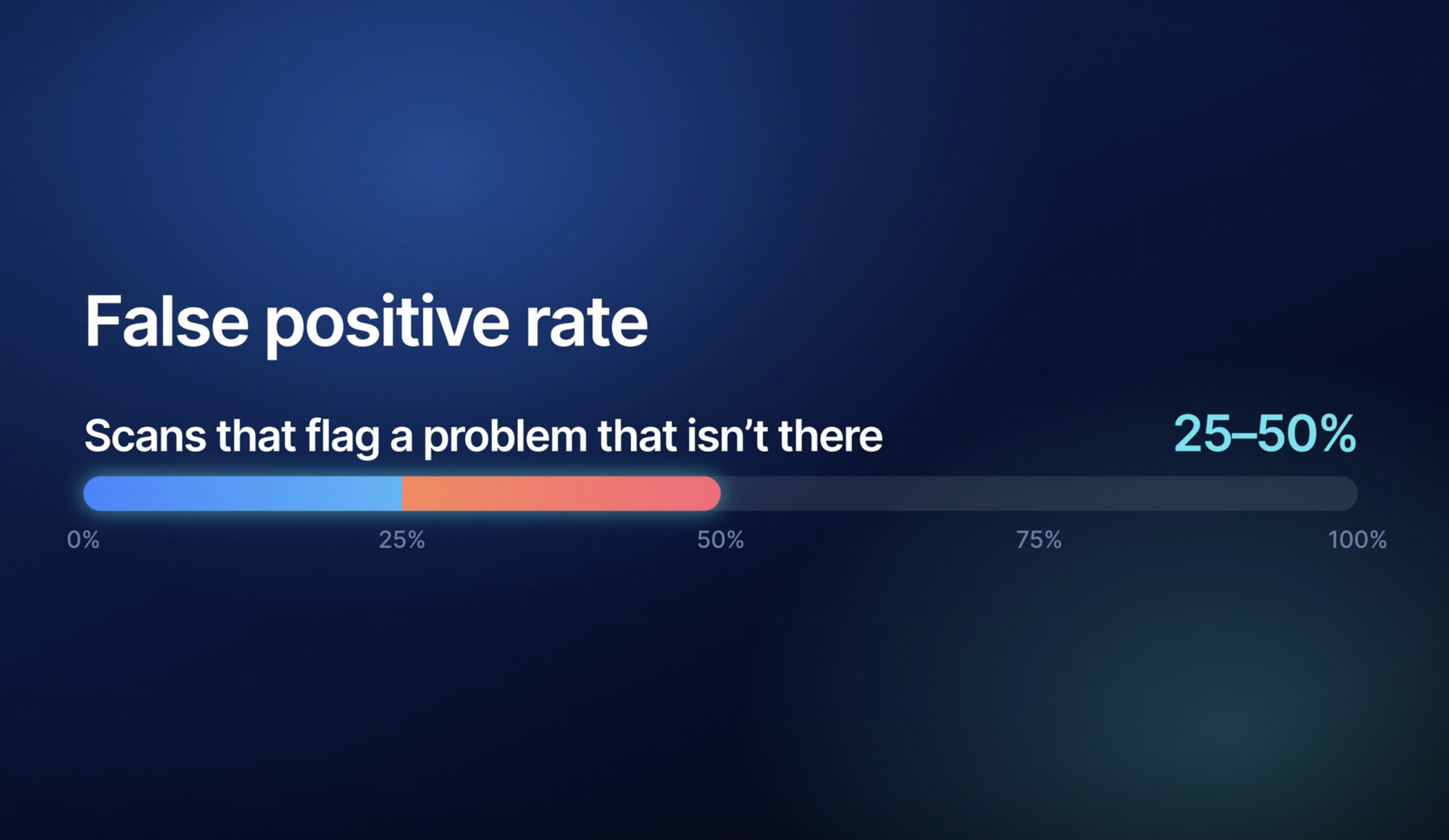
A good diagnostic test should find the problem only in people who actually have it. But with FAI, the false positive rate, meaning it shows a problem that isn't really there, is 25 to 50%. That is close to flipping a coin to decide if you really need surgery.
A Real-Life Story of Hip FAI Surgery Gone Wrong
Let me tell you about a 40-year-old man I spoke with a few months ago.
He had hip impingement in both hips and had multiple surgeries. After each surgery, the pain persisted.
He told me: "After each operation, one problem got a little better, but then a new one popped up."
They shaved off part of his femur the first time, then stitched up the labrum the next time, then did microfracture surgery, then something else.
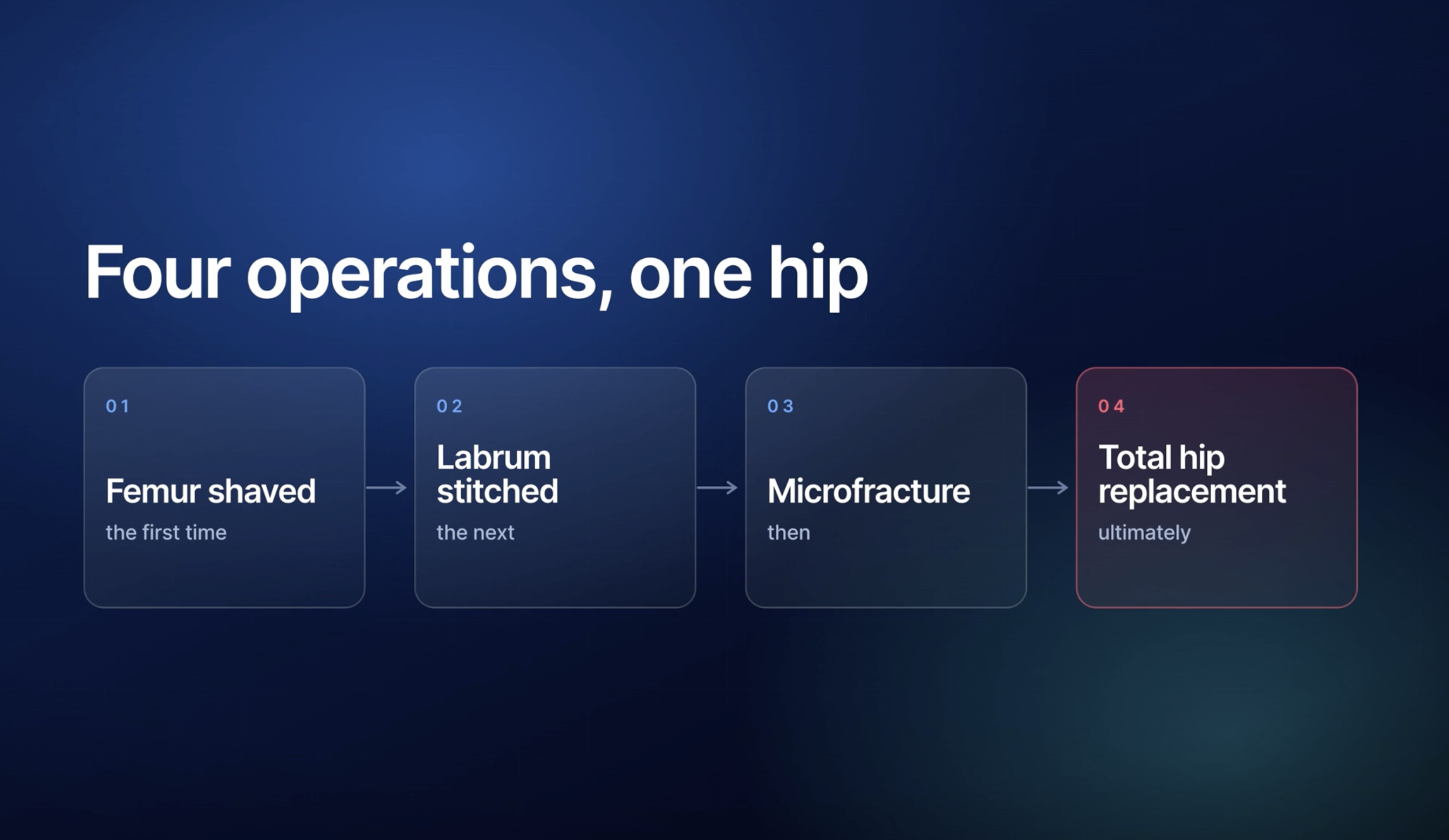
Years into this, he is a little better in his pain levels, but he feels his hips are now fundamentally unstable.
"It feels like my hips don't fit well in the socket anymore," he told me. Ironic, since the surgery is supposed to make the ball fit better in the socket.
The bottom line: modern medicine is amazing in many ways, but slicing and dicing your bones is never an easy ride. Don't rush into it.
How to Avoid This Problem
Take it slow. There is a lot you can do before surgery.
Find someone who has real, direct experience helping people work through FAI, not just a generic physical therapist down the road.
Consider other causes. There are many causes of hip pain besides FAI. Get a thorough assessment and a differential diagnosis, and get multiple perspectives if possible, before going all in on a surgery you can never undo.
The Bottom Line: Don't Rush Into Surgery
Surgery is not the enemy, and it can help some people. But it is also big business that makes doctors and surgeons a lot of money. If we now know that hip FAI shows up in many normal people who have no hip pain at all, we need to be careful about diagnosing FAI as the cause of someone's hip pain and operating based solely on MRI or X-ray findings.
Where to Go From Here
If you have been told you have FAI and need surgery, don't panic.
Depending on your specific condition, symptoms, and goals, conservative treatment may be worth exploring before making a decision. Consider getting a second opinion from a qualified professional who understands FAI and specializes in non-surgical approaches to hip pain.
If you want to take the next step, our DIY Hip Fix™ Program gives you a structured approach to improving your hip mobility, strength, and movement. You can work through the program at your own pace, without having to piece together random exercises from the internet.
And if you'd like more personalized guidance, you can add one-on-one coaching to your program for help understanding your specific limitations, adjusting your approach, and progressing with greater confidence.

Over the past 14+ years, we've helped more than 30,000 people work toward better movement and recovery. That's a lot of experience helping people navigate pain, mobility challenges, and the frustration of not knowing what to try next.
If you're dealing with hip pain or considering FAI surgery, remember that a diagnosis doesn't automatically define what you're capable of doing. Your situation is unique, and understanding your options is an important part of deciding what comes next.
You deserve to understand all your options before making a decision about your hips.
And as always, remember that you're just one step away from building (or rebuilding) your perfect body.
About The Author

Shane Dowd, CES, CMP is the owner/founder of GotROM.com. He is also a sports performance & mobility coach specializing in injury prevention and flexibility for athletes.

Free download for this topic
The Ultimate Guide to Hip Impingement
How To Fix Hip Impingement Without Surgery
GET THE FREE EBOOK


