
The Hip Rehab Pyramid: The Simple Path to Pain-Free
Have you ever tried to fix stubborn hip pain with "functional training," only to end up looking like a circus seal balancing on a BOSU ball?
Or found an online guru telling you to "initiate a left zone of apposition expansion through left anterior femoral internal rotation while simultaneously maintaining a right medial malleolus roll to promote a balanced pelvic position"?
You're not alone in this wild rehab show.
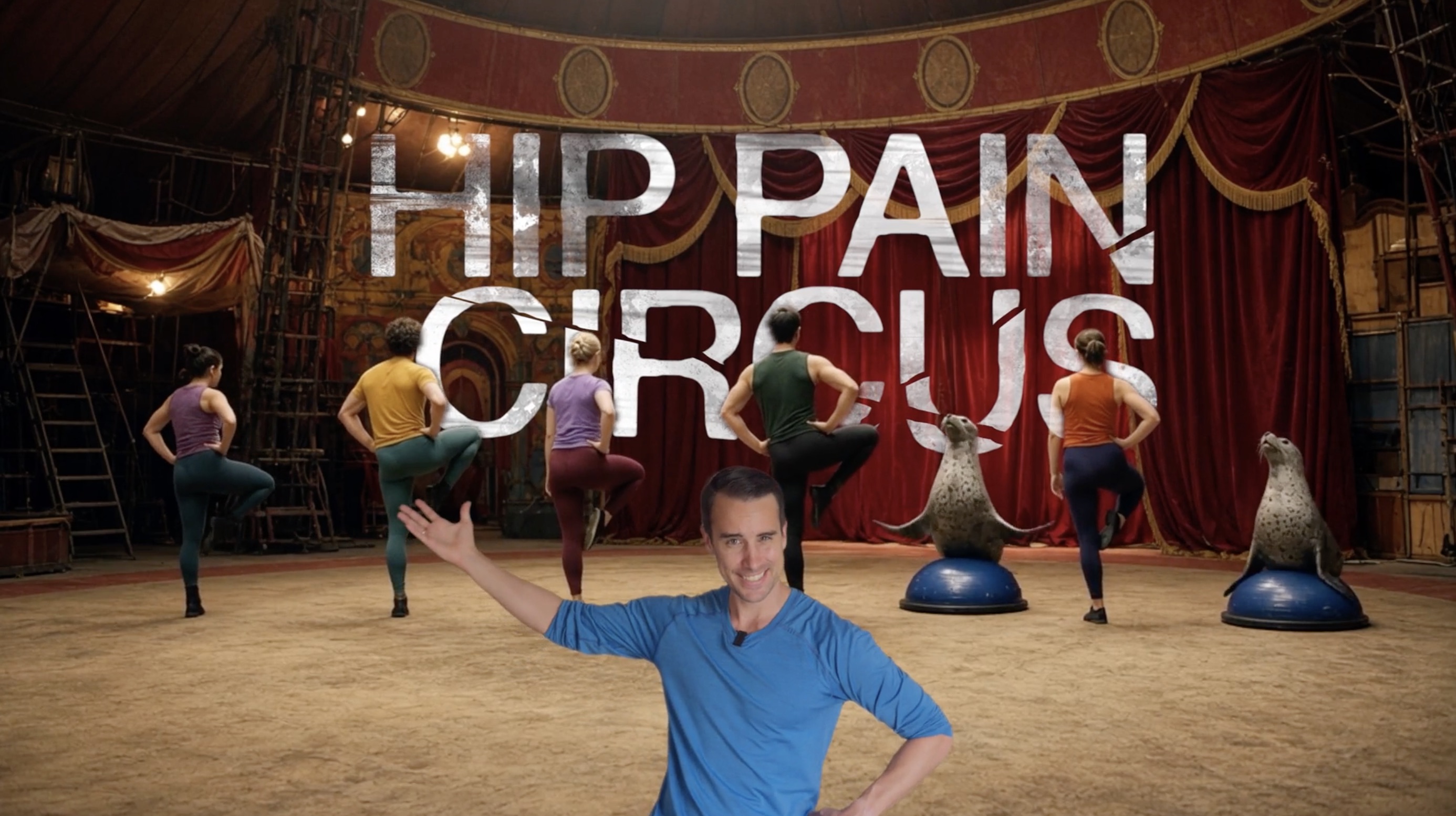
I've been through this circus myself. I've spent hours in therapy trying to perfect exercises that felt more like acrobatics than actual treatment, and I've paid $300 an hour for physical therapists who were so focused on perfecting movement that we sometimes lost sight of what actually mattered.
Eventually, I realized something important: hip rehab doesn't have to be nearly as complicated as people make it.
That's why I developed what I call the Hip Pain Pyramid.
It's a simple framework for understanding what you actually need to focus on when you're trying to overcome hip pain and get back to doing the things you love.
The basic idea is this:
Build Capacity. Develop Control. Add Complexity when you actually need it.
Let's break it down.
Why Simplify Hip Pain Rehab?
When your hip hurts, it can affect almost everything you do. Walking, running, jumping, lifting, getting out of a chair, and even standing for long periods can become frustrating.
So it's easy to assume that the solution must also be complicated.
Maybe you need to "get functional." Maybe you need bands, gadgets, unstable surfaces, and dozens of highly specific exercises designed to correct every tiny movement.
Or maybe you need to surrender to a guru with an alphabet soup of letters after their name who speaks in a language you barely understand because, well, they sound smart.
But here's the thing.
Hip pain can be complicated. Your approach to improving it doesn't have to be.
For athletes, gym-goers, and active adults, one of the most useful things you can do is build a solid foundation of strength, mobility, and physical capacity before worrying about highly complex movements.
That doesn't mean technique doesn't matter. It doesn't mean you should lift with sloppy form or stretch randomly.
It means you should prioritize the things that give you the biggest return first.
And that's where the Hip Pain Pyramid comes in.
How I Escaped the Hip Rehab Circus
I've experienced the other side of this firsthand.
I've worked with therapists who wanted to focus on extremely nuanced movement patterns before I had built the basic strength and mobility necessary to perform those movements well.
I've been given explanations that sounded incredibly sophisticated but left me wondering what the hell I was actually supposed to do.
I once had a therapist tell me:
"I want you to engage the right brachial chain through a descending spiral of the right upper extremity, integrating serratus anterior activation and rib positioning to counteract left thoracic mediastinal compartment compression and facilitate ipsilateral hip abduction and external rotation."
My honest reaction?
What?!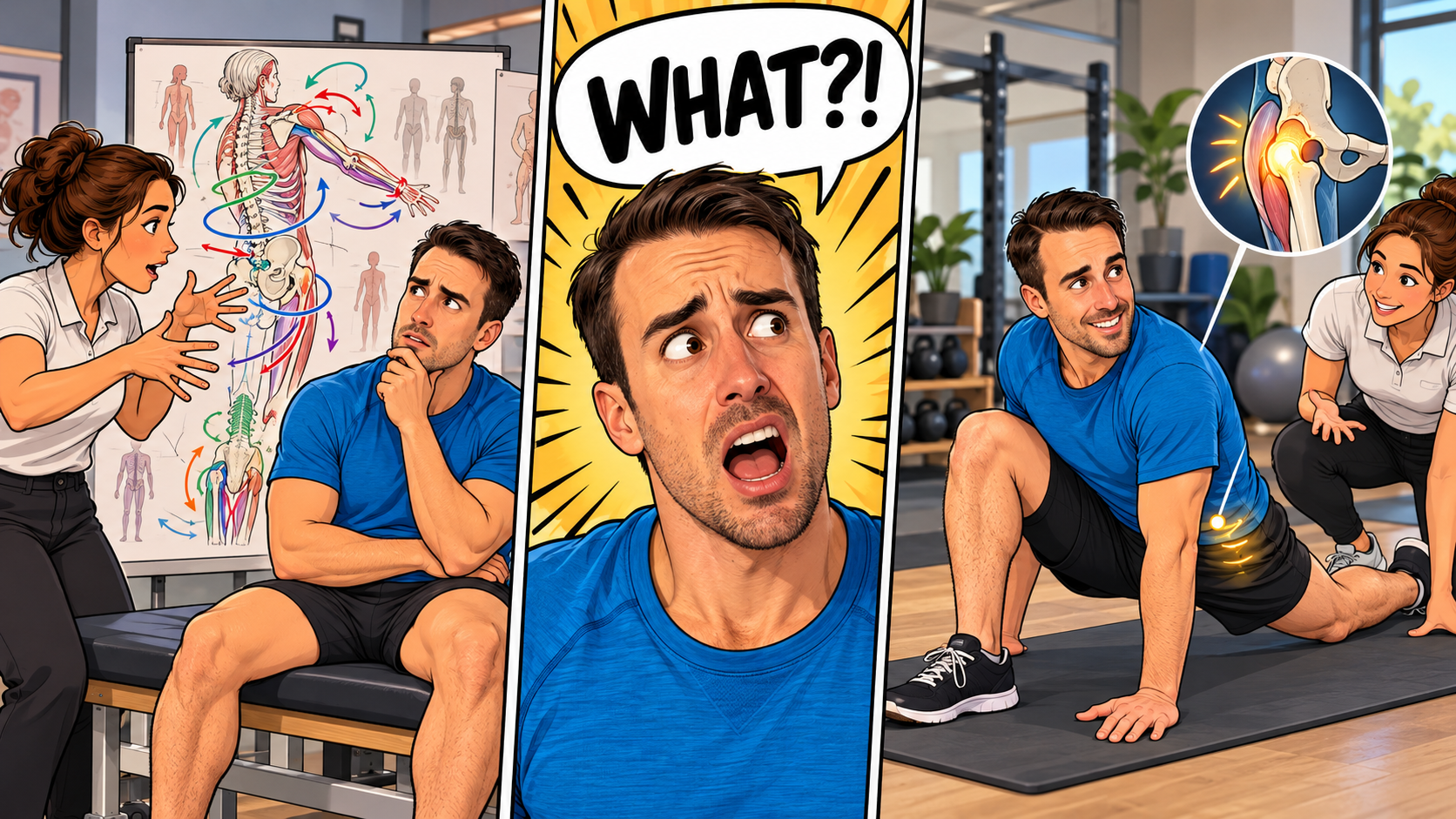
I'm not exaggerating. There are genuinely complicated systems and approaches being taught in the world of movement and rehabilitation.
And sometimes that complexity is appropriate.
But if you've just come to someone because your hip hurts, you probably don't need to start by performing a movement that requires a PhD to explain.
You need to build a body that is stronger, more mobile, and more capable.
That's why I believe in starting with the basics and progressing from there.
Even in our one-on-one coaching for hip pain, we take a nuanced and professional approach. We look at the individual, their history, their limitations, and their goals. But we don't make things complicated just for the sake of making them complicated.
Consistency with the fundamentals beats unnecessary complexity most of the time.
Think about it like building a house. You don't start by designing the roof before you've poured the foundation.
You build the foundation first.
Then you build on top of it.
That's exactly how I look at hip rehab.
The Hip Pain Pyramid
The Hip Pain Pyramid has three layers:
Capacity → Control → Complexity
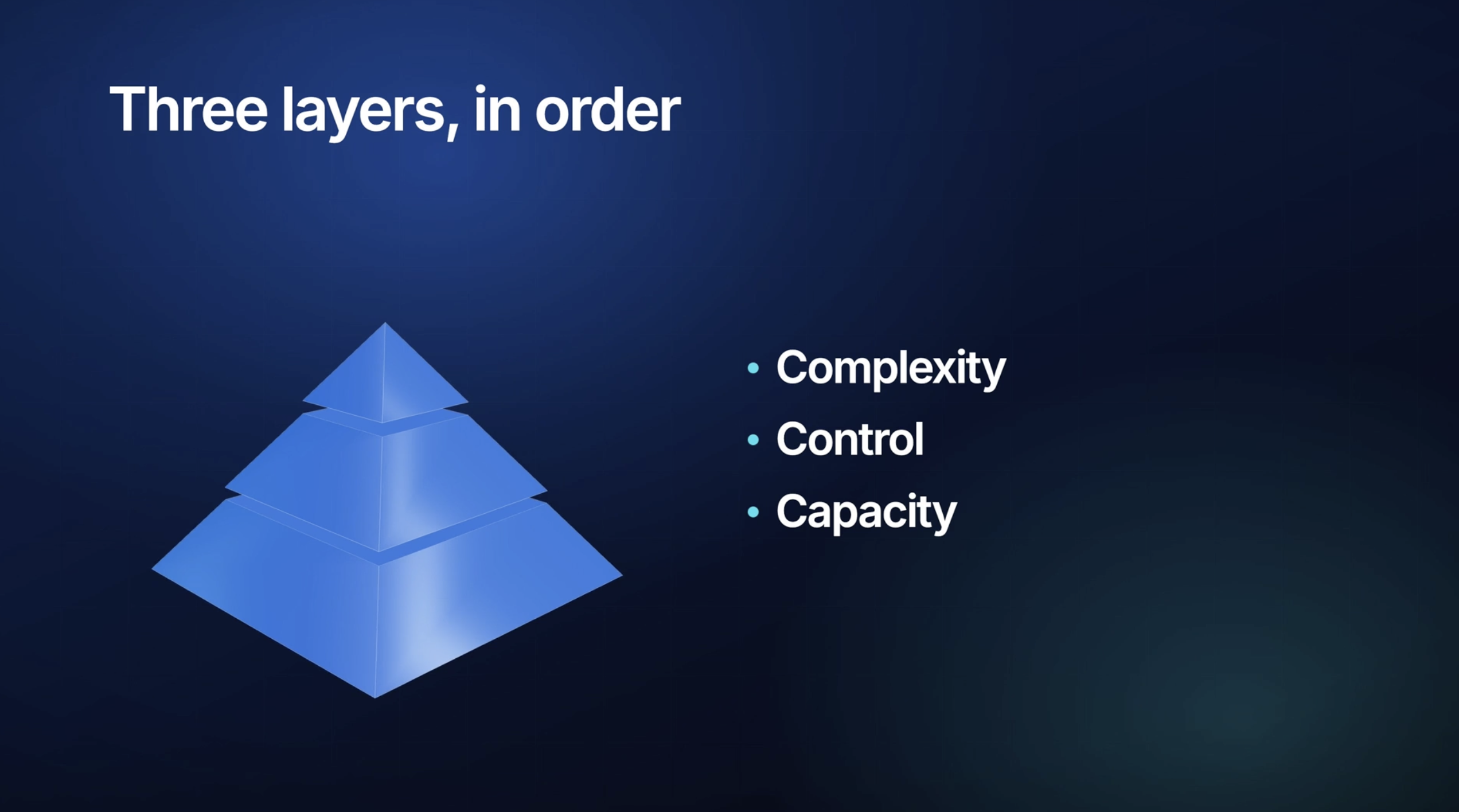 Each layer builds on the one below it.
The mistake I see all the time is people jumping straight to the top.
They want to work on balance, agility, coordination, unstable surfaces, complicated movement patterns, and highly specific exercises before they've developed the basic physical capacity to handle those demands.
The Pyramid flips that approach.
You start with what gives you the biggest foundation, then progressively build from there.
Layer 1: Capacity
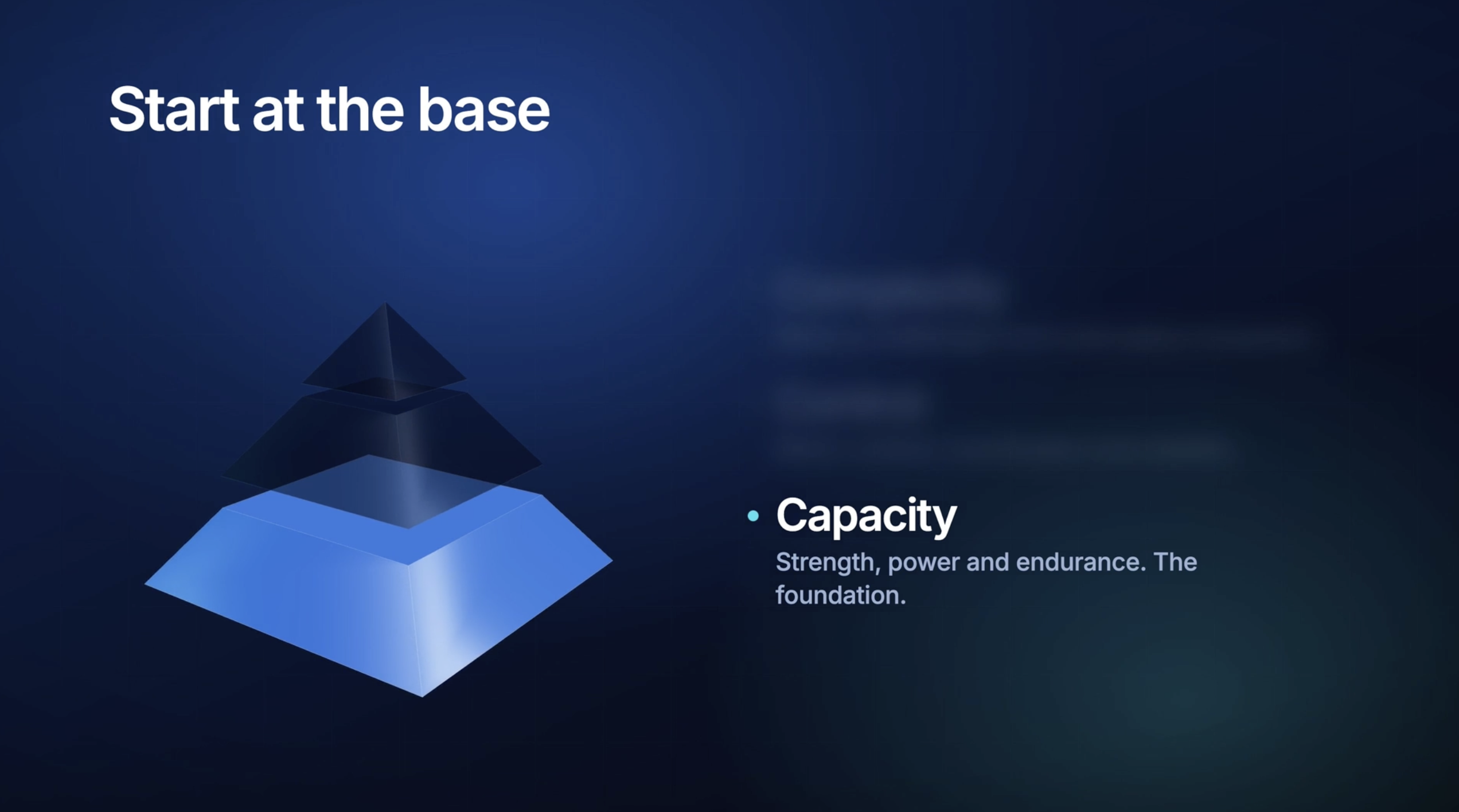
Capacity is the foundation of the pyramid.
It's your ability to produce and tolerate force, movement, and physical stress.
In practical terms, this means building strength, power, and endurance through consistent training.
You don't need fancy equipment or complicated exercises to do this.
You can start with basic movements like squats, lunges, hinges, and other strength exercises that challenge your hips and the muscles around them.
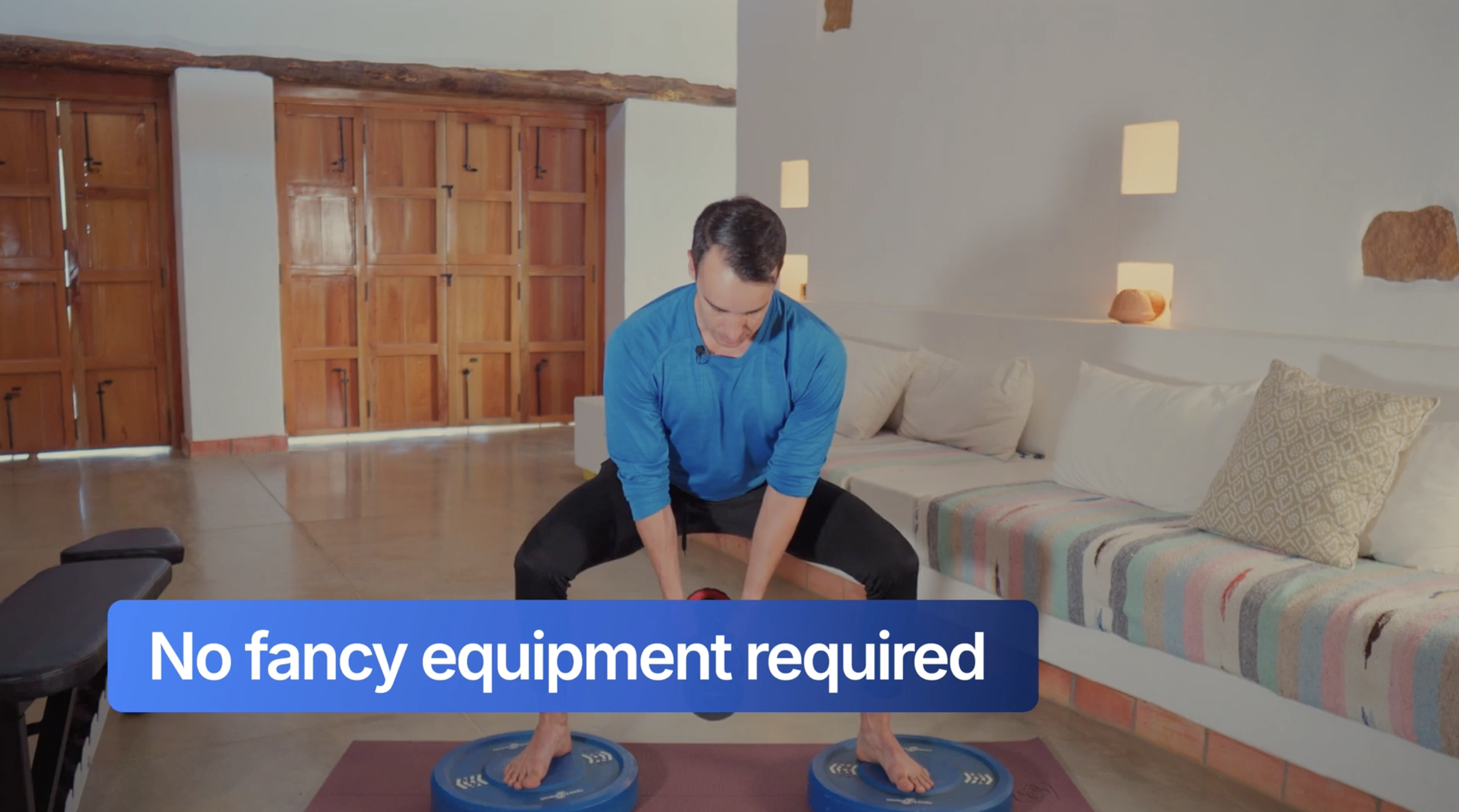
The important part is that you choose movements you can perform with control and progressively increase the challenge as your capacity improves.
That might mean starting with a bodyweight squat, using a shallower range of motion, and gradually working toward deeper ranges as you become more comfortable.
It might mean starting with a light lunge and progressively adding resistance.
The exercise itself isn't necessarily the magic.
The progression is.
Your body needs exposure to progressively greater demands if you want it to become stronger and more resilient.
That's capacity.
Layer 2: Control
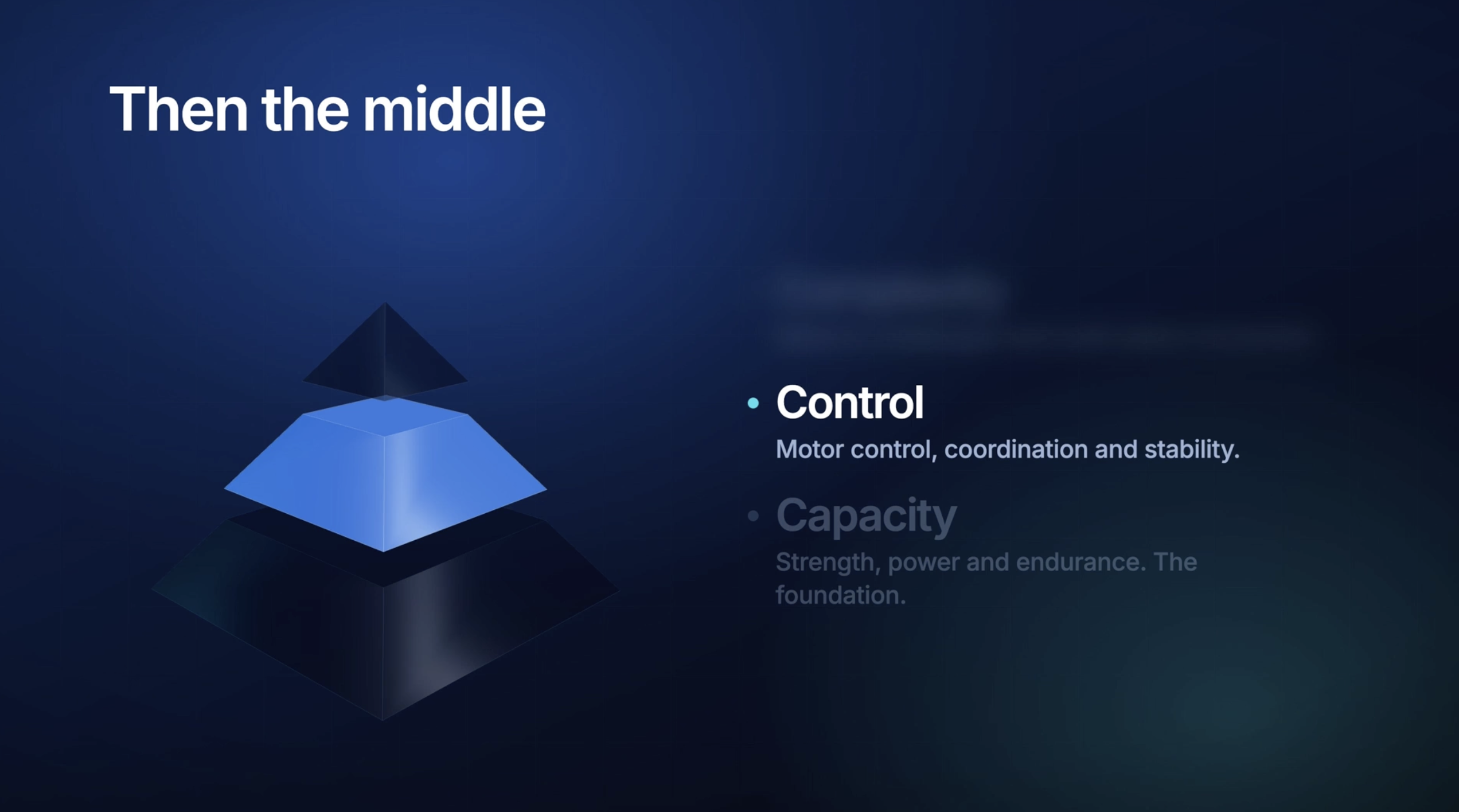
Once you've built a foundation of capacity, you can start paying more attention to how you control that capacity.
That's where control comes in.
Control includes things like motor control, coordination, balance, and stability.
And here's something important: you're already developing some degree of control while you're building capacity.
You don't need to completely separate these two things.
The goal isn't to obsess over every tiny movement and convince yourself that your hip is going to fall apart if your knee moves two degrees in the wrong direction.
The goal is to progressively develop your ability to control your body as the demands increase.
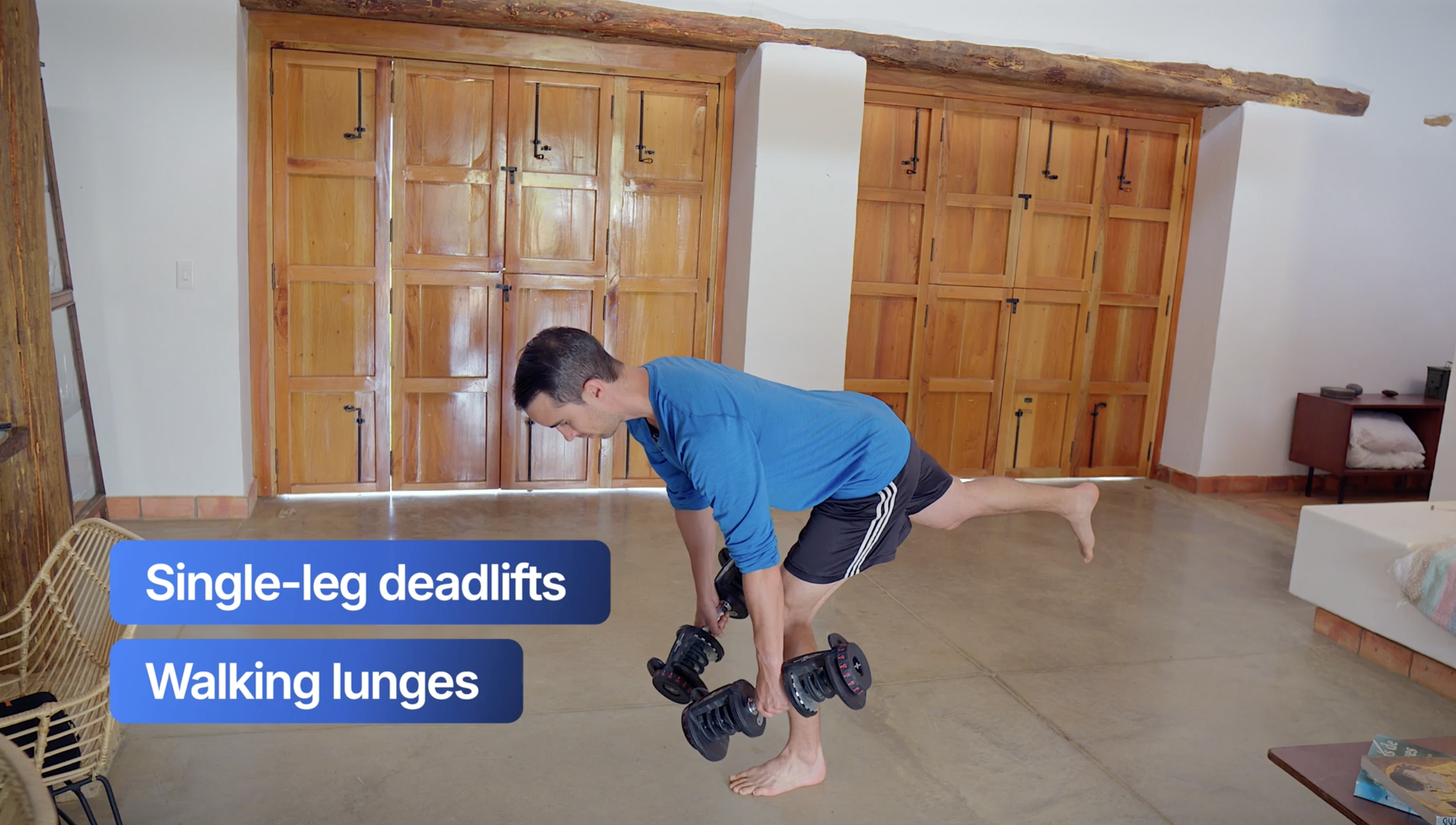
Exercises like single-leg deadlifts, walking lunges, and other controlled unilateral movements can challenge your balance and coordination while also continuing to build strength.
As your capacity increases, you can ask your body to control that capacity in more demanding positions and movements.
That's when movement starts becoming more efficient and adaptable.
Layer 3: Complexity
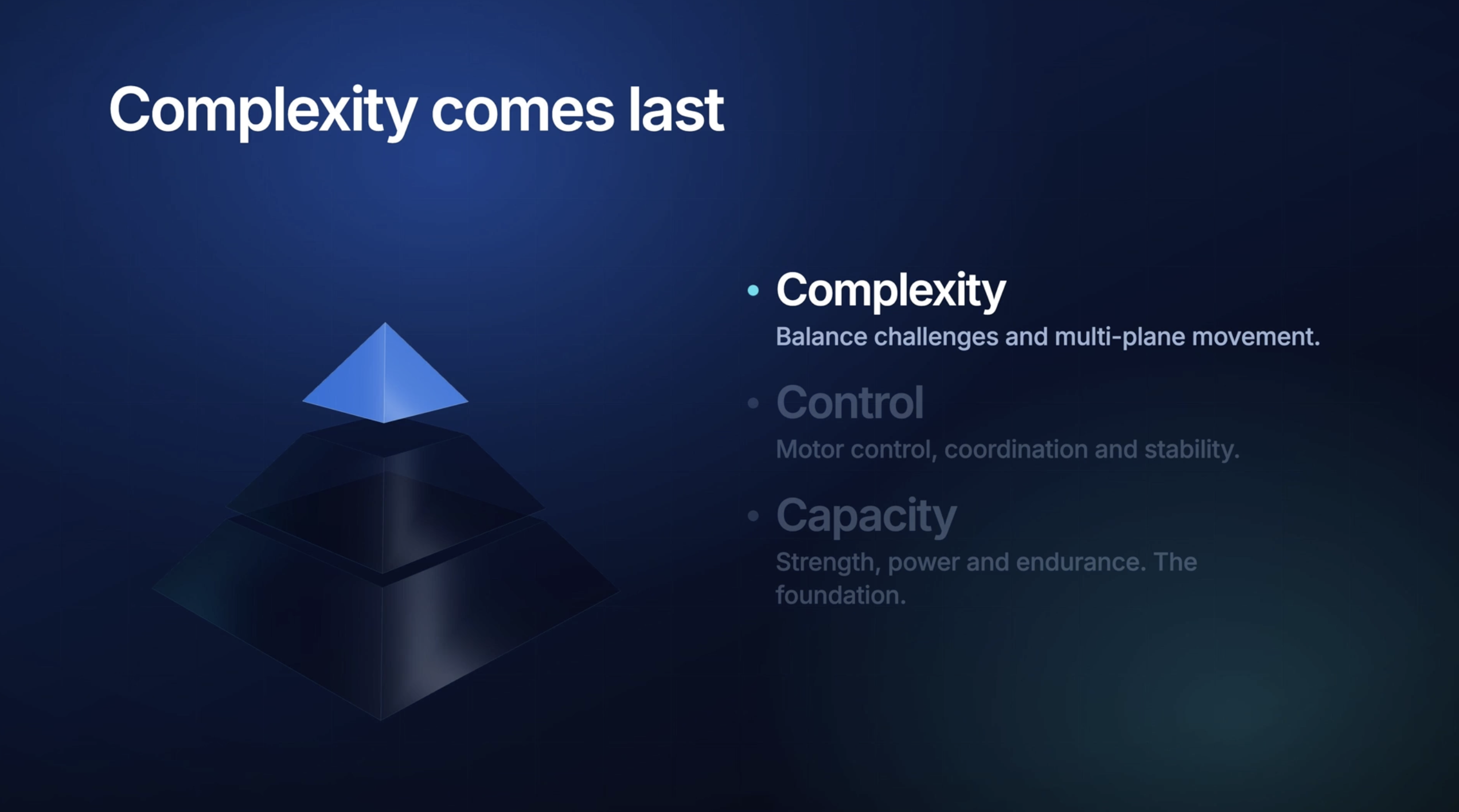
At the top of the pyramid is complexity.
This is where things get more intricate.
You might introduce faster movements, multiple planes of motion, balance challenges, plyometrics, agility drills, or more advanced exercises that require greater coordination.
This is also where a lot of online gurus like to start.
Why?
Because complicated exercises look impressive.
A person balancing on an unstable surface while simultaneously performing three different movements certainly looks more "functional" than someone doing a basic squat.
But looking complicated doesn't automatically make an exercise more useful.
Complexity has a place. It's simply not where everyone needs to start.
If you're a competitive athlete, you may eventually need to develop the ability to sprint, cut, jump, land, react, and change direction quickly.
If you're a recreational lifter who simply wants to train, hike, play sports, and stay active without hip pain, you may not need the same level of complexity.
Complexity should match the demands you actually need to meet.
That's the key.
Putting the Hip Pain Pyramid Into Practice
So what does this actually look like?
Let's say you're dealing with hip pain and you've been avoiding certain movements because they feel uncomfortable or intimidating.
You don't necessarily need to find the most advanced hip exercise on YouTube.
Start by asking: What can I do right now that I can control and progressively build on?
Start With Capacity
Begin with basic strength-building exercises.
Squats and lunges can be excellent starting points for developing strength and endurance around the hips. You might begin with bodyweight variations, use a range of motion that you can comfortably control, and gradually increase the challenge as your capacity improves.
The goal isn't to prove how much you can do on day one.
The goal is to create a training stimulus your body can adapt to.
Then you repeat it.
And repeat it.
And progressively make it more challenging.
That's how capacity is built.
Then Develop Control
As your strength and basic movement capacity improve, you can introduce more exercises that challenge balance, coordination, and stability.
Single-leg deadlifts and walking lunges are examples of movements that can challenge your ability to control your body while continuing to build strength.
You can also gradually increase the range, speed, or complexity of movements as your body becomes more capable.
The goal is not perfect movement.
The goal is better control as the demands increase.
Add Complexity When You Need It
Finally, if your goals actually require it, you can start introducing more complex movements.
For an athlete, that might mean sprinting, jumping, cutting, or other high-speed movements.
For someone who enjoys strength training, it might mean progressing toward more advanced variations.
For someone who simply wants to move well and stay active, you may not need much complexity at all.
That's okay.
The Pyramid isn't telling you that everyone needs to reach the top.
It's telling you that you shouldn't build the top before you've built the foundation.
A Real-Life Example: Mathew Went From Pain to Control
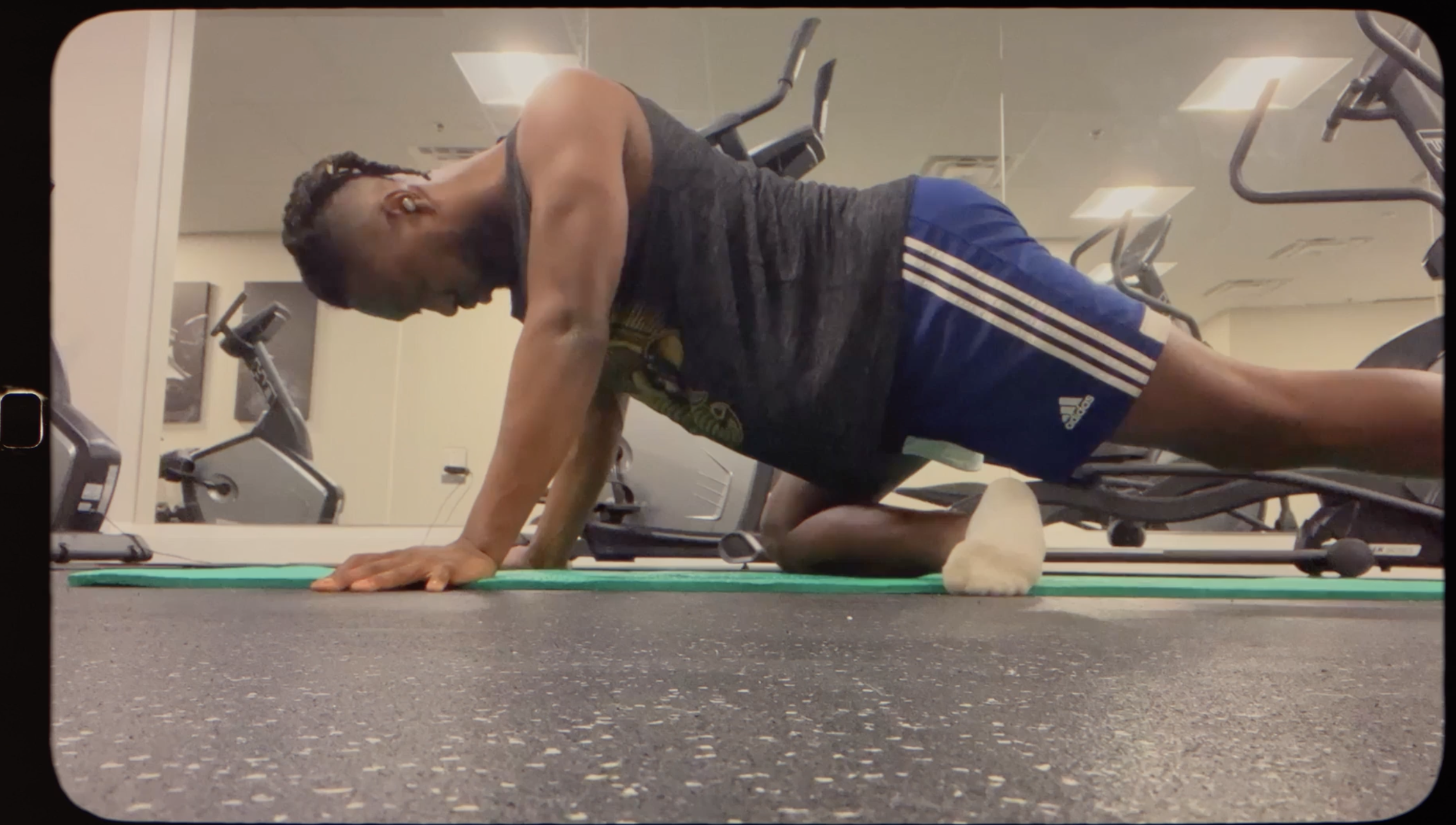
Mathew is a weekend warrior who loved going to the gym but had been sidelined by chronic hip pain.
Like many people with persistent pain, he had already tried complicated approaches that weren't giving him the results he wanted.
When we started working together using the Pyramid approach, we didn't immediately throw advanced exercises at him.
We started by building his capacity.
Mathew began with basic strength exercises like deadlifts and lunges, gradually increasing resistance as he became stronger and more comfortable with the movements.
Once he had built that foundation, we started adding exercises that challenged his stability and control.
Over time, he developed a much greater ability to control his hip and return to the activities he enjoyed.
The lesson isn't that deadlifts and lunges are magic exercises.
It's that building a foundation before piling on complexity can give your body something to build from.
You don't have to make rehab look impressive. You have to make it work for you.
Watch Mathew talk about his own journey here.
The Simple Path Forward
If you're dealing with stubborn hip pain, it's easy to get overwhelmed by the sheer amount of information available online.
One person tells you that you need to stretch more.
Another tells you stretching is the problem.
Someone else tells you that your glutes aren't activating.
Then another person tells you that your pelvis is out of alignment, your breathing is wrong, or your foot isn't moving correctly.
Before long, you're doing 17 different exercises every morning and still have no idea whether any of them are actually helping.
You don't necessarily need more exercises.
You need a way to prioritize them.
That's what the Hip Pain Pyramid is designed to do.
Build your capacity first.
Get stronger. Build endurance. Gradually expose your body to the ranges and demands you want to handle.
Then develop your control.
Improve your coordination, stability, and ability to manage the strength you've built.
Then add complexity if your goals require it.
If you're an athlete, that might mean sprinting, jumping, cutting, or other high-level movements. If you're simply trying to stay active and pain-free, you may find that you don't need much complexity at all.
The goal isn't to make your rehab look sophisticated.
The goal is to build a body that can handle the life you want to live.
Start simple. Build a strong foundation. Develop control. Then earn complexity.
That's a much more useful place to start than trying to perform circus tricks on a BOSU ball while wondering why your hip still hurts.
Where to Go From Here
At GotROM, we believe your rehab should be built around your body, your history, and your goals, not a collection of random exercises you've found online.

Our Hip Fix™ Program gives you a structured approach to improving your hip mobility, strength, and overall capacity without having to piece together your own rehab from dozens of different sources.
And if you want more personalized guidance, you can add one-on-one coaching to your program. This gives you the opportunity to have a specialist help you understand your specific limitations, adjust your training, and progress through the process with more confidence.
You don't need to make hip rehab unnecessarily complicated.
You need the right foundation, the right progression, and a plan you can actually follow.
Start building that foundation today.
And as always, remember that you're just one step away from building (or rebuilding) your perfect body.
About The Author

Shane Dowd, CES, CMP is the owner/founder of GotROM.com. He is also a sports performance & mobility coach specializing in injury prevention and flexibility for athletes.

Free download for this topic
How To 10X Your Flexibility
An Insider's Guide to Accelerated Gains
GET THE FREE EBOOK


