
Combat Veteran's 12-Year Hip Pain Nightmare Finally Ends
 By Shane Dowd , CES, CMP
"I Felt Like I Was 80 and Half-Crippled at 34": Combat Veteran's 12-Year Hip Pain Nightmare Finally Ends
How a former Army service member went from sleeping on the floor in agony to squatting heavy again—in just 4 months
The hammer hit Nelson's kneecap.
Nothing.
The doctor tried again. Still nothing. No reflex. No response.
"That's when I knew something was seriously wrong," Nelson recalls. "My legs just... didn't work anymore."
It was 2024. Nelson was 34 years old. And he couldn't even pass the basic reflex test you get at a routine checkup.
The Day Everything Broke
Nelson stood at the bottom of the staircase in his home, staring up.
Just twelve steps. He'd climbed mountains in Afghanistan. Squatted 325 pounds. Done mixed martial arts for years. Now he was negotiating with himself about whether he could make it upstairs to his bedroom.
His right hip screamed. The groin pain shot down to his knee and back up. His lower back felt like someone had driven a spike through his spine.
"I had trouble walking upstairs. I had trouble sleeping," Nelson says, his voice flat with the exhaustion of someone who's explained this too many times.
"I would get severe pain in the middle of my back to the point where I couldn't sleep—about once every week or two."
Every seven to fourteen days, like clockwork, the pain would spike so badly he couldn't lie down. The only thing that helped? Walking. For one to four hours. In the middle of the night. Just walking in circles, occasionally dropping into a squat, trying to get his body to unlock.
His girlfriend watched him sleep on the hardwood floor because a mattress made everything worse.
He got rid of his desk chair because sitting in it for more than thirty minutes left him barely able to stand.
And his right leg? He could barely lift it past twenty degrees.
"I'm 34 years old," Nelson said, frustration cracking through his voice.
"A guy who's been active doing mixed martial arts and Army stuff his entire life. I shouldn't behave like I'm 80 and half-crippled."
But he was.
How It All Started: Afghanistan, 2012
The blast happened fast.
One moment Nelson was on patrol in South Afghanistan. The next, he was on the ground, ears ringing, body rattled by an IED explosion.
He walked away. Technically. But something had shifted inside his body—something that wouldn't show up on X-rays for years.
The pain started subtly. Lower back issues. Intermittent hip tightness. Nothing a tough former servicemember couldn't push through.
But it got worse...
And worse...
And worse.
By the time Nelson left the military, started college, then grad school, then his career in software development, the pain had become his shadow. Some days it whispered. Other days it screamed.
His squat—once a respectable 325 pounds—plummeted to 160. Then lower.
Every time he tried to go heavier, his right hip would lock up. His body would shift to the right, breaking form no matter how hard he focused on technique.
"I kept injuring myself," Nelson explains. "My bench press went down. My overhead press went down. I knew I should be able to lift more. Something was fundamentally broken."
The Medical Merry-Go-Round (That Fixed Nothing)
Over the next ten years, Nelson did what you're supposed to do.
He went to doctors. Chiropractors. Physical therapists. Massage therapists.
He tried:
- Dry needling (didn't work)
- Muscle activation therapy (temporary relief at best)
- Standard chiropractic adjustments (helped a tiny bit)
- Yoga (marginal improvement)
- Generic stretching routines (useless)
- Over-the-counter pain pills (just masked symptoms)
The chiropractors would say things like,
"Your spine's jutting to the right" and "Your sacrum's rotated." Then they'd crack his back and send him home.
No diagnosis. No solution. No plan. The VA doctors were even worse.
"They're using VA terms for 'he's got pain,'" Nelson says with a bitter laugh.
"The only reason I'd be motivated to get an MRI is for disability qualification—because it doesn't seem to help anyone who actually gets them."
He even joined Starting Strength, a highly-regarded barbell training gym with exceptional coaching.
The technique coaching was incredible. They fixed his squat form. Stopped him from throwing his back out during lifts. Taught him proper mechanics. But they couldn't fix what was wrong inside his hips.
"Those guys know how to squat better than anyone," Nelson acknowledges.
"But when I kept telling them, 'My hip forces itself to the right and I can't stop it,' they didn't have a solution. They'd just say, 'Stop doing that.' And I'd say, 'I CAN'T.'"
The weight he could squat kept dropping: 250... 200... 185... 165...
Finally, barely over 160 pounds—less than half of what he'd lifted just a few years earlier. The medical system had failed him. The fitness system had failed him.
He was on his own.
The First Glimmer of Hope (Hidden in a YouTube Video)
Late one night, unable to sleep because of the searing back pain, Nelson was scrolling through YouTube.
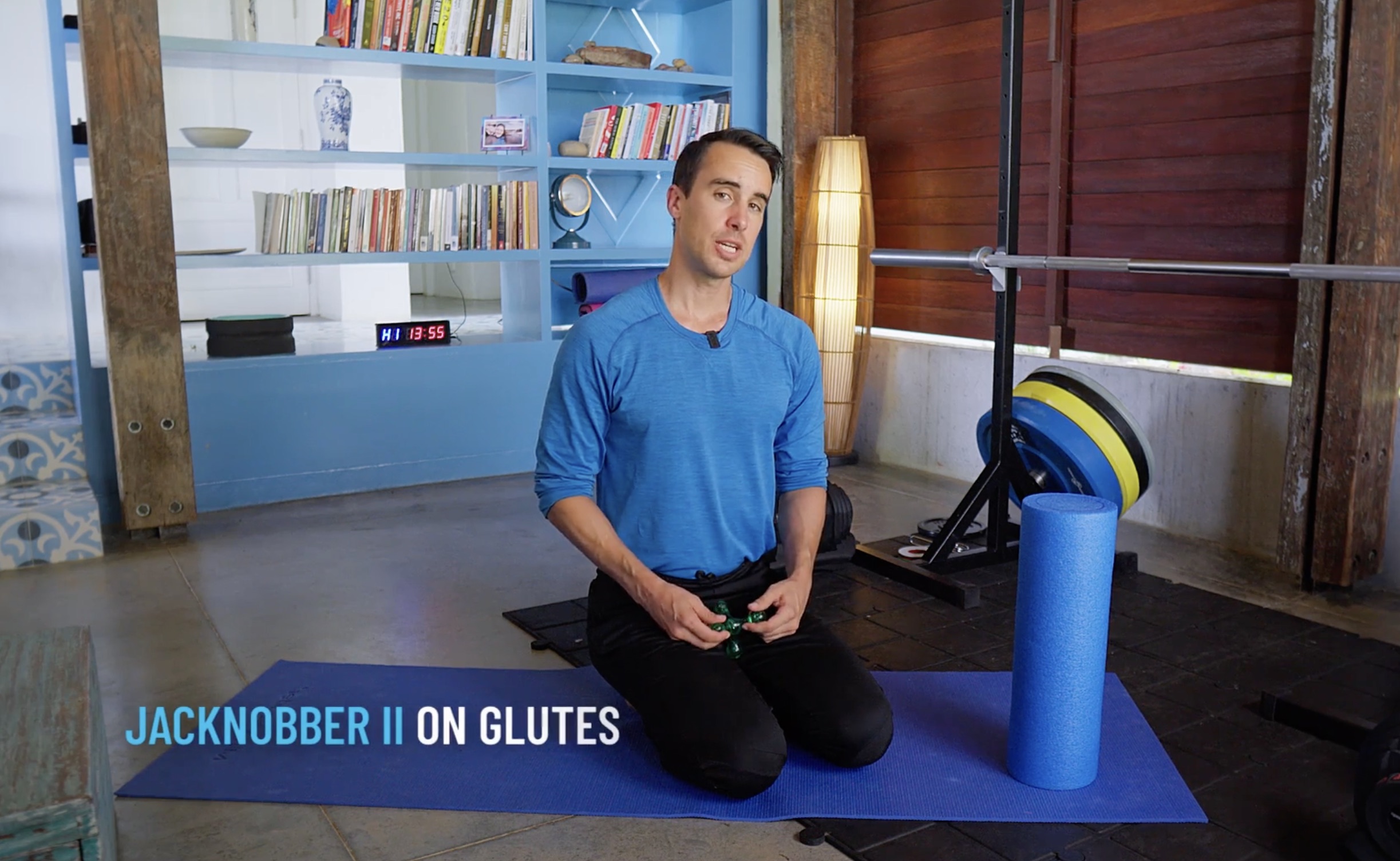
He found a video about hip pain. Something about using a tool called a "Jack Knobber" to release the muscles on the side of the hip.
He ordered one.
When it arrived, he positioned it on his right hip, right where the video showed, and leaned into it.
"I was screaming in pain," Nelson remembers. "I'm not exaggerating. I stayed there for five solid minutes, just moaning. It was excruciating."
But then something happened.
The hip released. The tightness melted. He could move again.
"I felt WAY better afterward. Like, immediately."
That video was from our channel. That tool became his lifeline.
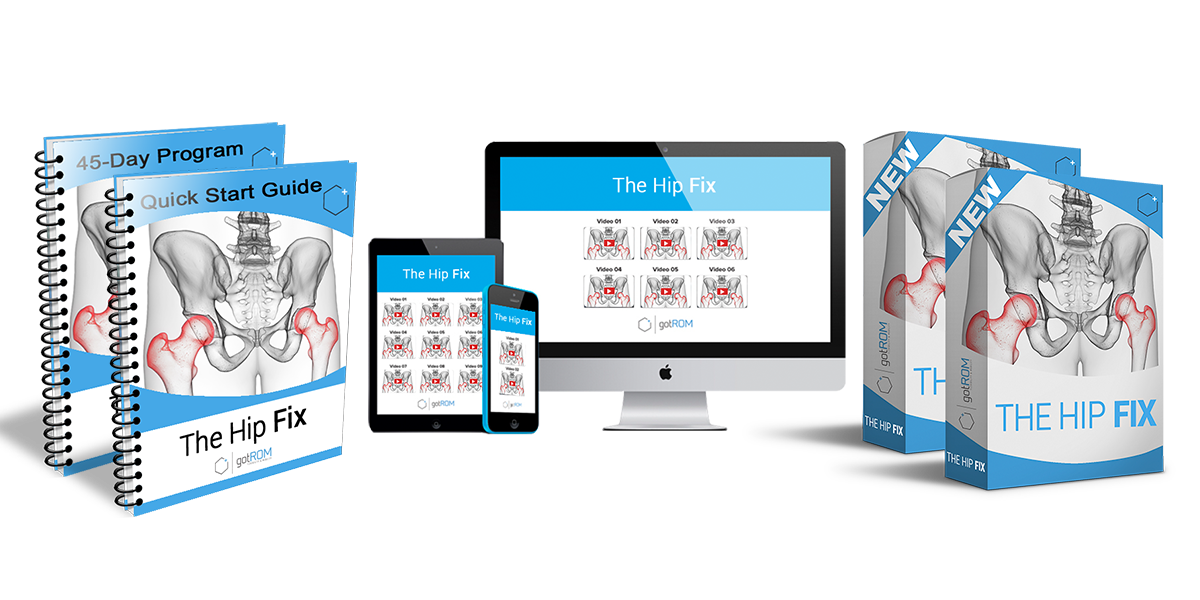
Then he found our Hip Fix™ program. Started following the videos. Used the techniques. And for the first time in years, he had a tool that actually worked.
"When I'd get that severe back pain in the middle of the night," Nelson explains, "if I could use the hip stick and loosen up the abductors in my groin, it would kill the pain. Like, completely take it away."
But there was a problem. The program helped—way more than anything else he'd tried. But it wasn't enough.
"Your stuff worked the best," Nelson told me during our first consultation call in July 2024.
"But it's still not fully fixing it. My assumption is there's just a couple of tweaks I need. So I figured I'd contact you, because that's the easiest way to do it."
The Decision Point: DIY or Get Expert Help?
Nelson had a choice.
He could keep grinding with the DIY program, trying to piece together his own solution from YouTube videos and guesswork.
Or he could invest in one-on-one coaching with a hip specialist. He thought about what he'd already spent.
"You'll pay about the same long-term going to chiropractors on a regular basis," he realized. "I was spending $150-$200 per session, multiple times per month. Over years? I'd spent a fortune."
Plus, the chiropractors weren't fixing anything. They were just giving him temporary relief—if that. The real question wasn't about money. It was about time.
"Getting a coach allows you to speedrun all of this," Nelson says. "In five years you might learn what you'd get in six months of actual coaching. Maybe. If you're lucky."
He thought about his martial arts background. You could try to teach yourself to fight by reading books and watching videos and getting into street fights until you learned. Or you could train with an expert coach and compress years of trial-and-error into months of focused practice.
Nelson applied for coaching.
There was just one problem: The program was full. Waiting list only. Within two weeks, a spot opened up. He was in.
Month 1: The Assessment That Changed Everything
Nelson's first session with a coach from The Hip Fix Program started with something no one had ever done before.
A comprehensive movement assessment. Not an X-ray. Not an MRI. Not a diagnosis of "nonspecific hip pain." An actual evaluation of how his body moved.
“Show me how you lift your right leg,” the coach said.
Nelson tried. Barely made it twenty degrees before his hip locked up.
“Now the left.”
Easy. Full range of motion. No problem.
“Okay, now lie on your side and show me your hip abduction.”
Right side: Terrible. Weak. Tight. Compensating.
Left side: Fine.
They went through test after test. Squats. Lunges. Single-leg balance. Gait analysis. Rotation. Flexion. Extension. With each test, the picture became clearer.
“Oh, it's just stiffness in the right abductor,” Nelson realized. “That's the entire thing. That's why my squat breaks to the right. That's why I can't lift my leg. That ONE muscle group is controlling everything.”
For ten years, no one had identified this.
“The assessment was the most useful tool I got,” Nelson says now. “You're not fully aware of how your body's performing until someone tests it. I didn't realize I couldn't raise my right leg under five pounds of pressure while sitting down. Once I knew THAT, everything else made sense.”
Months 2-4: The Rebuild
The program Nelson followed was nothing like what he expected. No squatting—at least not at first.
“You can't squat for a while,” the coach told him.
Nelson, the lifter who defined himself by his barbell work, bristled. “Why not?”
“Because your movement pattern is broken. If you keep squatting the way you're squatting, you'll just keep reinforcing the compensation. We need to retrain your hips first.”
Instead, the program focused on:
- Targeted tissue release with the hip stick
- Specific abductor strengthening exercises
- Romanian deadlifts (instead of conventional) to address hamstring tightness
- Movement retraining drills
- Positional breathing exercises
Every single day, Nelson sent videos showing his exercises and form.
And every day, a coach from The Hip Fix Program reviewed them and responded with corrections, adjustments, and encouragement.
“You're letting your knee cave in here.”
“Good, but drive through your heel more.”
“Your hip's hiking on this rep—focus on keeping it level.”
“The second you go and you see that you're doing something wrong, or even if you just need to see how you did it last time, you can review the videos,” Nelson explains. “But having someone with expertise look at it and say, ‘You're doing this wrong, fix this’—that's invaluable.”
He compared it to his time doing martial arts.
“It's amazing how many people, when they get tired, mess up simple things. In lifting, your knees start caving in on the squat. On the deadlift, your back rounds. You need someone to stop you right there before you hurt yourself. Coaching prevents all of that.”
The program evolved weekly. As Nelson's abductors got stronger, his coach added new exercises. When his hamstrings stayed tight, they switched strategies. When his movement patterns improved, they progressed the difficulty.
It wasn't a static program downloaded from the internet. It was a living, breathing roadmap that adapted to Nelson's body in real time.
Month 4: The Transformation
Nov 2025. Six months after starting. Nelson recorded a video for us.
"I can raise my legs under pressure again," he said, demonstrating. "I can stand without issues. I can handle stairs just fine."
He paused.
"I don't have that regular occurrence of pain anymore. I think the last episode was two months ago—and that was mainly because I was being stupid, not because of my hip."
The severe back pain that once woke him every week or two? Now happening once every few months instead. He's sleeping in a bed again. Not on the floor. He's sitting in a normal chair. Not a wooden bench.
And the squat?
"I don't know where it's at exactly because it's less of a focus right now," Nelson admits. "But I'm at the point where I can actually see getting to a 400-pound squat. It's getting better. Not getting worse. Not even staying the same. Actually GETTING BETTER."
After a decade of declining function, his trajectory had finally reversed.
"This is what fixed most of it," Nelson says. "A huge amount in just four months. That's amazing."
The Five Things That Actually Worked (When Nothing Else Did)
Looking back, Nelson can pinpoint exactly why this approach succeeded where everything else failed.
1. Comprehensive Assessment (Not Guessing)
"If you're not assessing, you're guessing," Nelson says. "That assessment was the most important thing. You discover weaknesses you didn't even know existed."
Ten years of doctors, chiropractors, and physical therapists, and not one had done a proper movement assessment. They looked at X-rays. They manipulated his spine. They told him to stretch.
But no one evaluated how his body actually moved under load, in different positions, with different muscle activation patterns.
"The second you take that assessment, you're like, 'I can't do THIS?' And that starts the process," Nelson explains. "Most chiropractors don't have a solution when you show them that test. But a specialist does."
2. Working with Someone Who's Lived It
Nelson worked with a coach from The Hip Fix Program who understood both rehabilitation and strength training.
“He knows where I want to go and what I want to do,” Nelson says. “But more importantly, he knows when I'm NOT supposed to do something. He can tell me, ‘You can't squat for a while,’ and explain exactly why.”
That combination—specialized hip knowledge plus understanding strength training and performance—is incredibly rare.
“A yoga teacher with 200 hours of training isn't the same as someone with years of specialized knowledge,” Nelson points out. “That's like saying a white belt is the same as a black belt. It's just not.”
3. The Right Tools (Not Generic Foam Rollers)
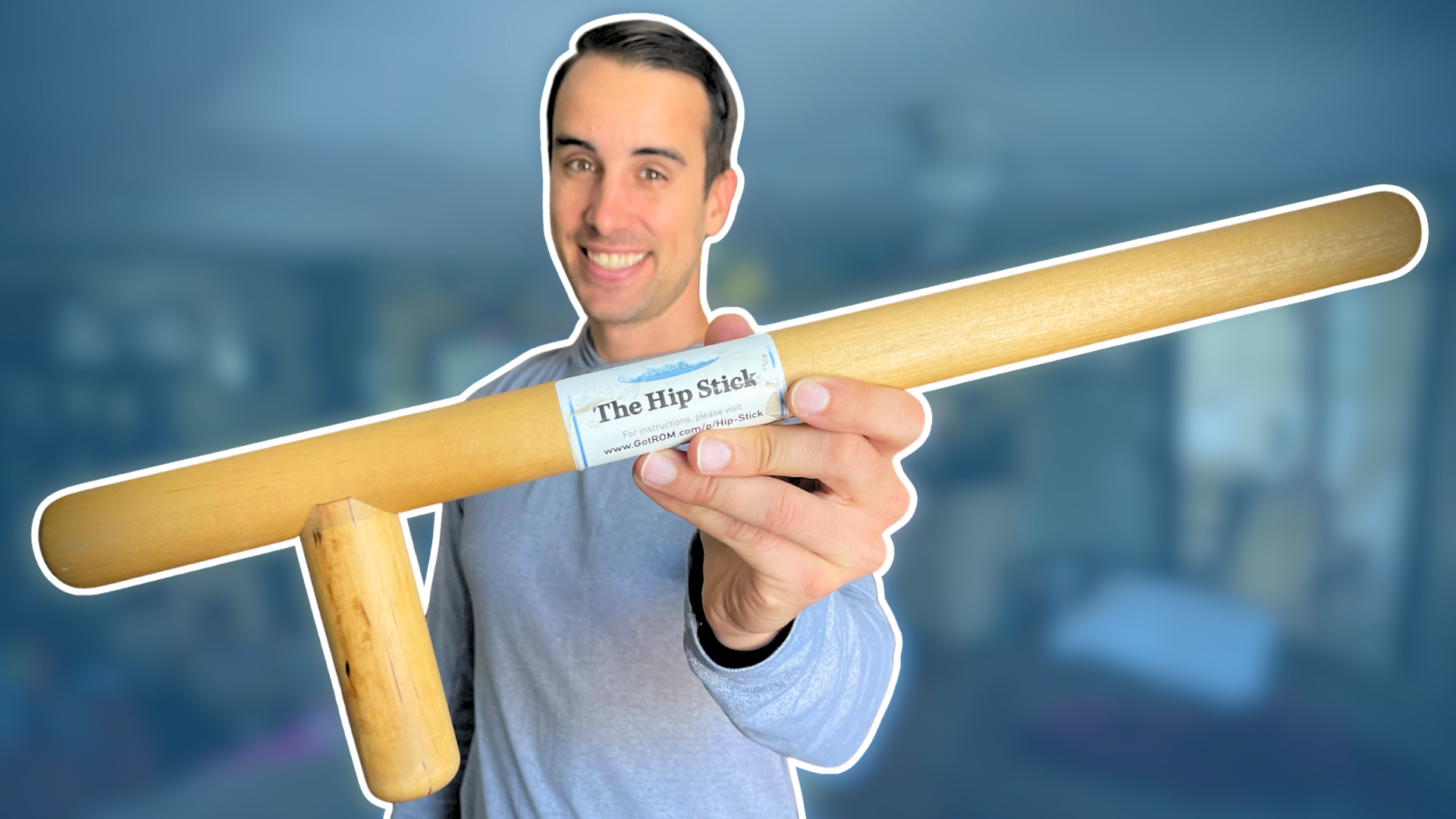
"Foam rollers don't work once you're beyond the very basics," Nelson says bluntly. "But the hip stick? That thing works. The small ball? Works."
The difference is depth and precision. Generic tools give you generic results. Specialized tools designed for deep, targeted tissue release give you actual change.
"It's painful," Nelson admits. "But it works. Most massage tools aren't designed to go that deep, probably because people avoid things that hurt. But if you're in severe pain anyway, you need something that actually addresses the problem."
4. Consistent Video Analysis and Feedback
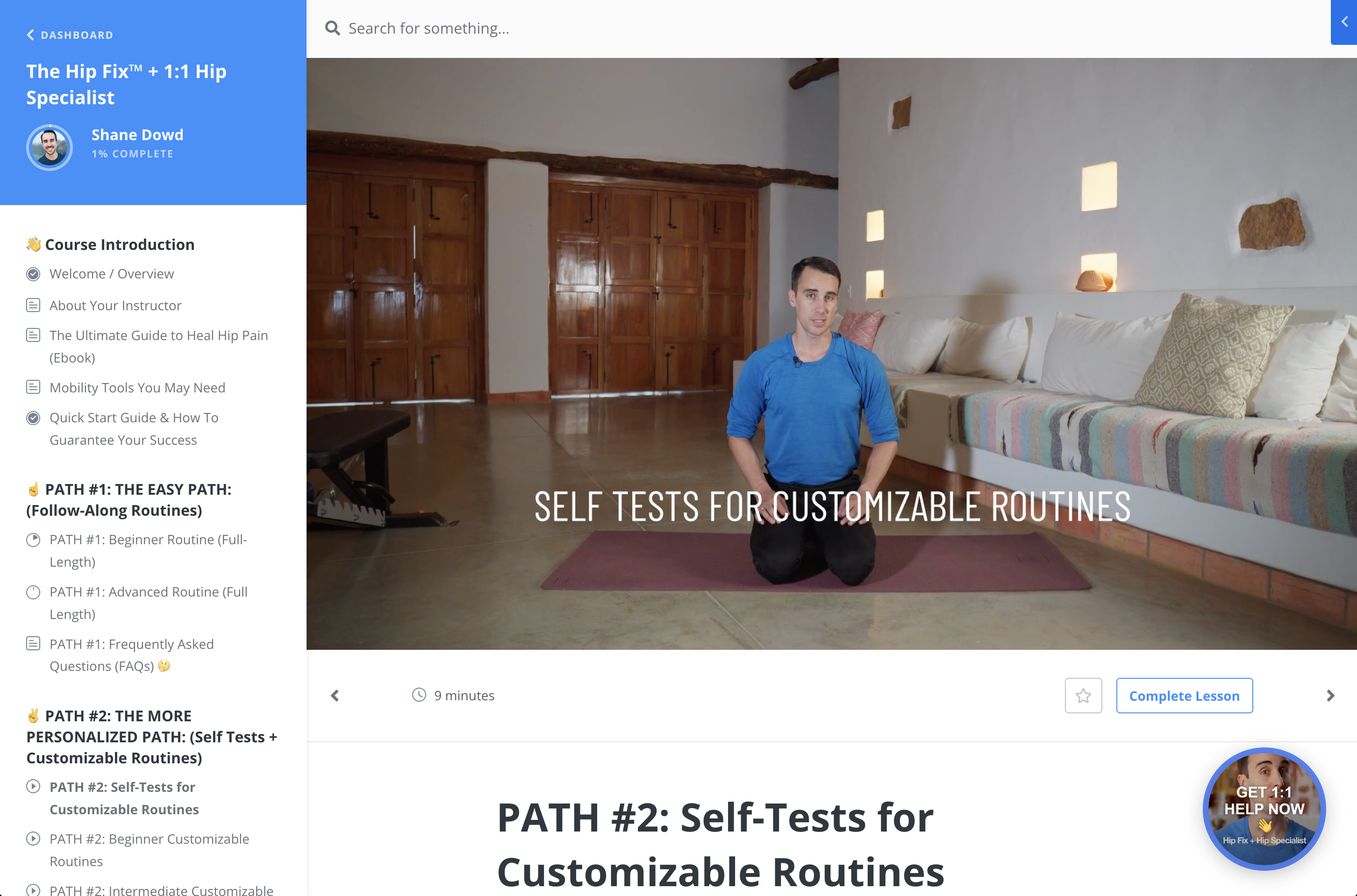
Over six months, Nelson sent hundreds of videos for feedback. Every exercise. Every lift. Every time something felt off.
“As things get difficult, you're going to mess it up and not even notice,” Nelson explains. “Taking videos lets you review them yourself, but having someone with expertise look at them and say, ‘You're doing this wrong’—that's the difference.”
He draws from martial arts again:
“In MMA, I'd have to smack someone in the head because they kept dropping their hands. In lifting, you don't realize your knees are caving until someone points it out. The simplest mistakes will destroy your progress. Coaching prevents all of that.”
5. Progressive, Adaptive Programming
Nelson’s program changed every single week based on his progress, his feedback, and the ongoing assessments from his Hip Fix coach.
“Things move over time,” Nelson notes. “I had abductor issues, then groin issues—now I don't. Now I have tight hamstrings because things shifted.”
Those ongoing adjustments made the difference.
You can't get that from a static program you buy once and follow forever. You need guidance that evolves as your body changes.
What Nelson Wishes He'd Known 12 Years Ago
"Stop guessing. Get assessed," Nelson says without hesitation. "That's the first step. If you don't know what's actually wrong—not what hurts, but what's functionally limited—you're just throwing darts in the dark."
Second: "Find the right expert. Not just any physical therapist. Not your chiropractor. Not your yoga teacher. Find someone who's lived it, who specializes in it, and who understands strength and performance."
Third: "Commit to consistency and communication. Send videos. Ask questions. Even if you think you're doing it right, you need that outside perspective."
And finally: "Think long-term. This isn't a 30-day fix. It's not a magic pill. It's athletic development. But it works, and it's worth it."
The Real Cost of Waiting
Nelson spent ten years trying to figure this out on his own.
Ten years of chiropractor visits at $150-200 per session.
Ten years of declining function, lost strength, sleepless nights, and frustration.
Ten years of his girlfriend watching him sleep on the floor because he couldn't lie in a bed without pain.
"If I'd found this five years ago, I would've saved so much time and suffering," Nelson reflects. "But I had to be in enough pain to force myself to change. Most people do."
The question isn't whether specialized coaching costs money.
The question is: What's the cost of NOT getting specialized help?
How many more years of pain? How much more strength lost? How many more nights sleeping on the floor? How many more activities you used to love that you can't do anymore?
"Getting a coach allows you to speedrun all of this," Nelson says. "In five years you might learn what you'd get in six months of actual coaching. Maybe. If you're lucky."
Where Nelson Is Today
Six months after starting, Nelson isn't "cured." He's not squatting 400 pounds yet. He still has work to do.
But he's not sleeping on the floor anymore. He's not waking up in agony every week. He's not standing at the bottom of stairs, negotiating with himself about whether he can make it up.
He's lifting. Training. Improving. And most importantly?
He's not getting worse anymore. He's getting better.
"I'm a happy customer," Nelson says simply. "I can see the path forward now. That's something I didn't have before."
For someone who spent a decade being told "you just have to live with it," that's everything.
Your Move: DIY or Done-With-You?
Nelson's story proves two things:
-
Chronic hip pain doesn't have to be permanent
-
The right approach makes all the difference
You have the same two options Nelson had:
Start with The Hip Fix™ Program (The DIY Path)
Take the first step on your own with The Hip Fix™ Program—step-by-step video instruction, specialized techniques, and progressive programming you can follow at your own pace.
It’s the TSR method (Tissue work, Stretching, Re-education) that gave Nelson his first real relief after years of failed treatments.
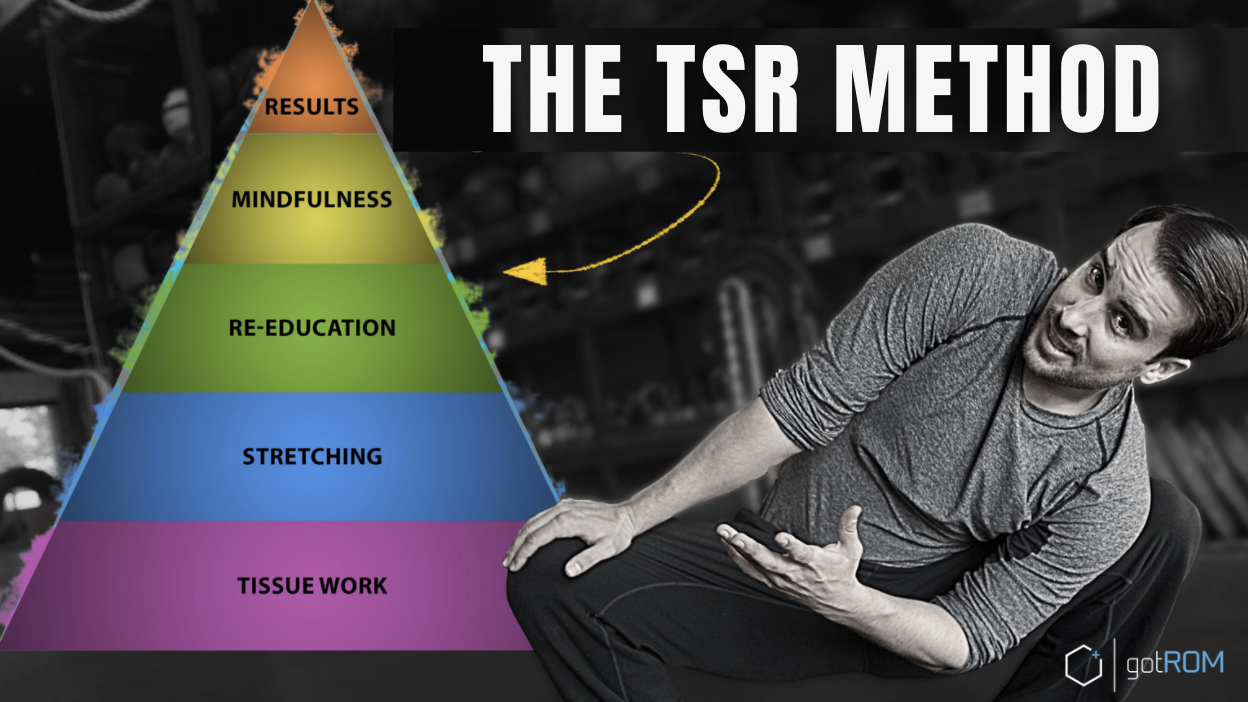
If you want extra guidance along the way, there’s an optional coaching add-on. A hip specialist can review short videos or messages from you and tell you exactly what to adjust, what to skip, and how to keep progressing—no guessing, no waiting weeks.
It’s the same program, now with support available if you want it.
The choice is yours.
You can keep doing what you've been doing—chiropractors, generic PT, YouTube videos, hoping something magically clicks.
Or you can do what Nelson did: Stop guessing. Get assessed. Work with an expert. And actually fix the problem.
"If you're not assessing, you're just guessing."
Nelson learned that the hard way. You don't have to.
👉 Start with the The Hip Fix™ Program and begin restoring your hips today.
About The Author

Shane Dowd, CES, CMP is the owner/founder of GotROM.com. He is also a sports performance & mobility coach specializing in injury prevention and flexibility for athletes.

Free download for this topic
The Ultimate Guide to Hip Impingement
How To Fix Hip Impingement Without Surgery
GET THE FREE EBOOK


