
Micro-Mindfulness: How Meditation Can Prevent Injuries
 By Shane Dowd , CES, CMP
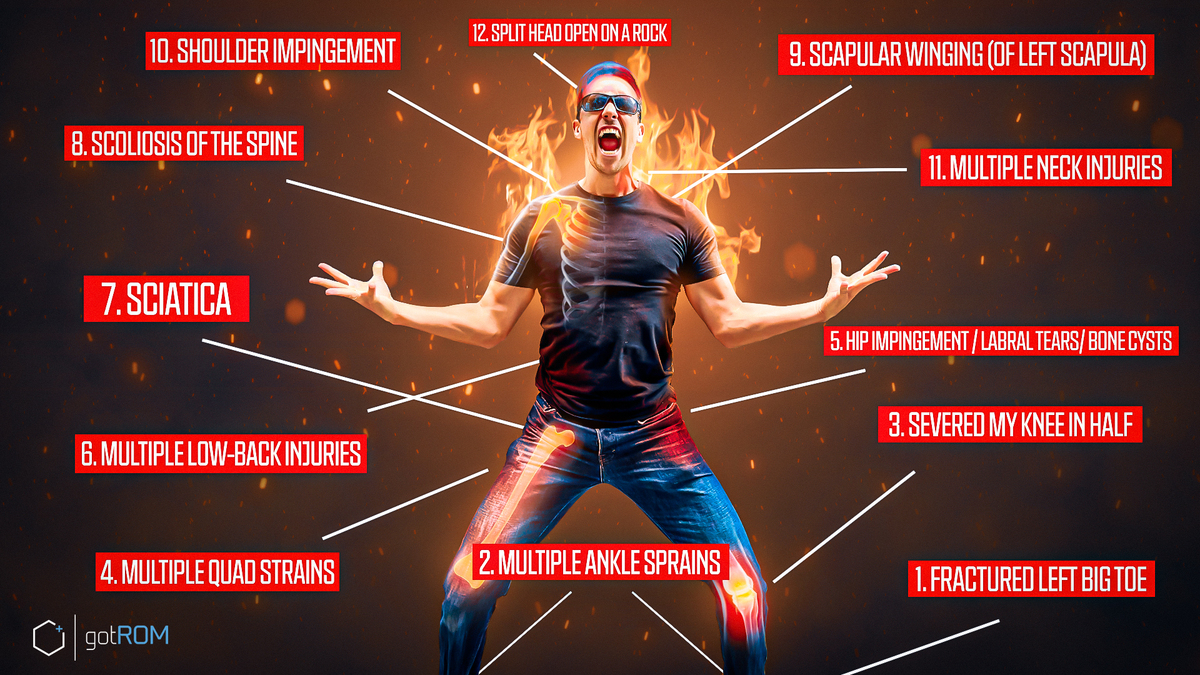
I have collected more injuries than I care to count over forty years of hard training.
And looking back honestly at almost every one of them, the injury itself was never really the beginning of the story.
It was the end of one I hadn't been paying attention to.
A tightness that had been building for weeks. A subtle wrongness in how a movement felt. A fatigue that was deeper than usual.
Signals that were there, clear as anything in hindsight, that I was too distracted or too driven to hear.
Pain whispers before it screams.
I just wasn't listening. Most athletes aren't.
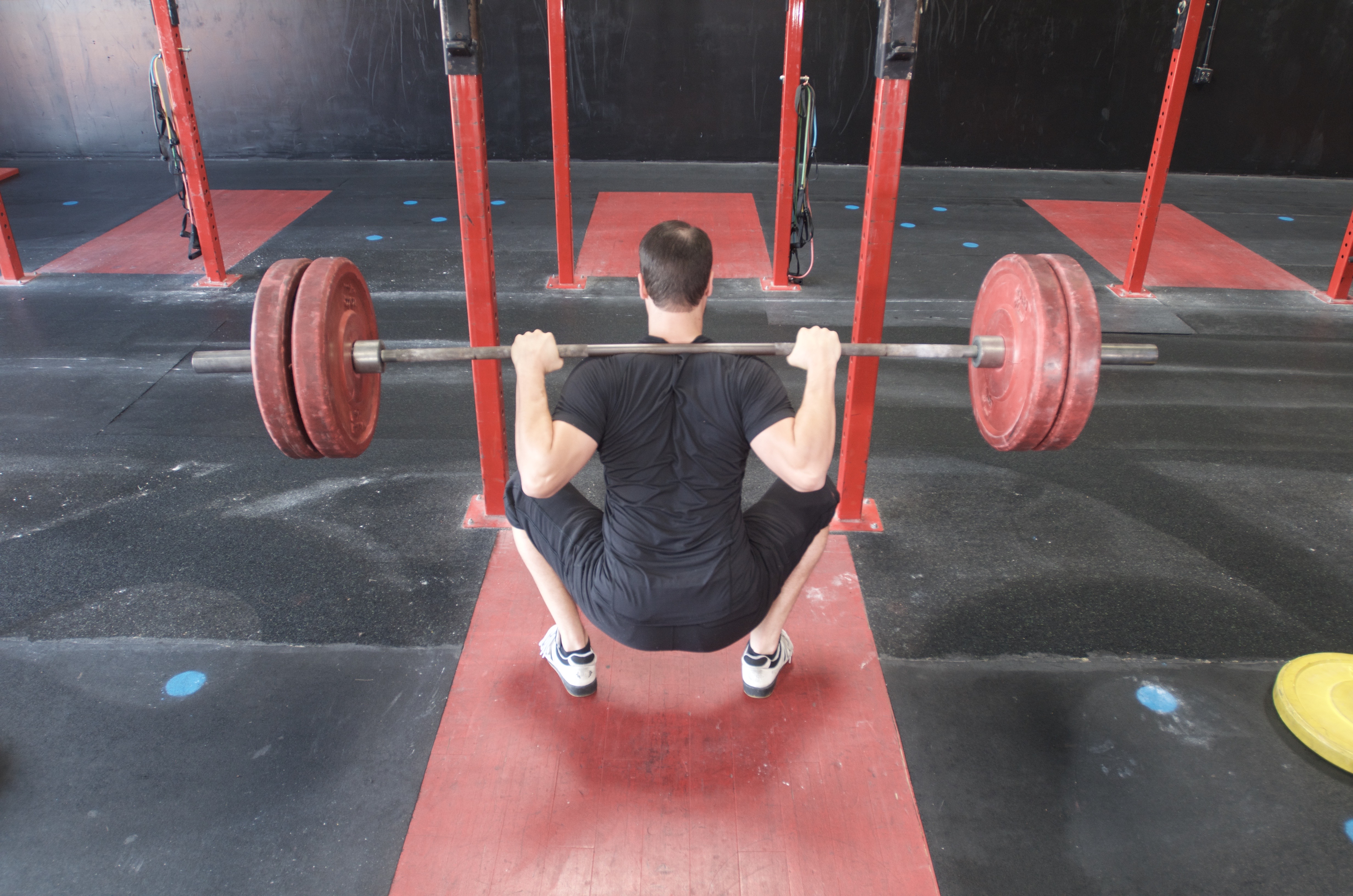
We're focused on finishing the workout, hitting the next goal, following the program, or pushing through whatever feels uncomfortable. And sometimes, without realizing it, we become so focused on what we're trying to accomplish that we stop paying attention to the body that's actually doing the work.
I've worked with thousands of people dealing with hip pain, from average Joes and Janes all the way up to celebrities, and one thing that consistently surprises people is how much mindfulness can matter.
They're expecting me to teach them a magic exercise or stretch that will make the problem disappear. And of course, the physical side matters. I believe in physics, biology, and biomechanics. You need to work on your tissues, mobility, strength, and movement.
But there's another factor that most people overlook.
You have to learn how to listen to your body.
That's where micro-mindfulness comes in.
Injuries Are Not Always Random
One of the most dangerous beliefs in training is that injuries just happen.
Wrong place. Wrong day. Bad luck.
Sometimes injuries do happen unexpectedly. But in my own experience, many of the injuries I've dealt with were preceded by smaller signals that I wasn't paying enough attention to.
Tissue stress accumulates. Movement patterns can deteriorate under fatigue. A joint can become irritated. Something that normally feels easy starts feeling slightly different.
The warning signs may be subtle enough that you can ignore them.
Until you can't.
For me, this became especially obvious because of my own history with femoroacetabular impingement, a labral tear, scoliosis, and all the other injuries I've dealt with over the years. I used to get caught in a frustrating cycle where I'd start feeling better, then have another setback, then start making progress again, only to get hurt once more.
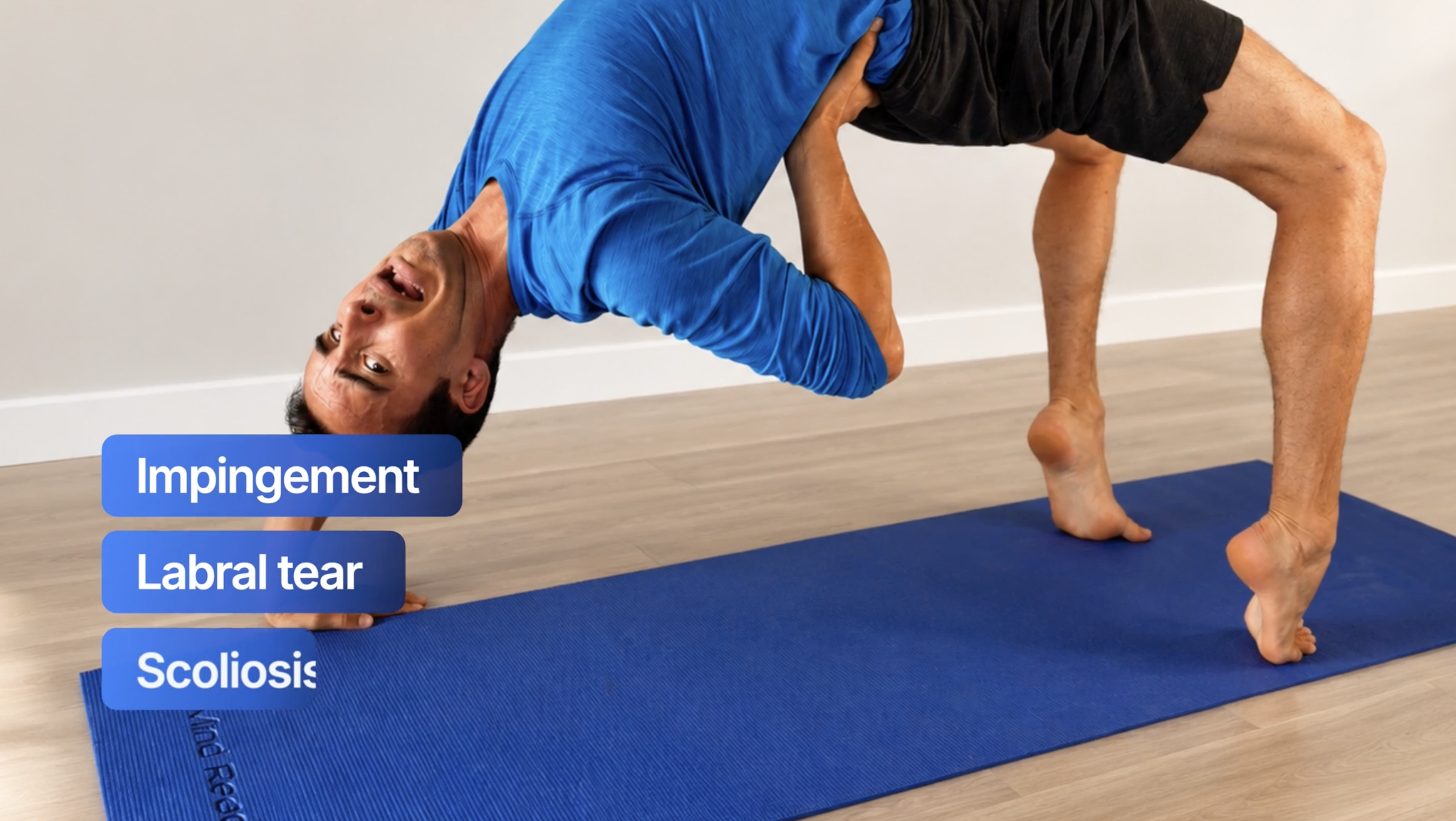
It felt like I was taking two steps forward and one step backward over and over again.
But as I became better at listening to my body, something changed.
The setbacks started getting smaller.
Then smaller again.
And eventually, my progress became much more consistent.
That's one of the reasons I believe mindfulness has such an important place in athletic training.
It's not about sitting on a cushion and becoming enlightened. It's about developing the practical skill of noticing what's happening in your body before a small problem becomes a much bigger one.
What Is Micro-Mindfulness?
Micro-mindfulness isn't necessarily a long meditation session.
It's a series of brief, deliberate check-ins woven into things you're already doing.
Think of them as small pauses that ask one simple question:
What is my body telling me right now that I've been too busy to notice?
That's it.
You don't need another complicated routine. You don't need to completely change your schedule.
You simply need to create small moments where you stop, pay attention, and notice what's happening inside your body.
One of the things that happened when I started practicing Vipassana meditation was that my internal awareness improved dramatically. I spent periods meditating for long stretches and even went on extended meditation retreats. Over time, I developed a much stronger sense of what was happening inside my own body.
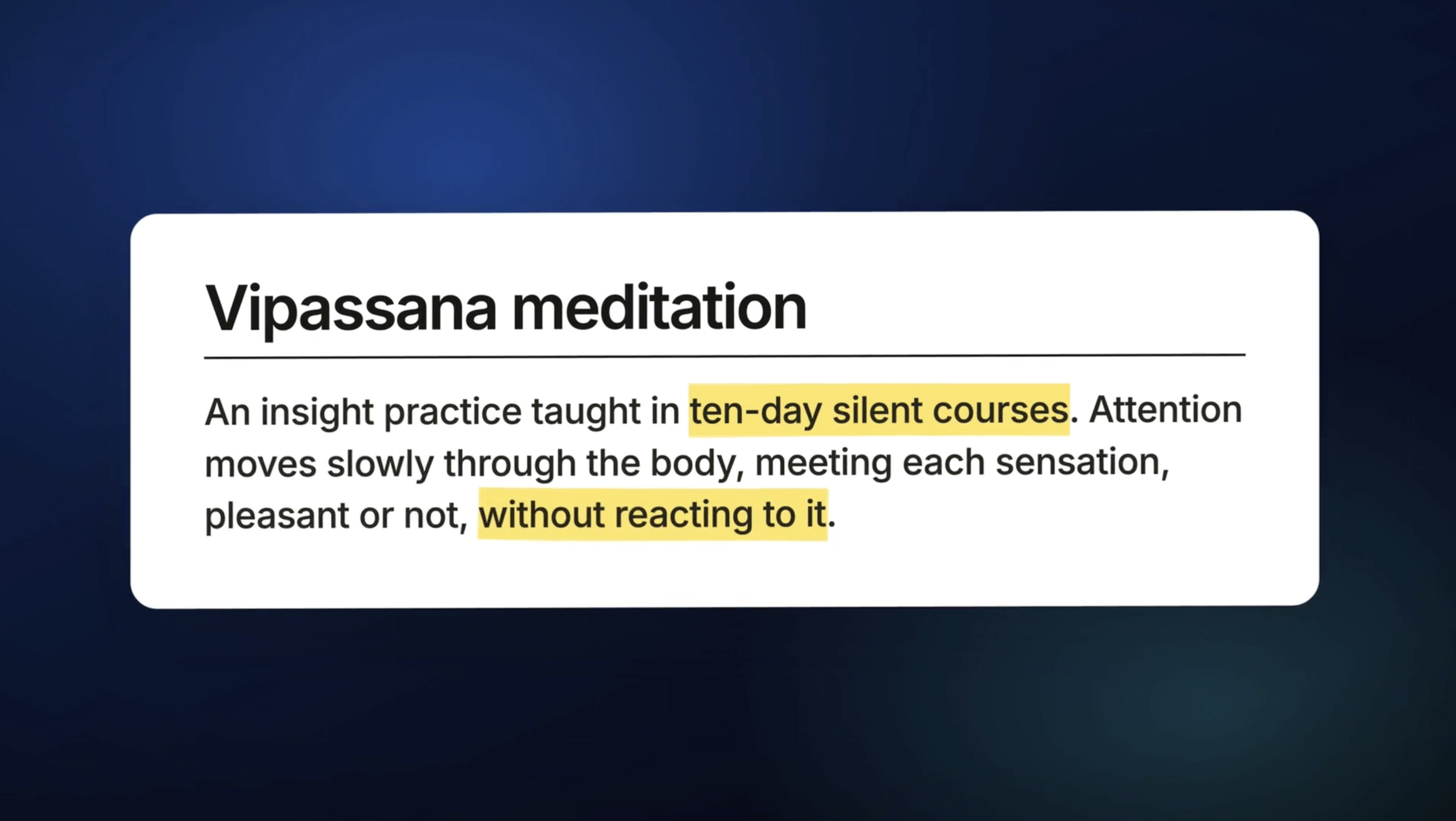
You could call it interoception. I think of it more simply as developing a better internal awareness or a better "inner IQ."
The important part wasn't that I became better at sitting still.
It was that I became better at noticing.
And that skill started carrying over into training.
Three Micro-Mindfulness Habits Worth Trying
1. The Morning Body Scan
One simple practice is a body scan.
You can lie down for five minutes in the morning and slowly bring your attention from your feet all the way up to your head. You're not trying to diagnose yourself or fix anything. You're simply noticing what you feel.
Where is there tension?
Does one side feel different from the other?
Is there a joint that feels unusually stiff?
Is something different today compared with yesterday?
You can also do this for a few minutes in the evening before bed.
The goal is to establish a baseline of awareness. When you regularly pay attention to how your body feels, subtle changes can become easier to recognize.
2. The Between-Sets Check-In
Another simple practice is to use the time between sets as a quick body check.
Instead of immediately reaching for your phone, take one breath and ask yourself:
How does my body feel right now?
Is your form holding up, or are you starting to compensate because you're fatigued? Does the movement still feel good? Is something starting to feel irritated? Are you recovering enough for another hard set, or are you simply following the program because it says it's time to go again?
It only takes a few seconds.
But if you do this throughout an entire training session, you suddenly have much more information about how your body is actually responding to the work.
That's valuable information.
3. Practice Mindfulness During Everyday Habits
Micro-mindfulness doesn't have to happen during a workout.
You can attach it to things you already do every day.
For example, instead of watching YouTube, Instagram, TikTok, or television while you eat, try having a meal without distractions once in a while. Pay attention to the sensations in your body as you eat.
Notice your breathing.
Notice your posture.
Notice how you feel.
You can also take a few moments after brushing your teeth to notice tension in your body, or spend a minute checking in with yourself before you start your car after a workout.
These moments may seem insignificant.
But that's the point.
You're not trying to create another huge habit that takes an hour every day. You're creating tiny moments of awareness that can stack up over time.
Week after week.
Month after month.
Year after year.
What Changes When You Start Listening?
The hip tightness that might eventually become a bigger problem may get noticed while it's still just a tightness.
The shoulder irritation that you normally ignore may get noticed while it's still minor.
The fatigue that could lead to a sloppy training session may become obvious before you start pushing heavy weight.
You may also begin noticing that certain positions or movements consistently feel different before you experience a full-blown setback.
This doesn't mean every uncomfortable sensation is a warning of an injury.
Your body will feel different from day to day. You're going to have stiffness, fatigue, soreness, and occasional aches. The goal isn't to become hyper-focused on every sensation or afraid of movement.
It's to develop enough awareness to recognize meaningful changes.
Your movement quality can improve too.
Not necessarily because you're thinking harder about every technical detail, but because you're present enough to notice when something feels different.
The body is constantly giving you information.
The challenge is that most of us aren't very good at receiving it.
We're thinking about the next set.
We're checking our phones.
We're thinking about work.
We're focused on the number on the bar.
We're trying to finish the workout.
Micro-mindfulness gives you a chance to reconnect with the body that's actually performing the movement.
This Is What I Wish Someone Had Taught Me Earlier
Looking back at forty years of training, this is one of the things I wish someone had taught me much earlier.
Not another complicated training program.
Not another supplement.
Not another secret exercise.
I wish I had learned the simple skill of listening to my own body before it had to get my attention through an injury. Because when you train for decades, you start to recognize patterns.
You notice that a movement that normally feels easy suddenly feels restricted.
You notice that one side doesn't feel the same as the other.
You notice that you're unusually fatigued.
You notice that a familiar ache is behaving differently than it normally does.
None of those things automatically mean an injury is coming. But they are information.
And the better you become at noticing that information, the better equipped you are to make intelligent decisions about your training.
For me, mindfulness didn't replace the physical work.
I still needed tissue work.
I still needed stretching and mobility.
I still needed strength training and re-education.
Those things are essential. But mindfulness helped me become more aware of how my body was responding to them.
That combination changed the way I approached my injuries.
Small Moments Can Add Up
You don't need to meditate for two hours a day to benefit from becoming more mindful.
If that's something you want to explore, great. Meditation can be a powerful practice. But you can also start much smaller.
Five minutes in the morning.
Five minutes before bed.
A few seconds between sets.
A distraction-free meal.
A brief body scan before you start your workout.
These tiny moments may not feel like much when you do them once. But habits compound. The more consistently you practice paying attention, the more familiar you become with your own baseline. And when you know your baseline, changes become easier to recognize.
That's the real value of micro-mindfulness. You're not trying to predict every injury. You're trying to stop being surprised by your own body.
Pain Is Information. Learn to Listen.
Mindfulness isn't a replacement for strength training, mobility work, recovery, or professional guidance when you need it. It's another tool. A way to become more aware of the body you're already training.
At GotROM, we take a similar approach to pain and movement.
We don't just want to give you a list of exercises and send you on your way. We want you to understand your body, build its capacity, improve your movement, and become more aware of how your body responds along the way.
Our programs are designed to address pain and injury from head to toe, including the foot, knee, hip, low back, spine, shoulder, neck, and beyond.
Whether something is already bothering you or you're simply trying to stay active for the long term, the goal is the same:
Build a body you can keep using.
The best time to pay attention to a pain signal is when it's still a whisper.
And as always, remember that you're just one step away from building (or rebuilding) your perfect body.
About The Author

Shane Dowd, CES, CMP is the owner/founder of GotROM.com. He is also a sports performance & mobility coach specializing in injury prevention and flexibility for athletes.

Free download for this topic
How To 10X Your Flexibility
An Insider's Guide to Accelerated Gains
GET THE FREE EBOOK


