
Physical Therapy Didn't Fail You — The Medical System Did
 By Shane Dowd , CES, CMP
In the past two years, I've talked to over a thousand people one-on-one on Zoom calls who are applying to work with us in our Hip Fix one-on-one coaching program. And one of the first things I ask them has started to reveal a disturbing pattern in how the medical system handles chronic pain.
It looks something like this...
The Six-Week Surgery Pipeline
The person comes to me with pain and I ask them,
"What have you tried to solve that?"
They tell me about massage, yoga, chiropractic, acupuncture. But here's where the pattern gets disturbing.
They go to the doctor when they have pain. The doctor writes them a prescription for some kind of physical therapy. Usually something that's covered by their insurance. Maybe not the best, but at least it's a physical therapist who can give them some symptom relief.
Then they try it for about four weeks. Maybe six weeks. Maybe maximum eight weeks. They get a tiny bit of relief, but it usually doesn't resolve the problem.
So they go back to the doctor and he says, well, conservative treatment has failed. It's time to schedule you for surgery.
Think about that for a second. Four to eight weeks of generic exercises and suddenly you're being told you need an irreversible surgical procedure on your body.
Complex Problems Don't Resolve in Six Weeks
Here's what you need to know. For complex hip issues, for shoulder issues, for most chronic pain problems, total symptom relief doesn't happen in two to four weeks. Not in six weeks. Not in eight weeks.
Sometimes several months is the natural history. It's the natural course that it takes to completely resolve these problems.

So if you go do a couple band exercises and some glute bridges, they put you on the recumbent bike, they slap a hot pack on you, and after four weeks you're not fixed, that doesn't mean conservative treatment failed. It means you barely started conservative treatment.
When the doctor says it's time to pop you into surgery, you should pause.
You should ask, well, you know, I'm trending in the right direction. I'm getting a little bit of relief. Can we at least try it a little bit longer?
It's not always necessarily in the doctor's best interest to do that. Because they'll make more money if they get you on the surgery table. But at the very least, you're taking control into your own hands and saying, let me first max out the non-surgical options before jumping into a more invasive, more expensive, non-reversible thing that I'm doing to my body.
Not All Doctors Do This
I want to be clear about this.
I'm not saying that I'm against all doctors.
I'm not even saying that all doctors do this. There are some doctors that really look for what are the best non-surgical options available, and ask can we fully, fully, fully exhaust those before we go to surgery.
Those are the good ones. The ones who see surgery as a last resort, not a six-week countdown.
I'm Not Anti-Surgery. I'm Anti Premature Surgery.
So if you're someone dealing with a hip issue or a shoulder issue or any chronic pain problem, here's what I would invite you to consider.
One, do PT longer if you can. Six to twelve months, not six to eight weeks.
Real tissue adaptation and motor pattern change takes time. You can't rebuild stability and mobility in a month and a half.
Two, look for specialized PT. Look for hip specialists or shoulder specialists rather than just whoever your insurance covers.
Because you could spend weeks and months and years like I did, spending about $26,000 over five years trying run-of-the-mill generic PT covered by insurance.
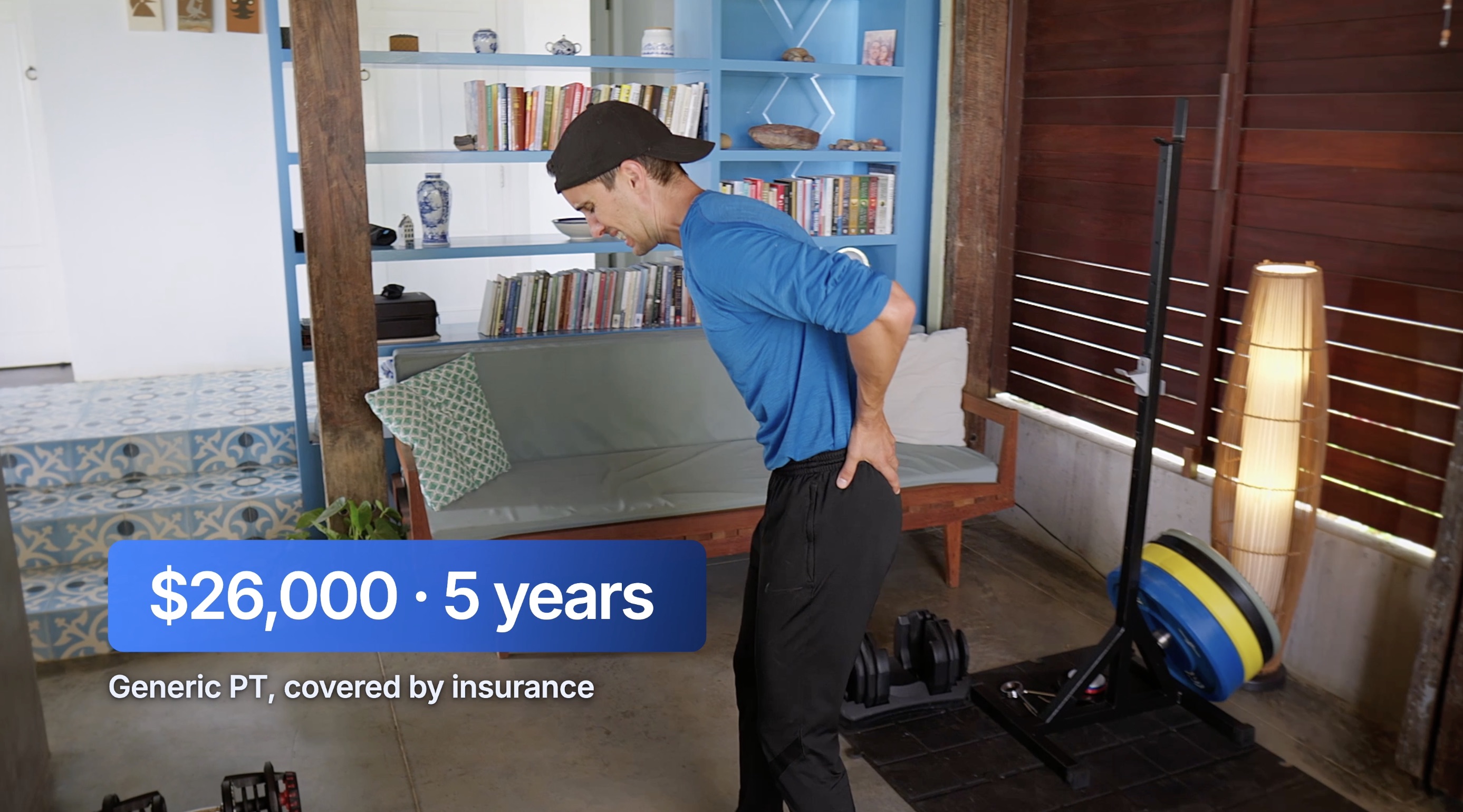
It wasn't until I found a hip specialist PT and gave it six to twelve months of exploring all the things he was teaching me that I fully came out of my hip impingement, my labral tear, my bone spurs, and all the other issues I had.
Six to twelve months with the right specialist versus six weeks with whoever your insurance pays for. That's the difference between keeping your hip and going under the knife.
What Conservative Treatment Actually Looks Like
Real conservative treatment doesn't mean doing some band exercises for a month and calling it quits. It means working with someone who specializes in your specific condition. Someone who can design a program tailored to your body, your limitations, your goals. Someone who knows what good progression looks like over months, not weeks.
It means giving your body enough time to actually adapt. Tissue takes time to heal. Movement patterns take time to change.
Strength and stability take time to build. You can't rush biology because your insurance company only approved eight sessions.

And it means being honest about whether you're trending in the right direction.
Are you getting worse? Then maybe surgery makes sense. But are you getting a little bit better each month? Then you haven't failed conservative treatment. You just need more time.
The Real Failure
Physical therapy didn't fail you.
The system that gives you six weeks with a generalist and then rushes you into surgery failed you.
The insurance structure that prioritizes quick fixes over actual healing failed you. The financial incentives that reward surgery over rehabilitation failed you.
But you don't have to accept that failure as final.
If you're dealing with pain right now and a doctor is telling you conservative treatment has failed, ask yourself this:
Did I actually work with a specialist who knows my specific condition?
Did I give it six to twelve months of intelligent, personalized rehabilitation?
Am I still trending in the right direction even if I'm not fully healed yet?
If the answer to any of those questions is no, you haven't exhausted your non-surgical options.
You've just exhausted the options your insurance company was willing to pay for in the timeline your doctor was willing to wait.
There's a difference.
Where to Start
If you're dealing with complex hip pain and you've been told that conservative treatment has failed, don't assume you've run out of options. Make sure you've actually had the opportunity to follow a specialized, structured approach for long enough to see what your body can do.
That's exactly what we help people do at GotROM.
The Hip Fix™ Program gives you a structured, step-by-step approach to addressing hip pain, mobility, and strength on your own, so you can stop jumping from one random treatment to another and start following a system.
And if you want more personalized guidance, you can add one-on-one coaching to your program. You'll have access to a Doctor of Physical Therapy who can help you understand your specific limitations, make adjustments, and keep you progressing without constantly second-guessing what you're doing.
You don't have to rush into surgery just because six weeks of generic treatment didn't solve the problem.
Start with The Hip Fix™ Program and take the next step toward getting your hips moving better.
About The Author

Shane Dowd, CES, CMP is the owner/founder of GotROM.com. He is also a sports performance & mobility coach specializing in injury prevention and flexibility for athletes.

Free download for this topic
The Ultimate Guide to Hip Impingement
How To Fix Hip Impingement Without Surgery
GET THE FREE EBOOK


