
Stretching vs. Trigger Point Therapy: Which Method Best Relieves Muscle Tension?
 By Shane Dowd, CES, CMP
Stretching vs. Trigger Point Therapy: Which Method Best Relieves Muscle Tension?
Two popular methods for relieving muscle tension often come to mind: stretching and trigger point therapy. But which one is truly the best?
In this video, we'll dive into the key differences between these two approaches, reveal how they complement each other, and explain how combining them with re-education (strengthening) through our TSR approach can triple your results.
Stretching: Releasing the Least Tight Fibers First
Think of your muscles as a rope with several tight knots. Stretching gently pulls on the rope, gradually loosening the outermost fibers—the least tight fibers.
This improves muscle health and flexibility and reduces tension, but it doesn’t always immediately affect the tightest knots.
And it makes sense, right?
If a muscle has a knot stuck right in the middle of it, it won’t stretch and lengthen uniformly when you tug on it.
It might lengthen, but not as easily or comfortably as it could.
Trigger Point Therapy: Targeting the Tightest Fibers First
This is where Trigger point therapy comes in. Trigger point therapy is like directly working on those tightest knots in the rope. It zeroes in on the strongest points of tension within a muscle—the trigger points—where tension is most concentrated.
According to Dr. Janet Travell, co-founder of Trigger Point Therapy, "Myofascial trigger points are hyperirritable spots in skeletal muscle that are associated with a hypersensitive palpable nodule in a taut band. These are the primary sites of pain and dysfunction."
Source: Travell, J. G., & Simons, D. G. (1983). Myofascial Pain and Dysfunction: The Trigger Point Manual.
Trigger point therapy releases these tight fibers first by applying pressure directly to them, providing relief where it’s needed most.
How They Complement Each Other
While stretching and trigger point therapy work differently, they’re not mutually exclusive—in fact, they complement each other beautifully.
Imagine starting with trigger point therapy to release the tightest muscle fibers, then stretching to maintain that release and improve overall flexibility.
It’s kind of like bubble gum; you gotta’ chew it up to stretch it easier!
You can quickly and easily verify this for yourself. For example, try stretching your quads using the classic “wall quad stretch” and notice how it feels.
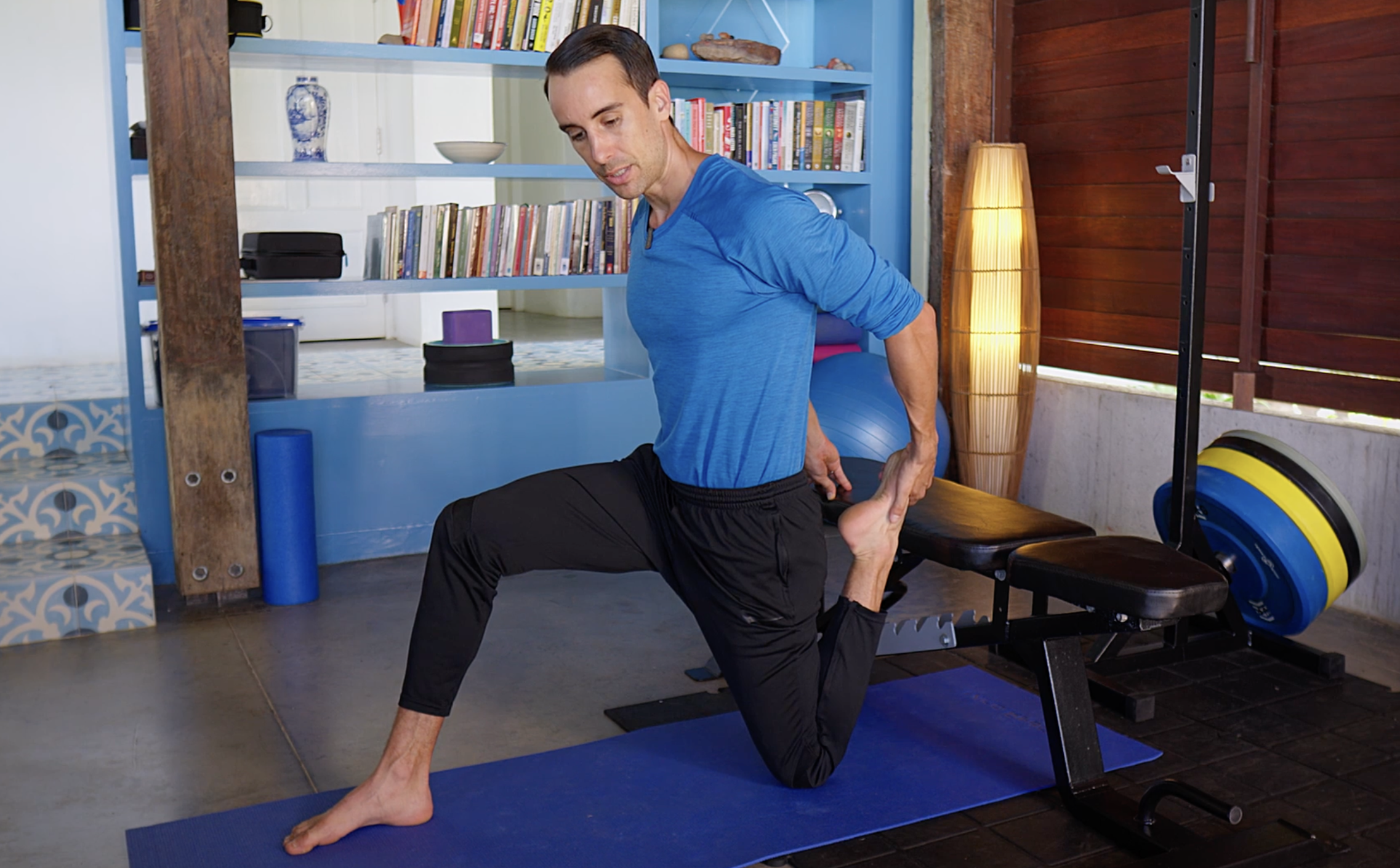
Then, do a trigger point style massage on your quads with a softball for three to five minutes.
Finally, retest your quad stretch.
Did it feel easier, and did you have more range of motion? Voila! You just learned how trigger point therapy plus stretching is better than either alone.
The Power of TSR: Tissue Work, Stretching, and Re-Education
While the purpose of this article was only to compare stretching and trigger point therapy, to maximize your results, we need to add one more element: re-education or strengthening.
This is where our TSR approach comes into play. TSR stands for Tissue Work (like trigger point therapy), Stretching, and Re-Education (strengthening). When you incorporate all three elements, you’re not just relieving tension—you’re building muscle strength and resilience, which helps prevent injuries and improves overall mobility.
In my 14+ years of experience as a strength coach, massage therapist, and flexibility teacher, helping over 30,000+ people, I’ve consistently found that combining tissue work, stretching, and strengthening can achieve up to three times better results than with any single method alone.
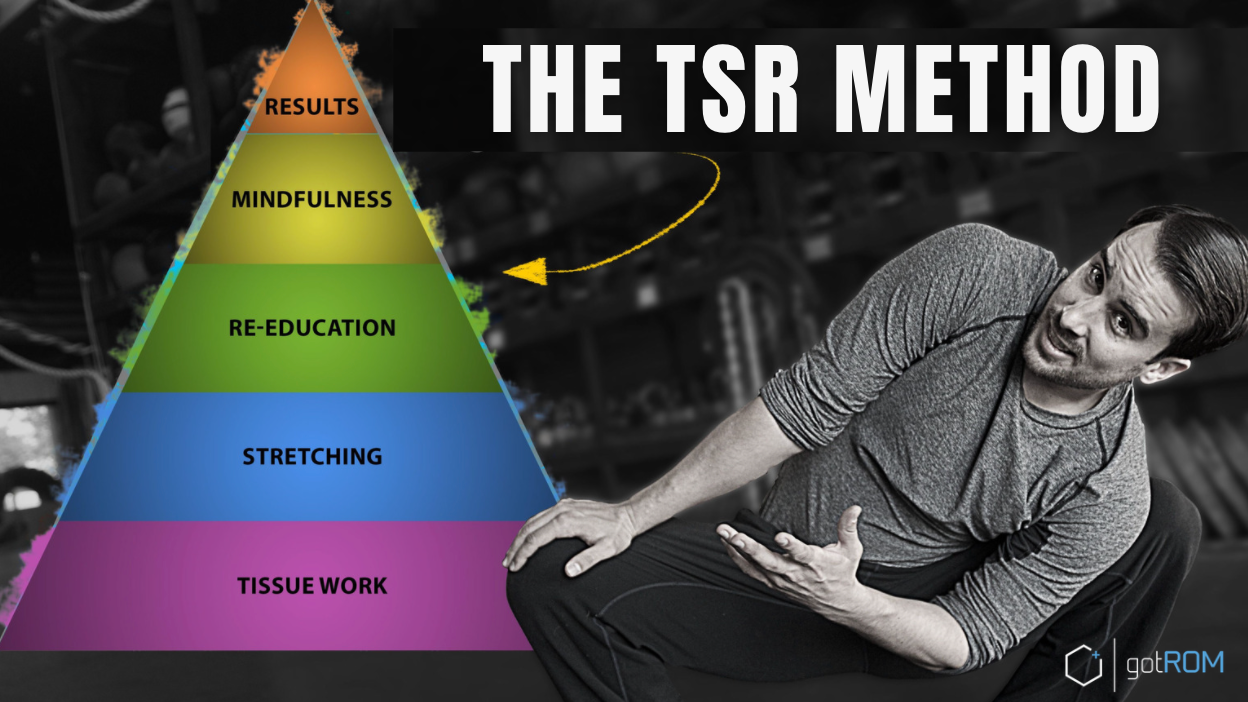
In fact, when I was a strength coach, I was stiff as a board. Then, when I started stretching and doing Yoga, I got a little bit more flexible. But it wasn’t until I added the trigger point style massage (and a few other techniques) that my flexibility and mobility really reached new levels.
This 3-pronged holistic approach ensures that your muscles are flexible, strong, and well-balanced, giving you the best possible foundation for long-term health and performance.
Ready to Triple Your Results?
Take it from our client, Janet, an avid mountain biker who struggled with chronic muscle tension for years.
Before she found us, she wrote this:
“I have always been a very active person. Almost three years ago, I started experiencing this dull, stiff pain in my right hip. It started to interfere with my everyday life. Sleeping became difficult. Driving my car just pushing the accelerator didn't feel natural anymore. My hip pain was all I could think about. It was taking over my life.”
After incorporating the TSR approach, she experienced a massive improvement in her flexibility and significantly reduced her pain levels.
She said:
“I began watching your videos on tissue work and stretching. I immediately felt relief. I have been doing some kind of stretching or tissue work every day for the last year, and I have seen a major breakthrough! I tell everyone about you. Seriously, Shane, you rock! - Janet M.
The bottom line is this: If you want to improve your flexibility and muscle health, our Flexibility University course is the perfect do-it-yourself curriculum. It includes the best of stretching, trigger point therapy, and strengthening exercises to help you achieve maximum results on your own.
If you’re dealing with pain, recurring issues, or want a more structured path to fixing your hips, The Hip Fix Program is the next step. It’s our guided system designed to help you reduce pain, restore movement, and build strong, resilient hips — and it’s also the foundation if you decide to upgrade to 1:1 coaching later on.
Whether you’re dealing with chronic pain or just want to get more flexible, we’re here to help you every step of the way.
As always, remember that you’re just one step away from building (or rebuilding) your perfect body.
About The Author

Shane Dowd, CES, CMP, is the owner/founder of GotROM.com. He is also a sports performance & mobility coach specializing in injury prevention and flexibility for athletes.

Free download for this topic
The Ultimate Guide to Hip Impingement
How To Fix Hip Impingement Without Surgery
GET THE FREE EBOOK


