
The Lifelong Athlete Mindset: The One Shift That Changes Everything
 By Shane Dowd , CES, CMP
There is a photograph of my body that stops people cold.
It is a simple image. An outline of a human figure. And on that figure, marked in what looks like flames, are the locations of every significant injury I have sustained across forty-plus years of hard athletic training.
A fractured toe. A severed knee. A hip labral tear. Scoliosis. Sciatica. Multiple shoulder and ankle impingements. And more, each one layered on top of the last across decades of pushing harder than my body could sustain.
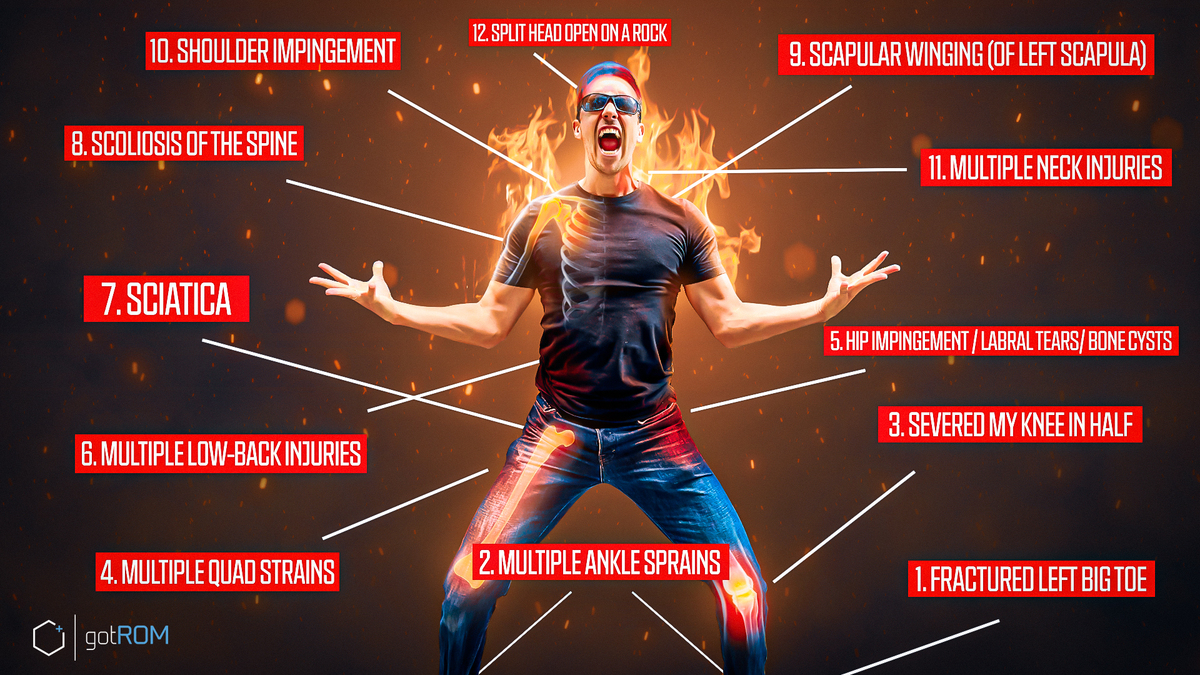
When people see that image, the reaction is always the same. A sharp intake of breath. A long pause. And then, almost always, the same question: how are you still moving?
The answer is not physical. Or rather, it is not only physical.
The answer starts in the mind, with a shift in identity that took me years to make and that I now believe is the most important thing I can pass on to any athlete navigating their own accumulation of setbacks.
The Athlete You Used to Be
In my teens and twenties, I was serious.
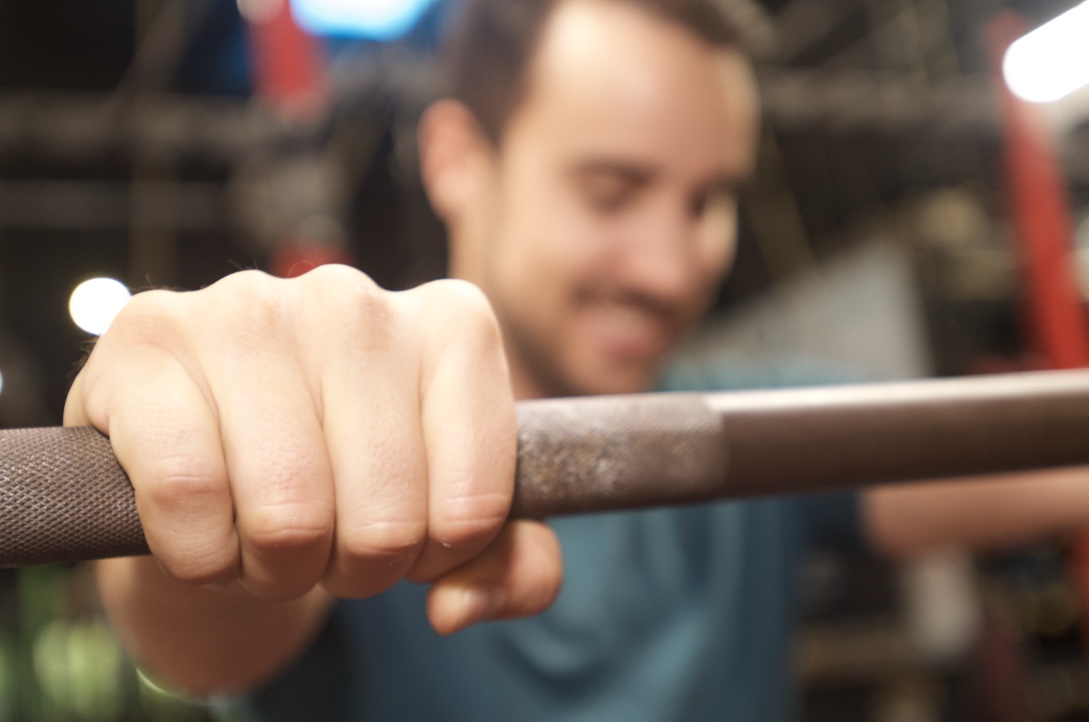
I played high-level soccer and competed in college. I trained alongside Olympic athletes, national-level strongman competitors, and Olympic weightlifters. Pushing hard was not just a strategy. It was my identity. It was how I understood myself in relation to the world.
And then, gradually and then all at once, that version of me became unsustainable. The injuries compounded. Each one left a residue that made the next one more likely.
The body that had absorbed so much for so long started sending signals I could no longer ignore. And somewhere in the middle of all of that, I had to face a loss that nobody in the gym ever talked about: the loss of the athlete I had been.
This is the grief that lives underneath most of the physical struggles I see in the people I work with. Not just the pain. Not just the reduced performance. The identity crisis of being someone who defined themselves through athletic achievement and now cannot train the way they used to.
The gap between who you were at twenty-five and who you are now. The quiet, persistent feeling that the best version of your athletic self is behind you.
That feeling is one of the most common and least discussed mental blocks in all of sport. And until it gets named and addressed directly, no amount of physical rehabilitation will fully work.
Because you cannot rebuild a body that your mind has already written off.
Which is why the most important work I ever did was not in the gym. It was in how I learned to think about myself as an athlete.
The Shift That Changed Everything
What I had to learn, slowly and painfully and through more setbacks than I care to count, is that competitive athlete and lifelong athlete are not the same identity. And the transition from one to the other is not a demotion. It is an evolution.
The competitive athlete measures success against opponents, against personal records, against an external standard that someone else defined.
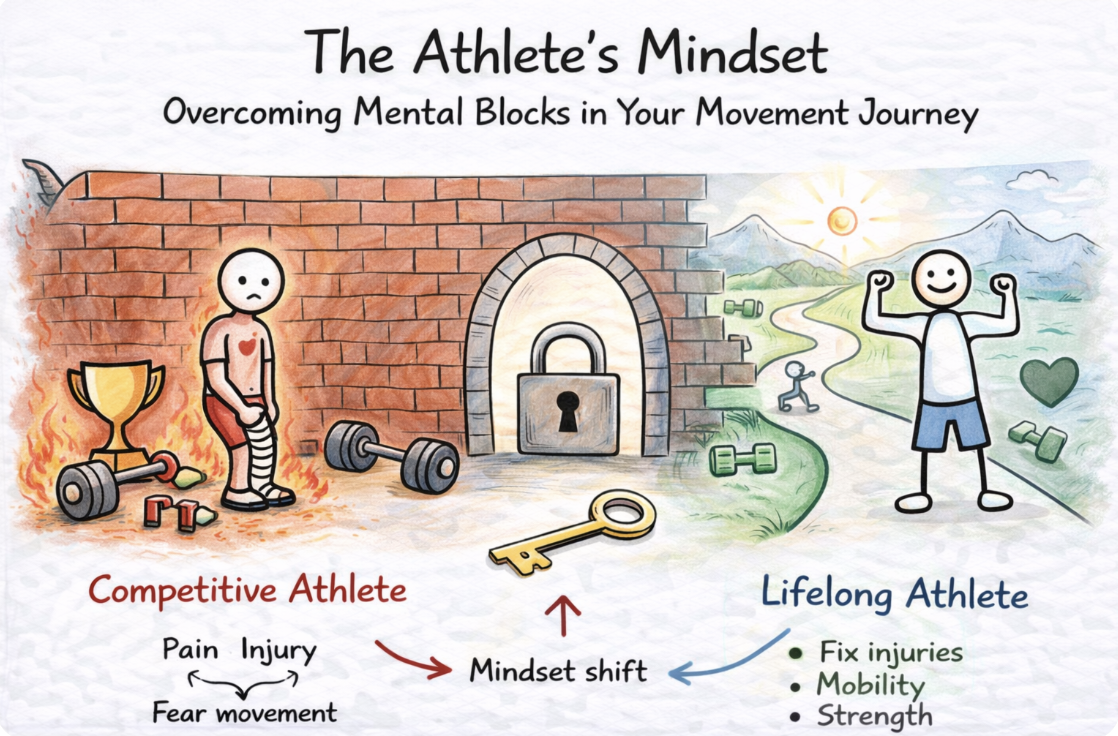
The lifelong athlete measures success against a single question:
Am I still moving? Am I still in the game? Am I taking care of this body, the only one I will ever have, in a way that lets me keep doing what I love for the rest of my life?
That shift, from competition as the highest value to longevity as the highest value, is what saved me. Not just physically. In every sense that matters.
It also forced me to look honestly at something I had been ignoring for years.
In my early twenties, despite all my training, I had almost no mobility. None. And that immobility was the hidden driver behind most of my injuries.
The moment I started taking mobility seriously, the major injuries stopped. Not immediately. Not without work. But the trajectory changed in a way that nothing else had managed to change.
I had been training hard my whole life. I had never been training smart. And the proof of that was written all over my body, in every mark on that burning figure, every injury that did not have to happen the way it did.
The Body on Fire
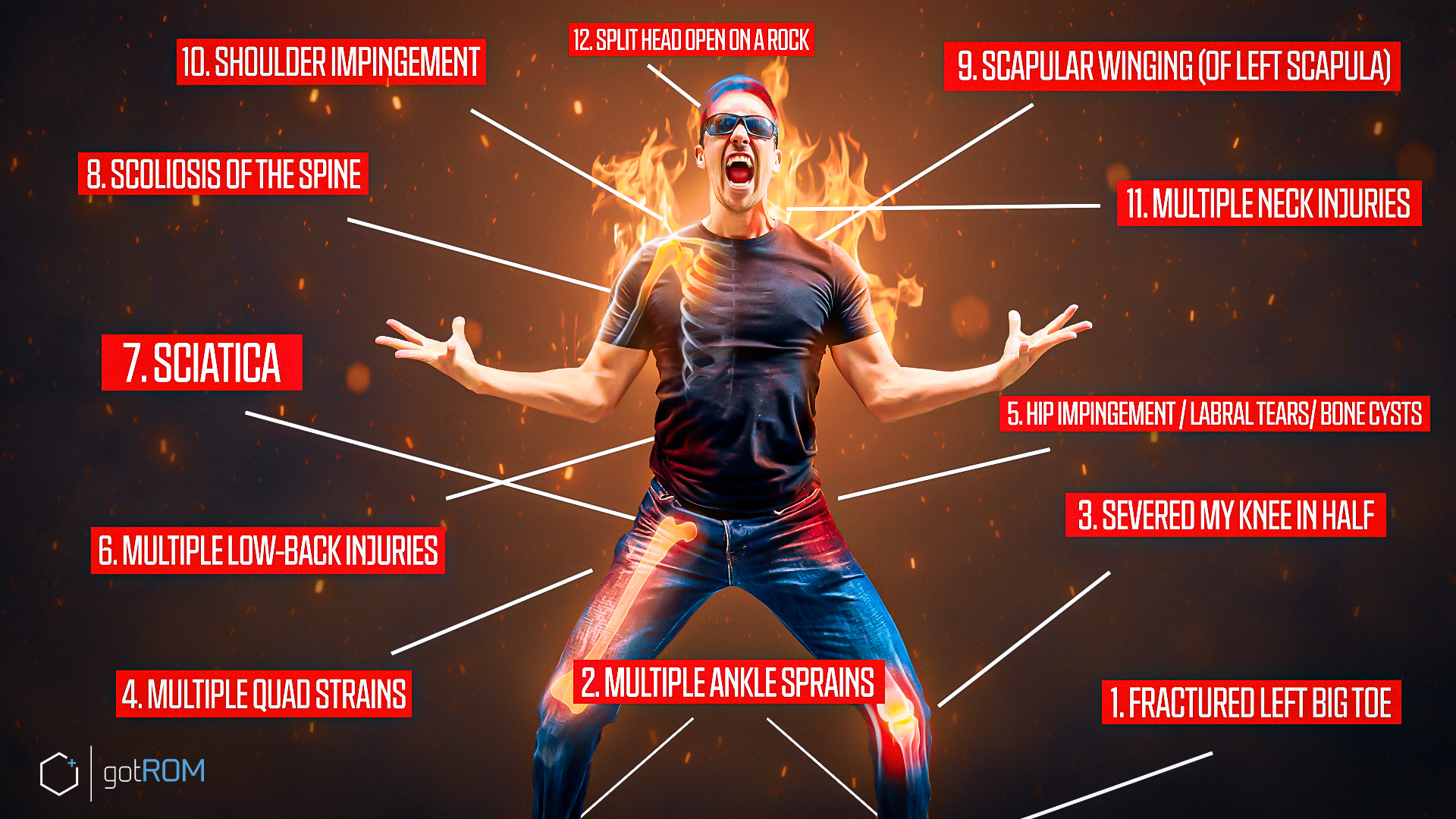
I want you to look at that image again.
Every mark on that figure represents a moment of pain, of limitation, of wondering whether this was the one that would end it. Taken together, they tell a story that could easily be read as a story of decline. A body used up by the demands placed on it.
But that is not how I read it anymore.
The hip impingement was the one that cracked everything open. I had been training hard for over twenty years at that point, and I genuinely believed I understood my body. The impingement told me otherwise.
It forced me to go deeper than I had ever gone into how a joint actually works, what it needs to stay healthy, and what happens when you load it in patterns it was never designed for.
That investigation changed everything. It was the injury that turned me from someone who trained hard into someone who trained intelligently. Everything I have learned since traces back to that moment of being forced to stop and actually understand what was happening inside my own body.
I would not have chosen any of it. But I would not trade what it taught me.
And here is what strikes me most when I look at that image now: every single person I have ever worked with has their own version of it.
Maybe not as long a list. Maybe not as dramatic. But their own accumulation of setbacks, their own map of places where the body said enough. And almost all of them, by the time they find me, have made the same mistake I made for too long.
They have concluded that the map means the journey is over. It doesn't. I am living proof of that. And so are the thousands of people I have worked with who felt exactly the way you might be feeling right now.
There Is Always a Way Forward
In the years since I committed to this work, I have spoken one-on-one with over a thousand people dealing with hip pain alone. Hour-long conversations, one person at a time, trying to understand where they are and what they need.
There is a pattern I see so consistently that I could describe it before the call begins.
They have tried things. Physical therapy. Surgery. Injections. They have done what the system told them to do, and they are still hurting, still limited, still feeling like their body is something that happened to them rather than something they live in.
And underneath all of it, there is this deflated, exhausted energy that breaks my heart every time I encounter it. The quiet belief that they have run out of options. That this is just what their body is now.
I want to say something directly to anyone who recognizes themselves in that description.
You have not run out of options. You have run out of the options the standard system knows how to offer. Those are not the same thing.
The Framework That Actually Works
The path forward exists.
I know because I walked it myself, starting from a body that looked like that image, and arriving at a place where I can do the splits in every direction, perform a full back bridge with my head touching my toes, and train with the speed, power, and athleticism of someone half my age.
Not because I was lucky or genetically gifted. Because I found the right framework and committed to it. And that framework is something I can hand to you right now, which is something I wish someone had handed me twenty years ago.
It has three parts.
The first is fixing injuries.
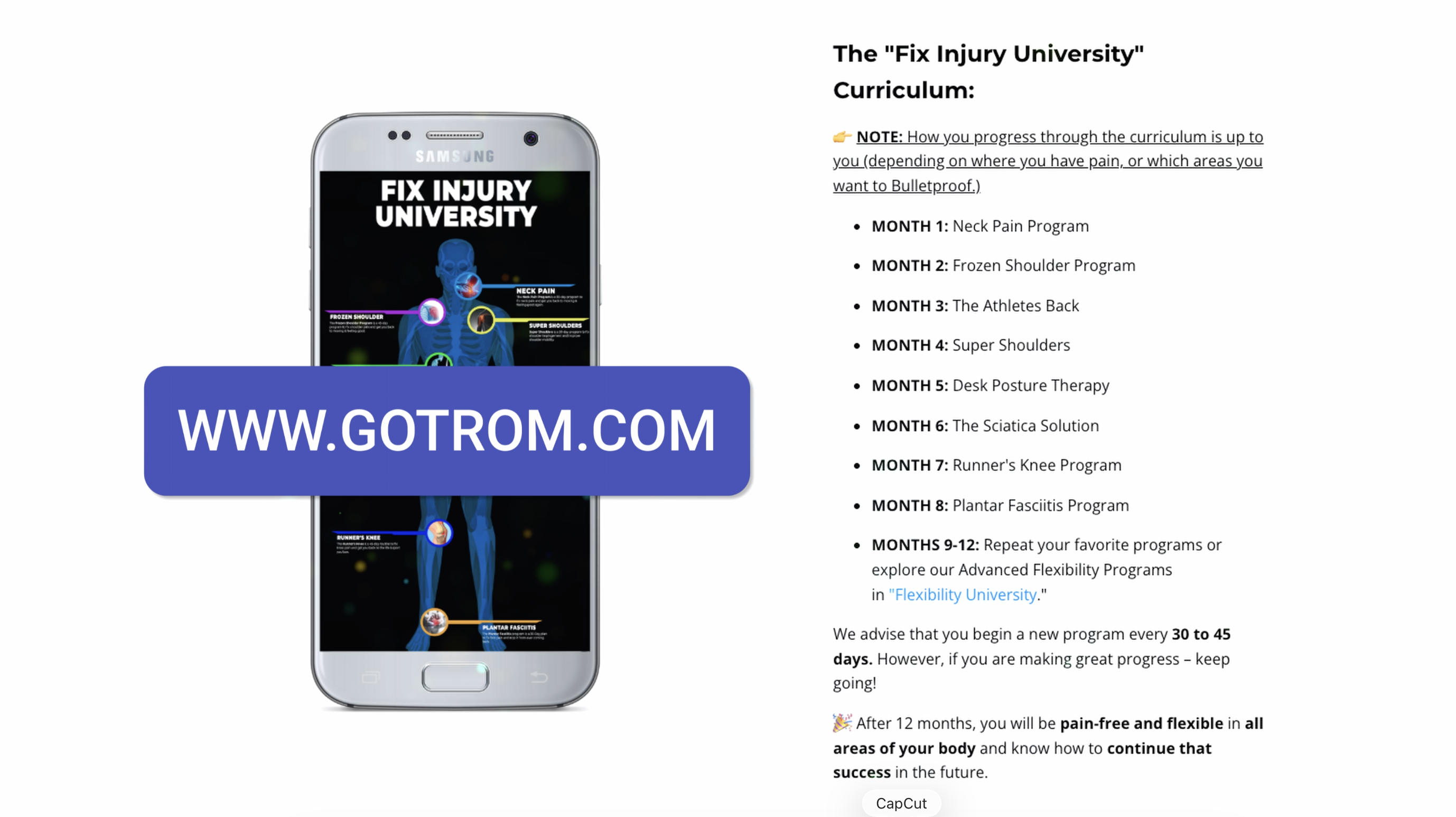
Not managing them, not working around them, but understanding them deeply enough to address their root causes and build a body that is no longer breaking down faster than it can rebuild. Most people have never been given this. They have been given temporary relief. There is a profound difference.
The second is mastering flexibility and mobility.
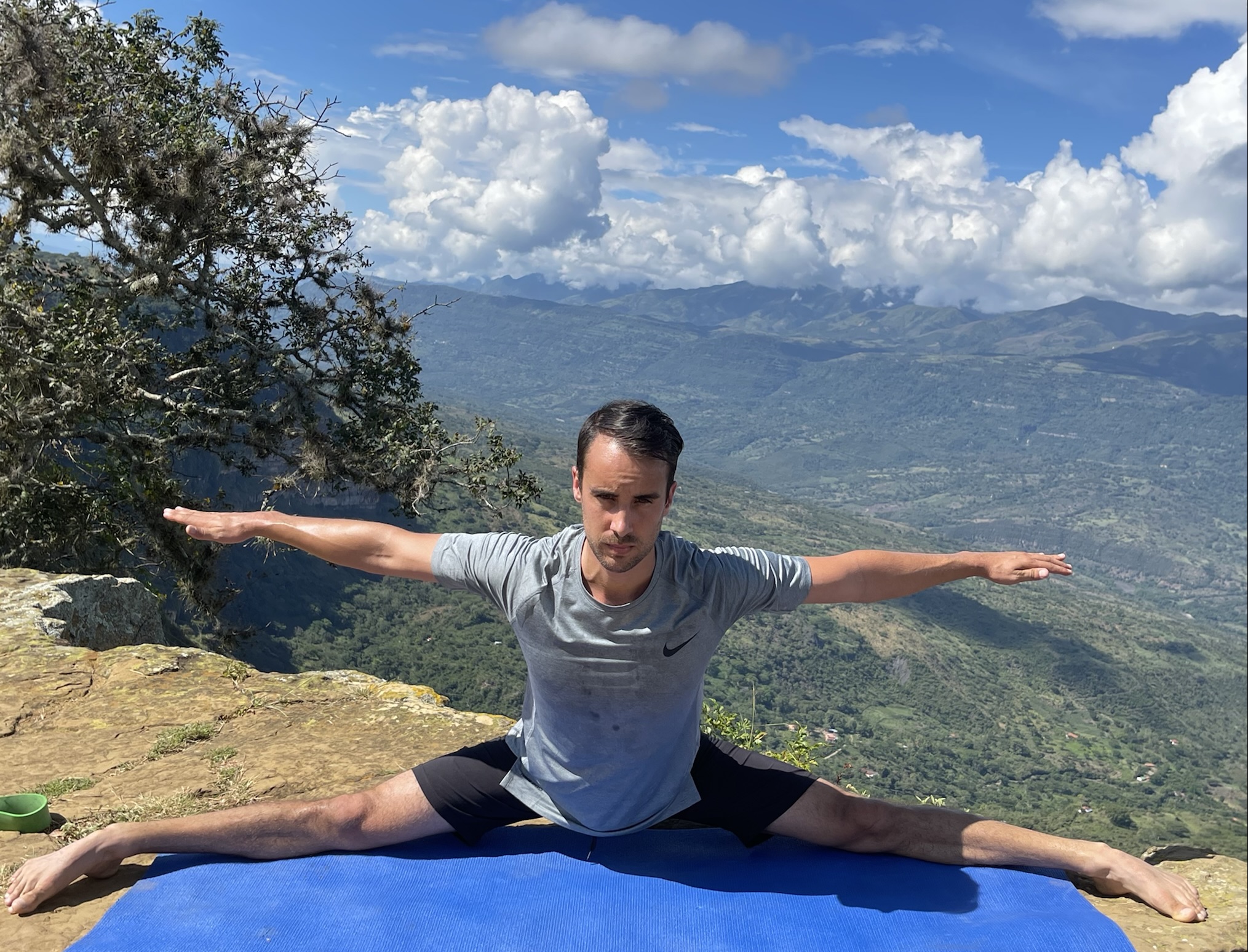
This is the one that most athletes skip entirely, and it is the one whose absence drives more damage than almost anything else. I had zero mobility in my early twenties and no idea it was the hidden source of everything going wrong. Mobility is not a nice-to-have. It is the foundation that everything else sits on. Without it, you are building on sand.
The third is mastering strength and conditioning.
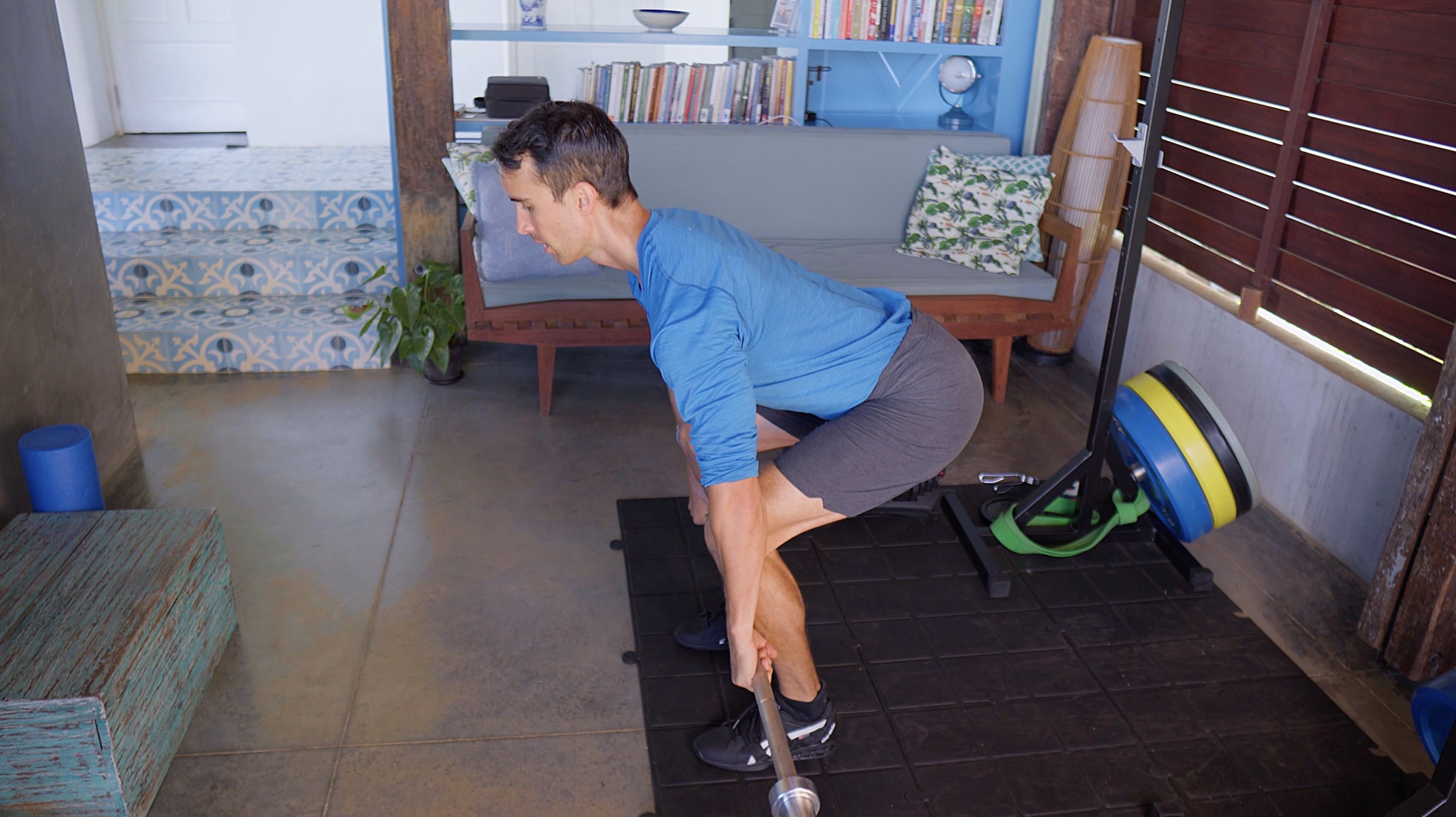 Building a body that is genuinely strong, resilient, and well-conditioned across a full range of motion and in every direction life asks you to move. Not just strong in the comfortable middle ranges. Strong all the way into the corners.
Mastering all three is a lifelong journey. But every step along that journey produces results. You do not have to reach the end to start feeling the difference.
I have spent years searching for people who truly understand all three areas, not just one of them.
What I found is that almost nobody does. A great strength coach often knows very little about mobility. A great physical therapist often knows very little about programming. Someone who genuinely masters all three is what I call a 3-in-1 Human Movement Specialist, and they are as rare as they sound.
I have spent years specifically seeking these people out, training them in my TSR system, and building a coaching staff around them. If you want one-on-one help from someone who sees your body as a complete system rather than a collection of separate problems, that is exactly what our coaches are equipped to provide.
Start Here
At Got ROM, we have built two complete curricula around the first two parts of this framework.
Fix Injury University is a comprehensive program for understanding, addressing, and moving beyond the injuries that have been holding you back.
Flexibility University is a head-to-toe mobility curriculum designed to restore the ranges you have lost and build the ones you never had.
Together they cover the ground that most athletes spend decades trying to find on their own, built by someone who has lived every part of this journey and has the injury map to prove it.
This is the only body you will ever have. You might as well learn everything about it.
The competitive athlete you used to be is not coming back. But the lifelong athlete you are becoming is capable of things that version of you never imagined.
The journey starts here.
If you want to work directly with one of our 3-in-1 Human Movement Specialists, trained in the TSR system and available for personalized one-on-one coaching, email us to find out if any spots are currently open.
As always, remember that you’re just one step away from building (or rebuilding) your perfect body.
About The Author

Shane Dowd, CES, CMP is the owner/founder of GotROM.com. He is also a sports performance & mobility coach specializing in injury prevention and flexibility for athletes.

Free download for this topic
How To 10X Your Flexibility
An Insider's Guide to Accelerated Gains
GET THE FREE EBOOK


