
The “Twin Peaks” of Hip Pain: Why Your Hip Hurts So Easily
 By Shane Dowd , CES, CMP
Why does your hip hurt even when nothing seems to be broken?
That is the question behind what I call the Twin Peaks of Hip Pain.
Once you understand it, a lot of the fear around hip pain starts to make more sense. The important thing to realize is that pain and actual damage are not always the same thing.
In people who have had repeated injuries or years of pain, the nervous system can become hypersensitive and start sounding the alarm much earlier than it needs to.
That distinction changes everything.
If your hip hurts every time you bend down, squat, lunge, or twist, it does not automatically mean the hip is breaking down.
Sometimes the warning signal has simply become too sensitive, and your body is treating movement like a threat long before there is any real danger.
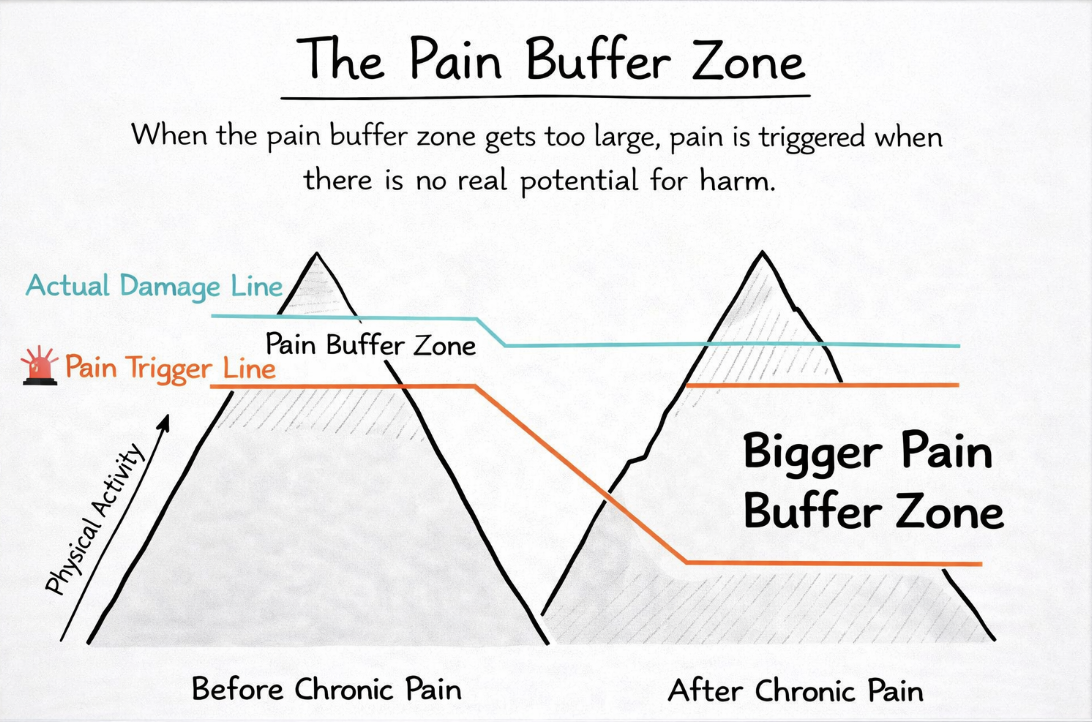
The Pain Trigger Line
When you increase your physical activity, there eventually comes a point where your body starts sending warning signals. I call that the pain trigger line. It is the point where your system says, “That is enough,” even if you have not actually caused damage yet.
That is why pain is not always a simple damage signal.
Early on, it is helpful because it protects healing tissue and keeps you from overdoing it. But the same signal can become overprotective if your body has had enough injuries, enough pain, or enough repeated threat that the nervous system starts getting conservative too early.
The Actual Damage Line
The actual damage line is different. That is the point where tissue would genuinely be at risk of harm.
Before chronic pain shows up, the pain trigger line and the actual damage line are fairly close together. Your body warns you when it should, and that warning usually makes sense. But after repeated injuries, bumps, bruises, or long stretches of pain, the gap between those two lines can grow much larger.
Your nervous system starts saying “stop” much sooner than it needs to, not because the tissue cannot handle the movement, but because the brain does not want to take the risk.
That is when normal movement starts to feel dangerous. The body becomes hypersensitive, and the warning system starts reacting to things that are well within the tissue’s actual capacity.
Why Your Hip Starts to Feel Fragile
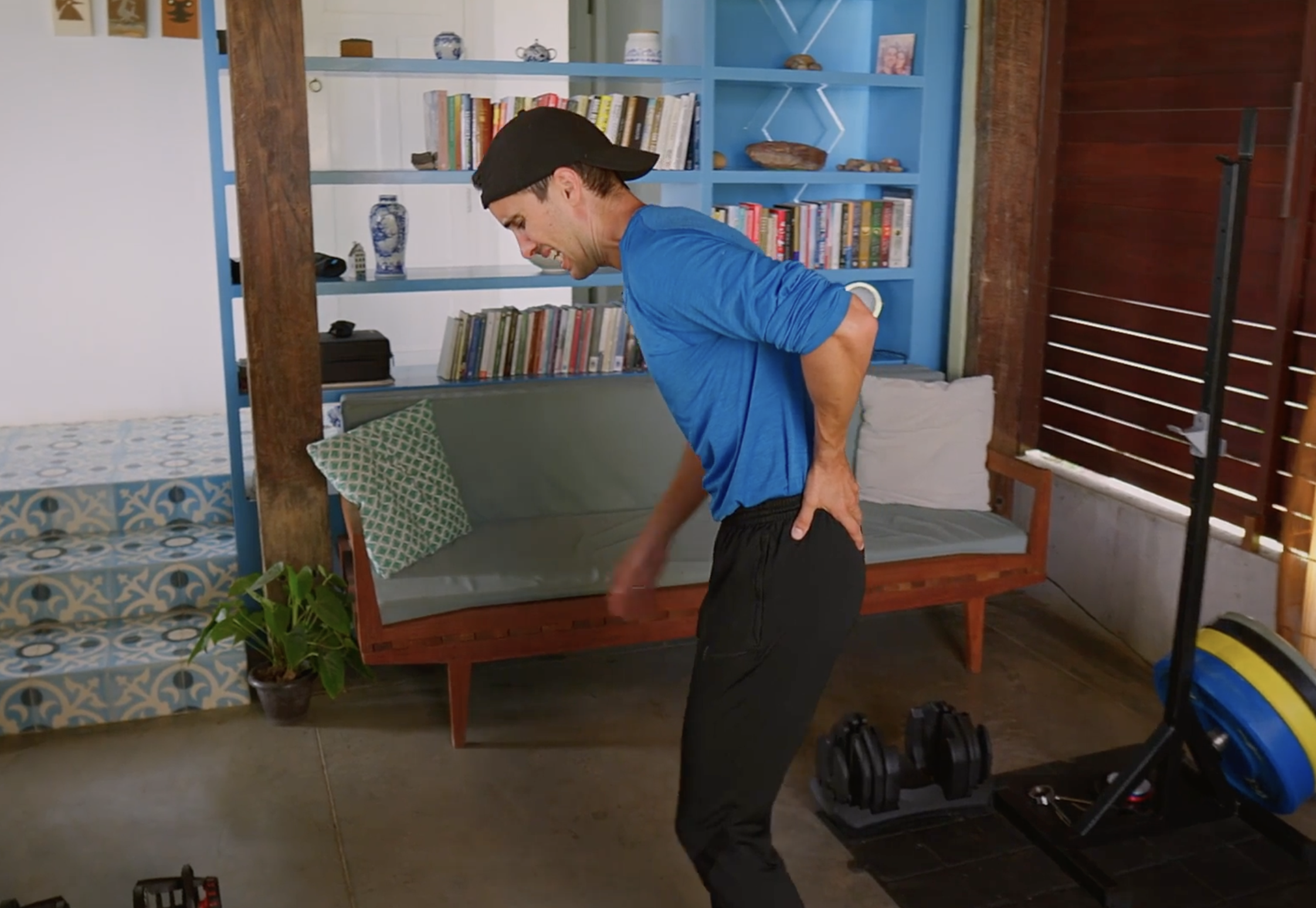 This is why so many people describe their hip as fragile, broken, or unpredictable.
They bend down to tie a shoe, get into a squat, or move into a stretch, and their body responds like something terrible is about to happen.
It can feel like the labrum is tearing, or like something is grinding away inside the joint, even when that is not what is actually happening.
What is really going on is that the nervous system has become overly protective. It has learned that movement is a threat, so it starts freezing things up and sending pain signals earlier than it should.
That is why the whole system can feel so unpredictable. One day you are fine, and the next day a simple bend can feel like a disaster waiting to happen.
The problem is that this becomes self-reinforcing.
When something hurts, you move less. When you move less, your brain gets less evidence that movement is safe. The nervous system stays guarded, and the pain pattern keeps repeating.
What Actually Helps
The answer is not to ignore the alarm and force your way through pain.
The answer is to gradually teach the body that it is safe again.
That is where my TSR approach comes in. Tissue work, stretching, strengthening, and re-education all work together to give the nervous system new evidence.
I am not trying to fight the alarm. I am trying to help it settle down by showing the body, over and over again, that certain movements are not a threat.
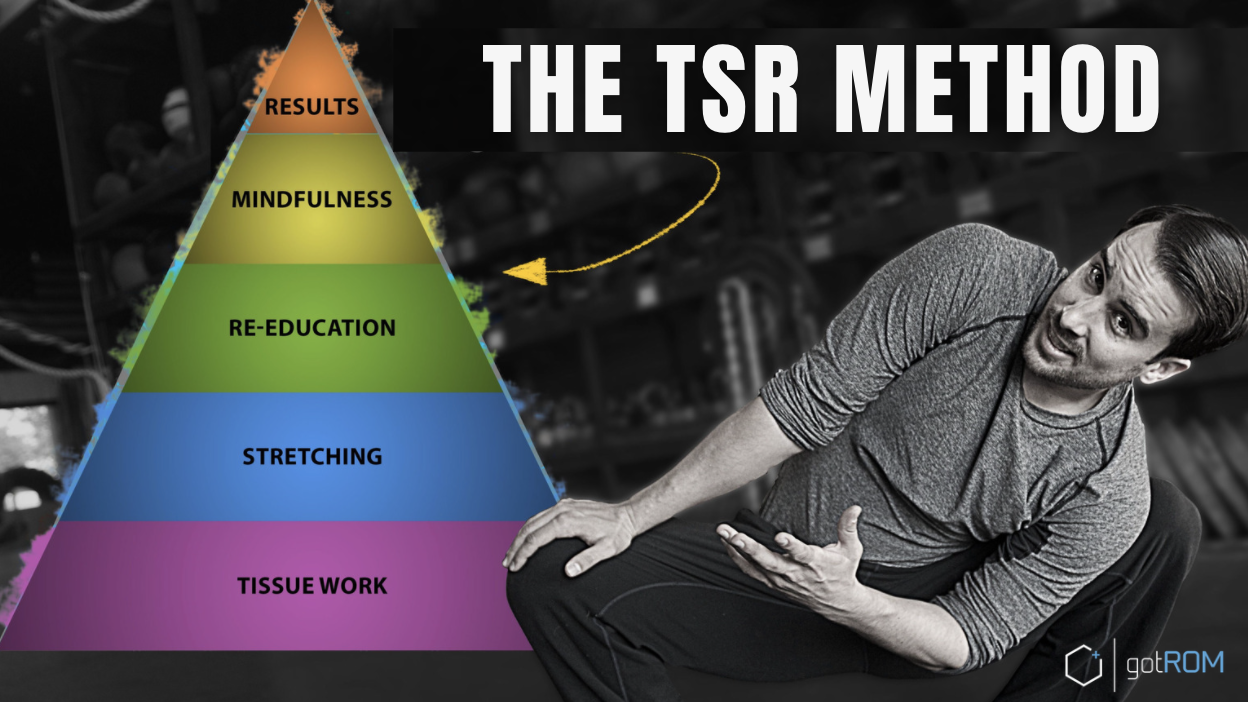
That process has to be gradual. If you push too hard too fast, you reinforce the threat response. But if you reintroduce the right movements carefully and consistently, the pain trigger line starts to rise, the buffer zone starts to shrink, and the hip stops reacting so strongly to ordinary movement.
Why “Safe” Is the Real Goal
The word that keeps showing up for me in this process is safe. That is really what it all comes down to.
Your nervous system is constantly deciding whether something is safe or threatening. If it decides a movement is safe, it lets you do it. If it decides the movement is risky, it tightens up and sends pain signals.
Rehab is not just about strengthening a hip. It is about helping the brain trust the body again.
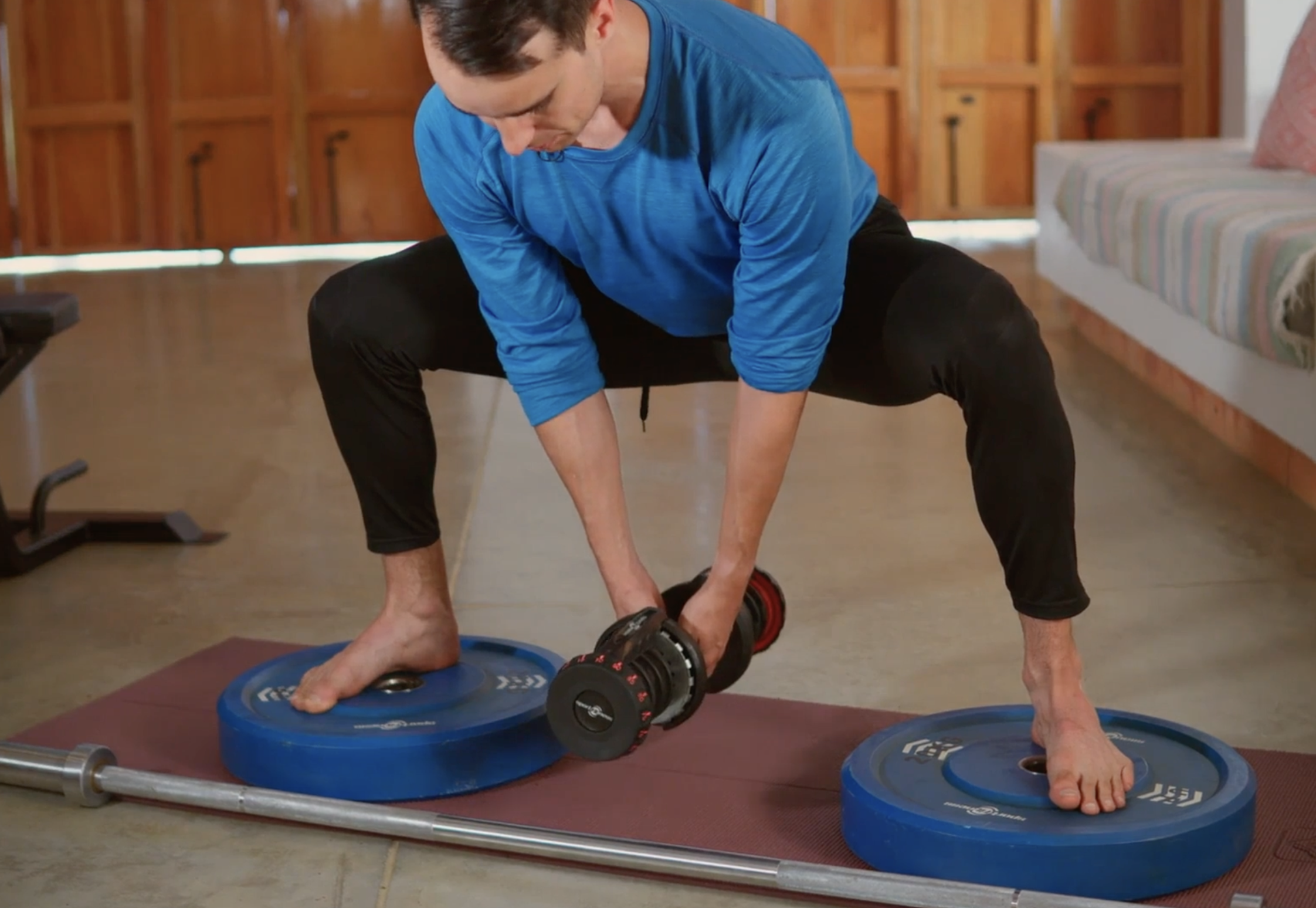
That is why I pay attention to end ranges, why I use tissue work on sensitive areas, and why I gradually reintroduce positions like bending, squatting, lunging, or side bending.
I am not just moving a joint. I am giving my nervous system repeated proof that it does not need to panic every time the body moves.
The Goal Is a Smaller Buffer Zone
A healthy system has a relatively small buffer zone between pain and actual damage. It warns you when it should, but it does not overreact to everything.
When the buffer zone gets too large, pain starts showing up long before real harm is happening. The body becomes hypersensitive. It interprets almost everything as a threat. And that is when people start feeling stuck, fragile, and afraid of movement.
The goal is to bring that buffer zone back down. Not by forcing the issue, but by giving the body better inputs over time. That is what the gradual progression is for. That is what the TSR process is for. And that is why consistency matters so much.
Where to Start
If your hip or back feels hypersensitive, fragile, or like it is made of glass, that does not automatically mean you are broken. It may simply mean your pain buffer zone has grown too large and your nervous system needs better evidence that movement is safe again.
That is exactly what our DIY programs are built to help with. They are designed to guide you through the process step by step so you can start giving your body the right inputs and stop living in that constant state of alarm.
And if you want more personalized support, you can add 1:1 coaching to your program so a specialist can help guide your progress and keep you moving in the right direction.
As always, remember that you’re just one step away from building or rebuilding your perfect body.
About The Author

Shane Dowd, CES, CMP is the owner/founder of GotROM.com. He is also a sports performance & mobility coach specializing in injury prevention and flexibility for athletes.

Free download for this topic
The Ultimate Guide to Hip Impingement
How To Fix Hip Impingement Without Surgery
GET THE FREE EBOOK


