
Why Older Lifters Get Hurt (And How to Fix It)
 By Shane Dowd , CES, CMP
I have been training hard since I was a teenager.
Forty-plus years of intense sports, heavy lifting, and the kind of genetic bad luck that means my body has collected injuries the way other people collect frequent flyer miles.
Shoulders. Hips. Back. Knees. The full catalog.
And for most of those forty years, I trained like I was twenty.
What I know now is that this was not toughness. It was ignorance. Paid for in injuries that didn't have to happen, and years of performance left on the table because nobody ever taught me how to actually train.
If you are a man over forty who keeps getting hurt in the gym, I want to tell you something:
It is probably not your age that is the problem. It is almost certainly the way you are training.
Those are two very different problems. Because one of them you can fix.
The Ego Trap
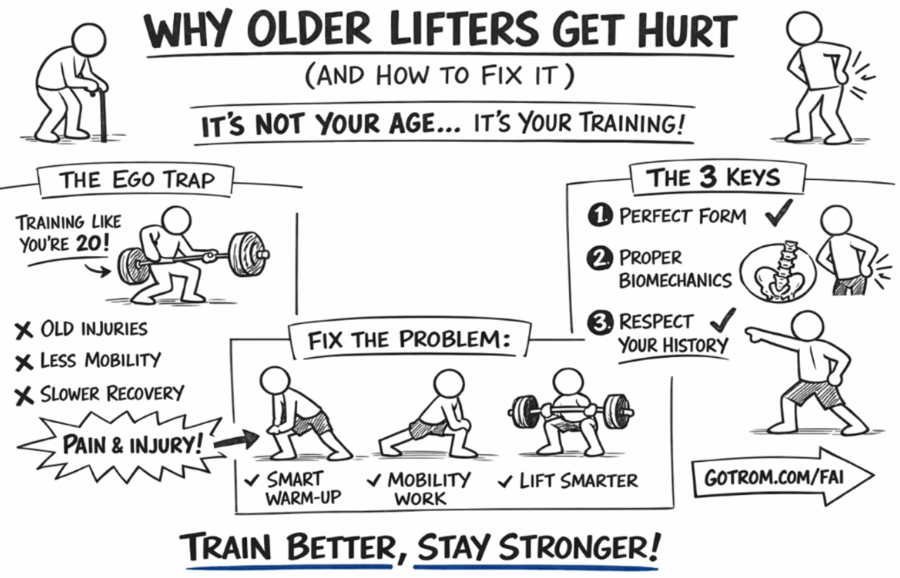
Most men over forty get hurt lifting because they are training like they are not over forty.
They walk into the gym carrying decades of accumulated injuries, reduced tissue elasticity, and a nervous system that needs more preparation time before it is ready to handle heavy load. Then they train exactly like the twenty-two-year-old on the platform next to them.
The twenty-two-year-old can get away with it. His body bounces back from a sloppy rep in a way that yours, at this stage of life, simply will not.
This is not a defeat. It is biology. And the men who understand it and adapt do not lift less. They lift better. They stay in the game longer. They are still building real strength at fifty and sixty while the guys who refused to adapt are nursing chronic injuries and wondering what went wrong.
The Three Things Nobody Ever Taught You
Most lifting injuries in men over forty trace back to the same three failures.
Impeccable form, never truly learned
Most men learn to lift from other gym members, YouTube videos, or a trainer with a weekend certification. Almost nobody learns from someone who understands human movement at the level a physical therapist does, combined with the programming knowledge of a genuine strength and conditioning coach.
Our physical therapists at GotROM are what I call three-in-one: physical therapists, strength and conditioning coaches, and mobility specialists in a single person.
That combination is rare. But it is the standard your body at this stage actually deserves.
Lifting biomechanics, never truly understood
Biomechanics is not just whether your back is rounded on a deadlift. It is understanding how force travels through your body, which structures are absorbing load, and how your specific anatomy should shape the way you perform every movement.
A squat that is textbook correct for a twenty-year-old may be a hip injury waiting to happen for a fifty-year-old with a different structure and a long injury history. The lift has to fit the body. Not the other way around.
Injury history, never truly respected
Old injuries are not just old. They leave behind tissue restrictions, movement compensations, and joint vulnerabilities that do not announce themselves until you load them the wrong way at the wrong moment. Respecting that history does not mean being afraid of it. It means building it into how you train.
The Warm-Up Is the Workout
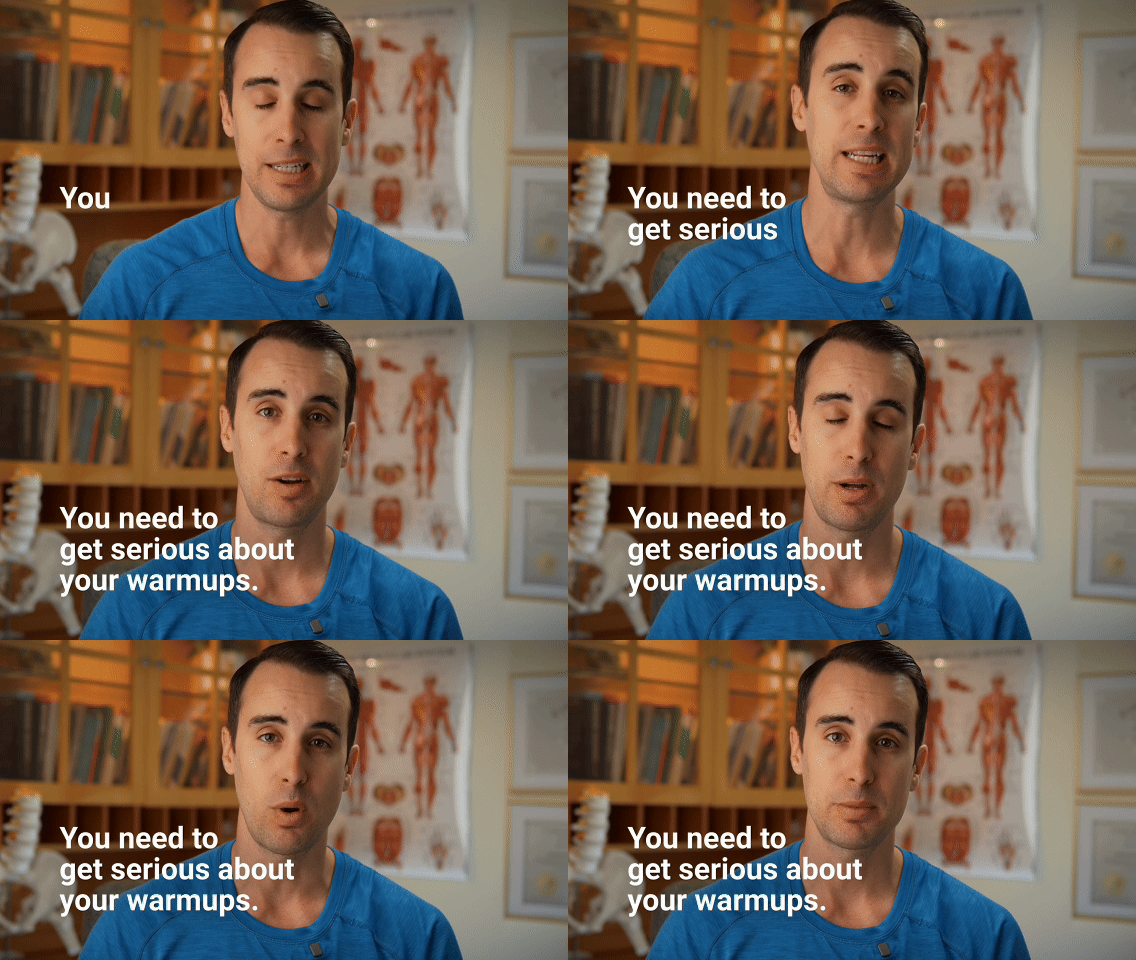
Here is the specific change that makes the biggest difference for older lifters.
Stop treating your warm-up like a formality. For a man over forty with any injury history, the warm-up is not five minutes on the bike. It is the foundation that makes everything else possible.
In practice, this means you do not go near the squat rack or deadlift platform for the first forty-five minutes of your session. Instead you build heat, prime the nervous system, and mobilize the specific joints you are about to load heavily. Between every set of every exercise, you are doing active mobility work. The entire workout becomes the warm-up.
By the time you get to the heavy lift, your body is not cold and stiff and being asked to handle load it isn't ready for. It is warm, mobile, and genuinely prepared. The squat and the deadlift come last. Not as an afterthought, but as the culmination of an hour of intelligent preparation.
This is how the men who keep training into their fifties and sixties without constant injury actually train. It is not a secret. It is just discipline most people are not willing to apply until they have been hurt enough times to take it seriously.
You Can Still Build the Body You Want
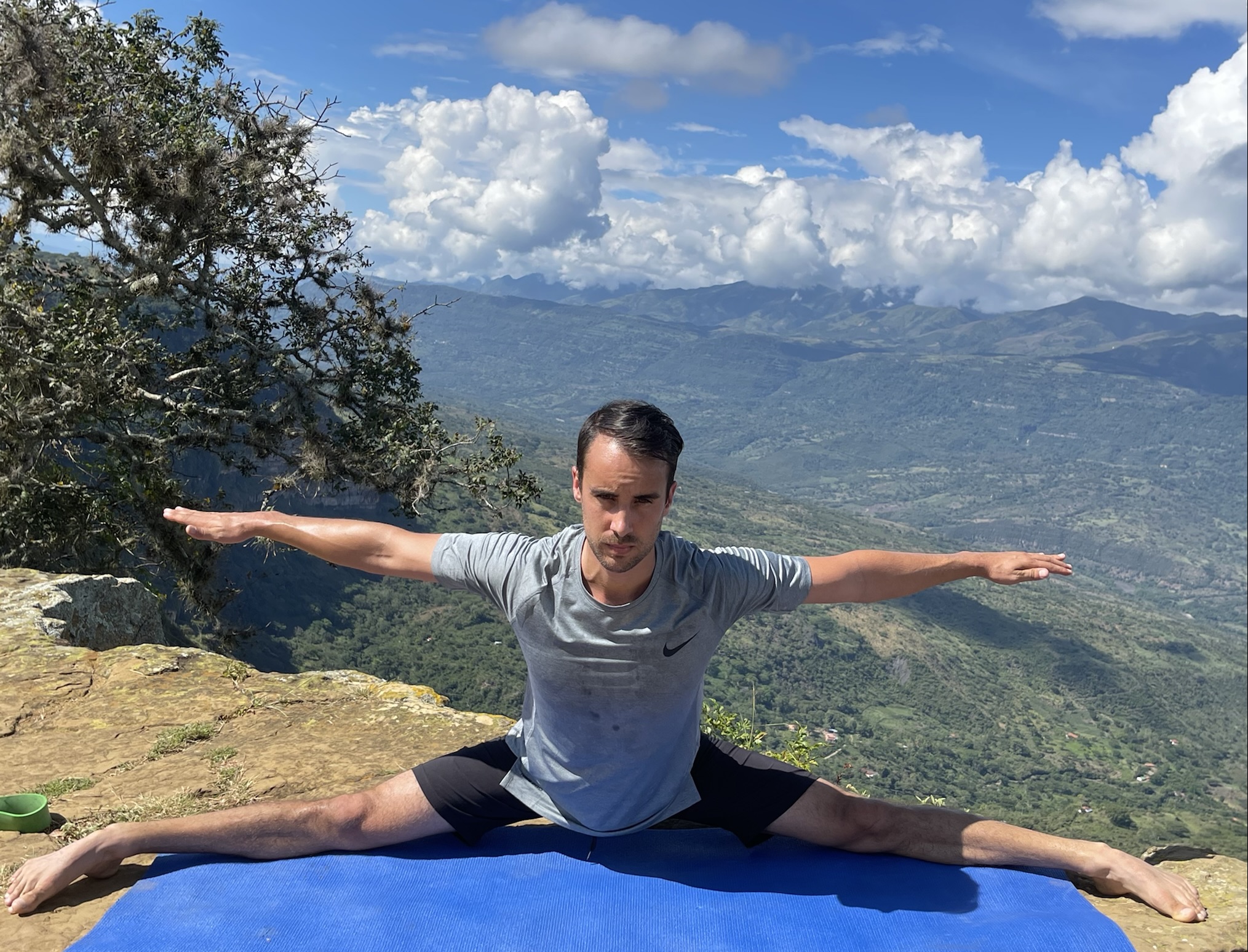
I train hard.
I love training hard. I have no intention of stopping.
What changed is not my commitment. It is the sophistication of how I express it.
I prepare more. I sequence smarter. I respect my history instead of pretending it doesn't exist.
The result is that I train better now than I did at thirty.
Not despite being older. Because of what being older taught me, and because I finally stopped being too proud to learn it.
If you are a man over forty who keeps getting hurt, the answer is not to stop.
The answer is to get educated, get proper guidance, and start training the way your body actually needs to be trained right now.
That is not a consolation prize. It is an upgrade.
Where to Go From Here
At gotrom.com/fai you will find an at-home program built on everything in this article: daily mobility, targeted strength, and the biomechanical foundations most lifters never get taught.
If you want more, you can upgrade to weekly one-on-one guidance from a Doctor of Physical Therapy who is also a strength coach and mobility specialist, someone who has lived through their own serious injuries and spent over a decade helping thousands of people train smarter and stay in the game.
As always, remember that you’re just one step away from building (or rebuilding) your perfect body.
About The Author

Shane Dowd, CES, CMP is the owner/founder of GotROM.com. He is also a sports performance & mobility coach specializing in injury prevention and flexibility for athletes.

Free download for this topic
How To 10X Your Flexibility
An Insider's Guide to Accelerated Gains
GET THE FREE EBOOK


