
15 Minutes of Exercise a Day = 3 Extra Years of Life (416,000-Person Study)
 By Shane Dowd , CES, CMP
How much would you pay for 3 extra years of life?
$10,000?
$50,000?
More?
The actual cost is 15 minutes a day.
That's what a 416,000-person study proved. And most people aren't doing it.
The Study That Changed Everything
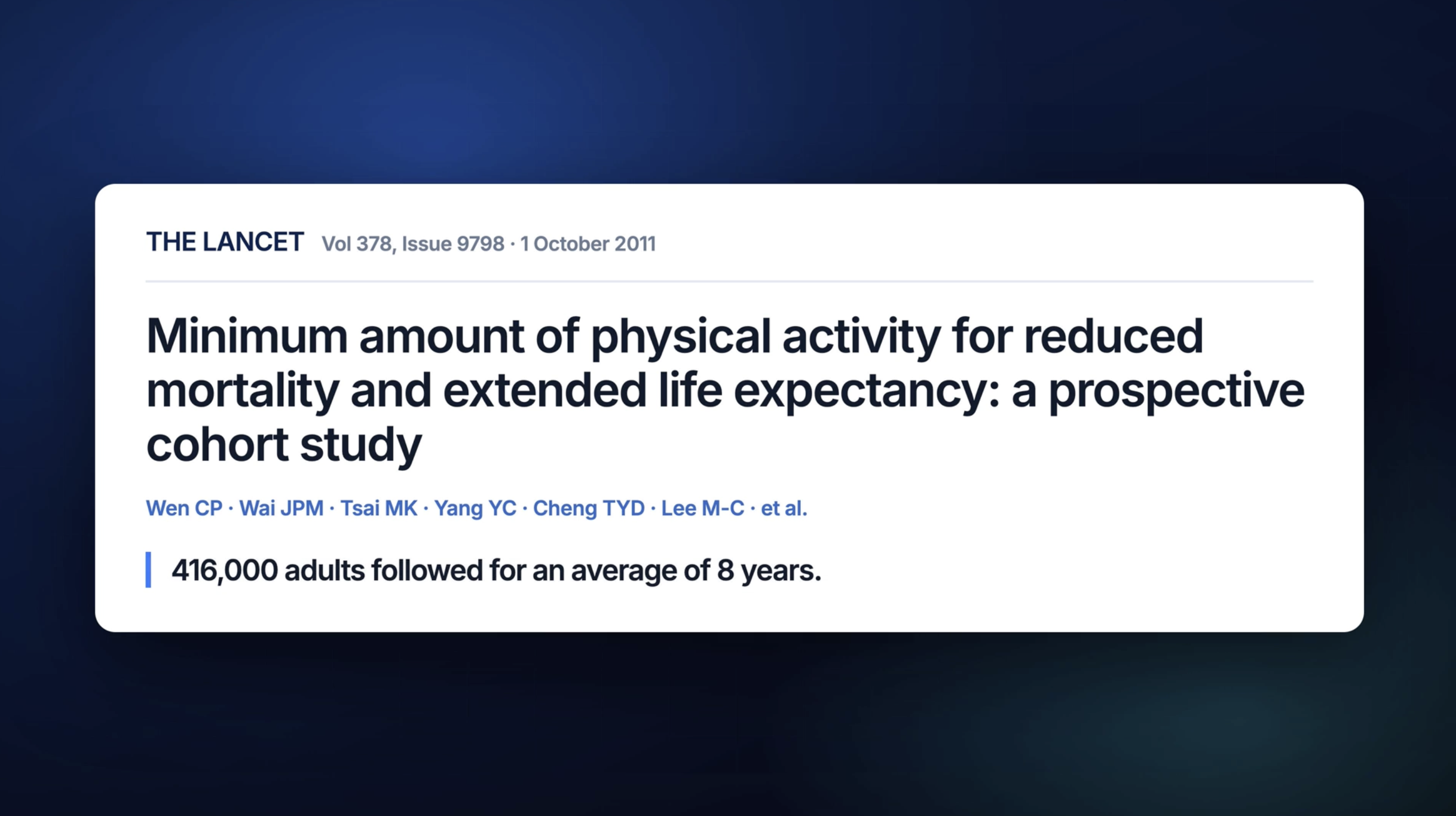
In 2011, researchers in Taiwan tracked 416,175 people for 8 years.
They weren't studying elite athletes or marathon runners. They were studying regular people doing 15 minutes of exercise per day.
Just 15 minutes.
A brisk walk. A short strength session. Less time than most people spend on social media.
The study, published in The Lancet, found something remarkable:
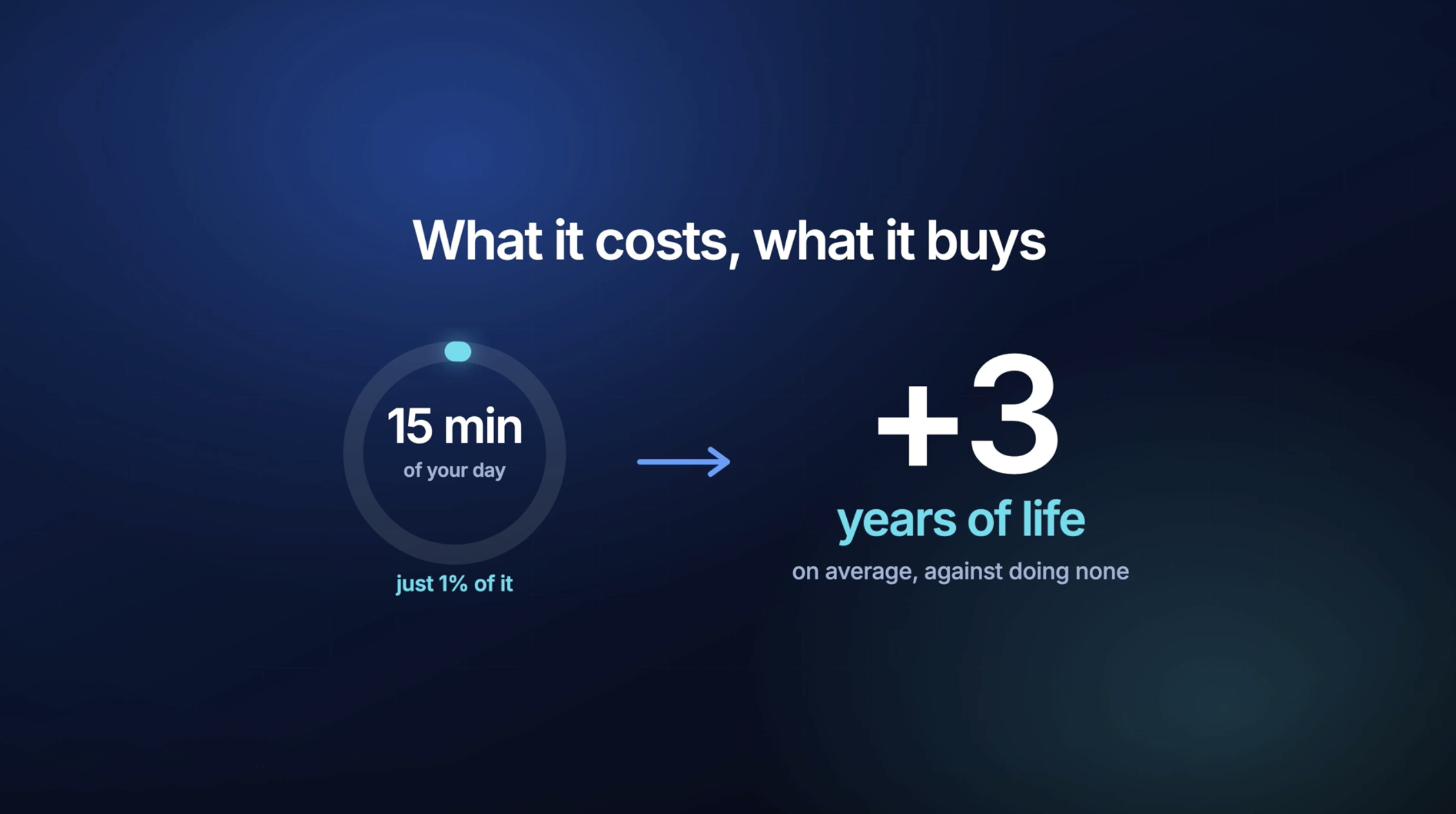
Those 15-minute-per-day people lived 3 years longer than people who did nothing.
Three extra years. From 15 minutes a day.
The Biggest Gains Come From Going Zero to Something
The most powerful finding in this study wasn't about the people already exercising. It was about the jump from nothing to something.
Going from zero exercise to just 15 minutes per day reduced the risk of death from any cause by 14%. Every additional 15 minutes beyond that reduced mortality by another 4%.
So the numbers looked like this:
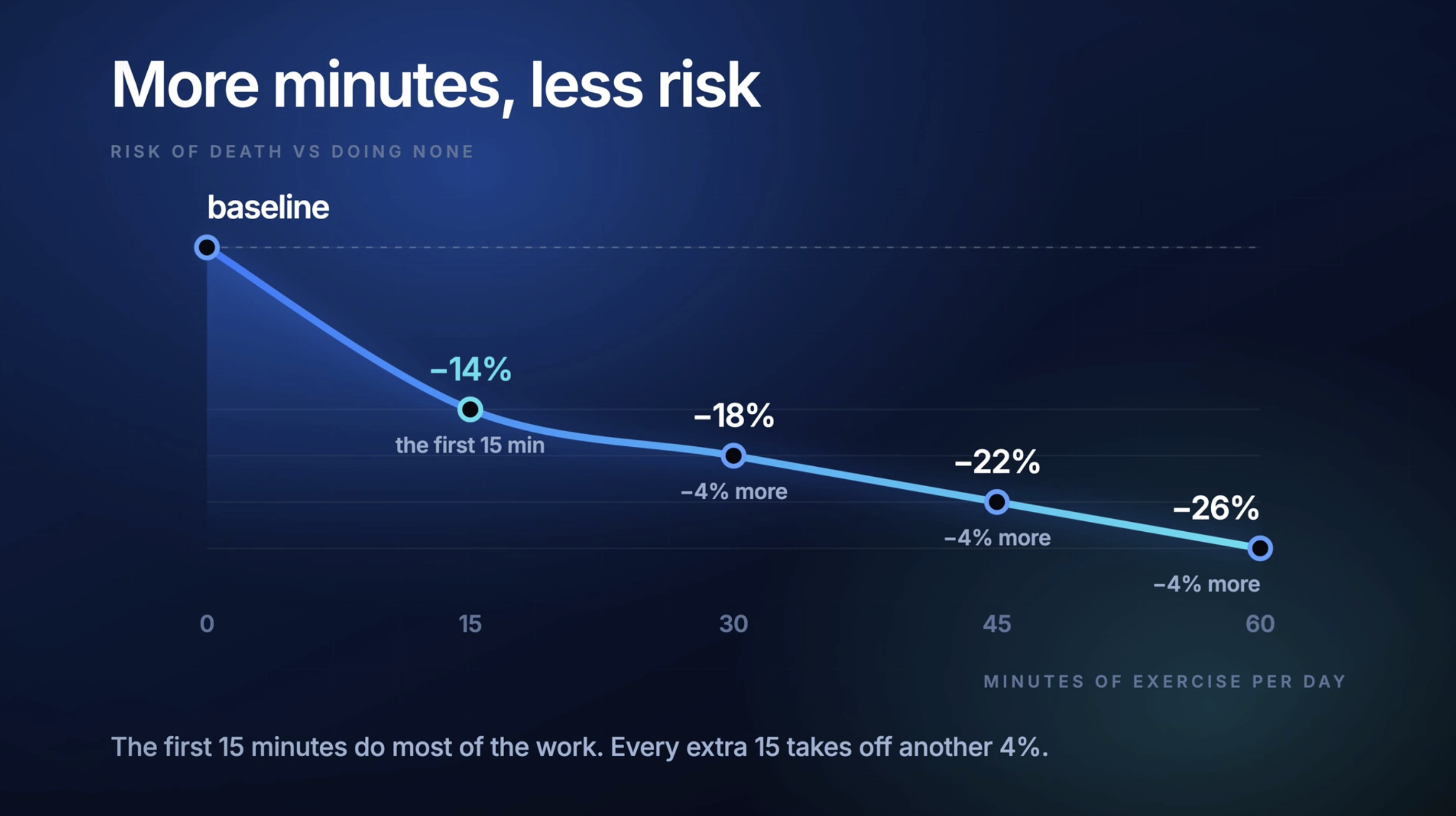
- 0 minutes = baseline risk
- 15 minutes = 14% lower risk + 3 years life expectancy
- 30 minutes = ~18% lower risk + 4 years life expectancy
- 45 minutes = ~22% lower risk
- 60 minutes = ~26% lower risk
The benefits kept compounding. But that first 15 minutes delivered the biggest gain.
Going from zero to 15 minutes gave you more than going from 60 to 90.
Most people miss this completely.
Why This Matters If You're Already Active
You're probably not sedentary. You already train.
So why does this study matter?
Because it reveals something crucial about longevity: small, consistent habits compound into years.
Think about your own training history.
You've had periods where you were on fire. Training 5-6 days per week. Hitting PRs. Feeling unstoppable.
You've also had periods where life got complicated. Work exploded. You traveled. You got injured. You fell off for weeks or months.
The question isn't whether you can train hard.
The question is: can you show up consistently for decades?
That's what this study measured. Persistence.
The people who lived 3 extra years weren't the ones who occasionally crushed themselves. They were the ones who showed up—15 minutes at a time—day after day, year after year.
The Math of Small Daily Habits
15 minutes per day doesn't feel like much. Skip it once? No big deal. Skip it twice? Still fine. But over years? Decades?
365 days × 15 minutes = 91 hours per year.
Over 10 years? 910 hours.
Over 20 years? 1,820 hours.
Over 30 years? 2,730 hours.
That's the difference between a body that breaks down and a body that lasts.
The study proved it. The people who showed up for 15 minutes per day didn't just live longer. They lived better.
Less chronic disease. Lower cancer mortality. Reduced cardiovascular risk.
This wasn't about adding frail years at the end of life. This was about adding healthy, functional years.
Years where you can still play sports. Travel. Move without restriction.
Healthspan, not just lifespan.
Available to anyone willing to invest 15 minutes per day.
What 15 Minutes Actually Looks Like
The study defined moderate-intensity exercise as movement that elevates your heart rate and gets you breathing harder—but doesn't leave you gasping.
Examples:
- Brisk walking
- Light jogging
- Bodyweight strength work (squats, push-ups, lunges)
- Cycling at a moderate pace
- Swimming
- Resistance bands
- Mobility drills
You don't need to crush yourself. You don't need max-effort intervals or heavy barbell work. You just need to show up.
And if you can do 15 minutes, you can do 20. If you can do 20, you can do 30.
Every additional 15 minutes compounds the benefit. But you have to start. And you have to stay consistent.
The Gap Between Knowing and Doing
If the science is this clear, why isn't everyone doing 15 minutes per day?
Because knowing and doing aren't the same thing.
You already know exercise is good for you. You've read the articles. Seen the studies. But knowledge doesn't create behavior. Systems do.
Think about your own experience with consistency. Sometimes you're dialed in. You get on a roll. Weeks turn into months. You feel great. Then life happens. Work gets busy. You travel. You get sick. A project blows up.
And suddenly you're back to zero.
You don't lack discipline. You lack structure.
You're trying to rely on willpower when what you actually need is a system.
What The Study Didn't Measure
The Taiwanese study measured the results of consistency. It didn't measure how people stayed consistent.
If you've ever tried to build a daily habit, you know the hardest part isn't the doing. It's continuing to do it when life gets complicated.
That's where most people fail.
They need:
- A clear, simple system
- Regular check-ins
- Someone watching their progress
- Accountability when they skip
- Guidance when they plateau
Coaching.
Think about it this way: if someone offered you a guaranteed 3-year extension to your life, how much would you pay? Tens of thousands? More?
The actual investment is smaller. But it requires consistency. And consistency doesn't happen by accident.
It requires infrastructure.
Why We Built The Lifelong Athlete Program
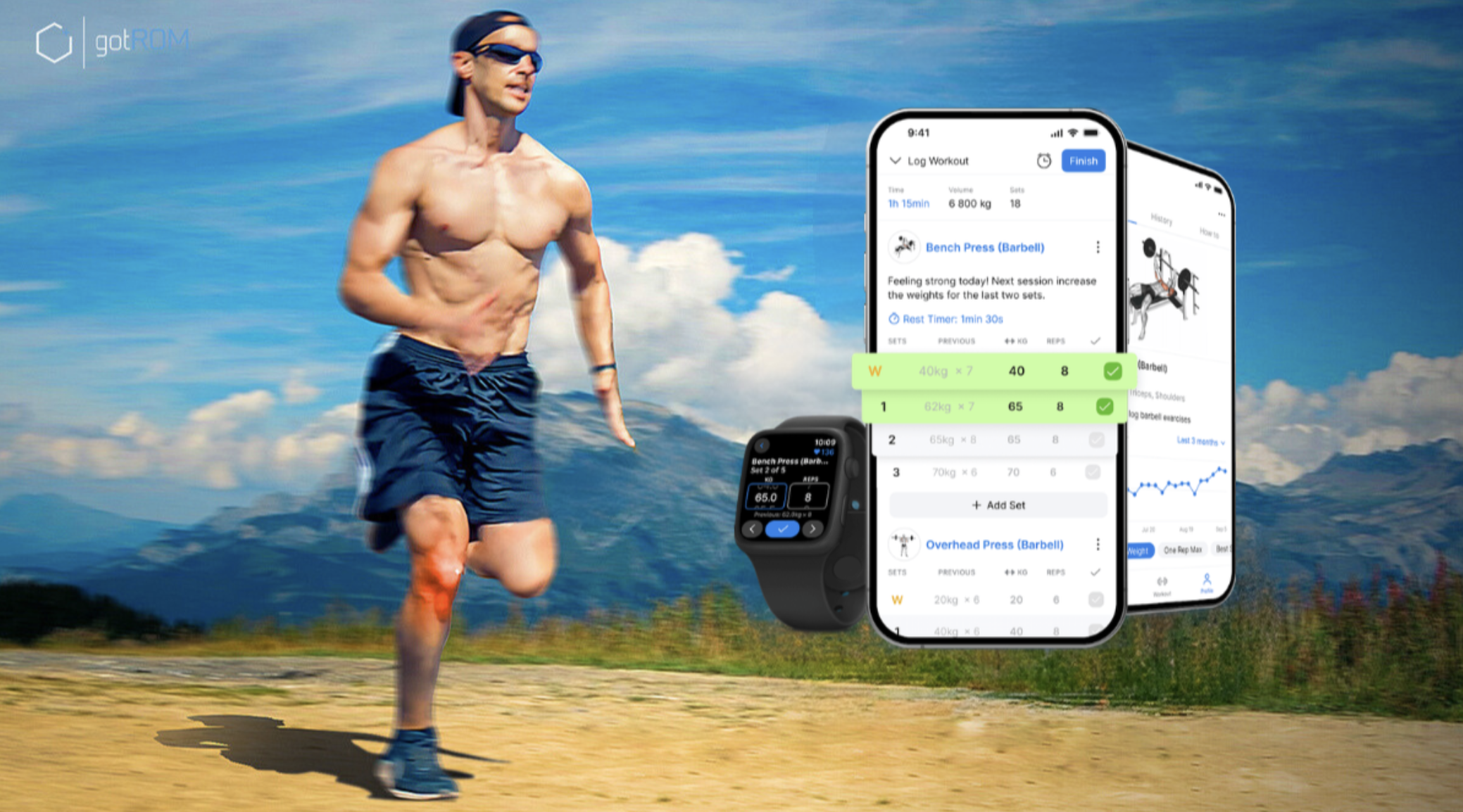
The Lifelong Athlete Program isn't designed to turn you into a competitive athlete.
It's designed to give you a system that survives real life.
Three core principles:
Minimum effective dose: We don't ask you to train like a professional. We ask you to show up consistently at a level you can sustain for decades. The research is clear—consistency beats intensity.
Personalized coaching: You get regular check-ins, video feedback, and accountability from coaches who understand what it takes to stay active for life. Guidance tailored to your body, your schedule, your constraints.
Adaptability: Life happens. Travel. Injuries. Stress. Chaos. The program adapts with you so you never start from zero again.
The goal isn't perfection. It's persistence.
Small Investments, Big Returns
How much would you pay for 3 extra years of life?
The Taiwanese study proved the actual cost: 15 minutes per day.
But I've coached thousands of active adults. Everyone starts with good intentions. Everyone believes they'll stay consistent.
Almost everyone falls off at some point.
Life is complex. Willpower is finite.
The people who actually turn 15 minutes per day into 3 extra years have one thing in common: they don't rely on motivation. They rely on structure.
They have a clear plan. Regular accountability. Someone checking in when they slip. Guidance when they plateau. A system that adapts when life changes.
That's what coaching provides. The infrastructure for consistency.
When you're talking about 3-4 extra years of quality life? That's one of the highest-ROI investments you can make.
Your Move
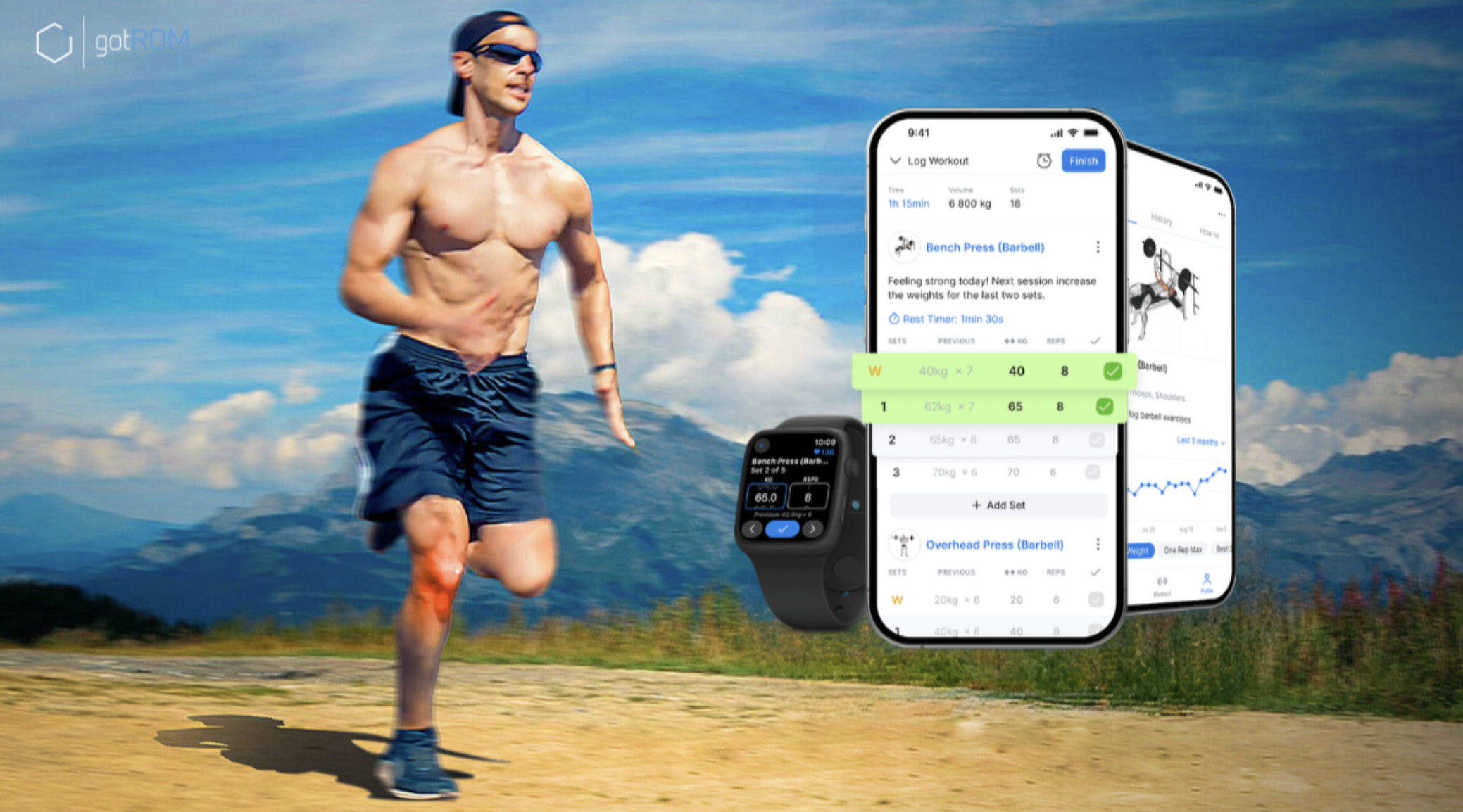
The research is clear. 15 minutes per day compounds into years.
The question is: will you actually do it?
If you've been inconsistent—if you've started and stopped, gotten on rolls and fallen off, known what to do but struggled to keep doing it—you don't need more information.
You need a better system.
That's what the Lifelong Athlete Program solves.
Personalized coaching. Regular accountability. Adaptable programming. A structure built to survive real life.
The goal isn't to add more training volume. It's to add more years.
And those years are built one 15-minute session at a time.
Learn more about The Lifelong Athlete™ Program and build a system that keeps you consistent for decades.
So one more time: how much would you pay for 3 extra years of life?
The answer isn't money.
It's 15 minutes a day. And a system that makes sure you actually show up.
References:
Wen CP, Wai JPM, Tsai MK, et al. Minimum amount of physical activity for reduced mortality and extended life expectancy: a prospective cohort study. Lancet. 2011;378(9798):1244-1253.
About The Author

Shane Dowd, CES, CMP is the owner/founder of GotROM.com. He is also a sports performance & mobility coach specializing in injury prevention and flexibility for athletes.

Free download for this topic
How To 10X Your Flexibility
An Insider's Guide to Accelerated Gains
GET THE FREE EBOOK


