
The Inner Game of Hip Pain: Master Your Mind to Heal Your Hips
 By Shane Dowd , CES, CMP
What if the secret to ending your hip pain was something you already possess?
No, it's not a miracle drug—it's your mind.
Today, we explore 6 groundbreaking mental strategies that I used to overcome my chronic pains and injuries without surgery.
The Inner Game of Hip Pain: Master Your Mind to Heal Your Hips
We often approach hip pain from a purely physical perspective.
I know I did when, 14 years ago, I was told I had FAI (Femoroacetabular Impingement), labral tears, and bone cysts, and I was doomed to inevitable hip arthritis and surgery.
So, I did what most people do…
Stretches, exercises, physical therapy treatments, medications… I did it all. And it makes sense, right? These are the go-to solutions for most people struggling with FAI or any type of pain or injury.
But what if I told you that the most powerful tool for overcoming FAI was right between your ears?
Your mindset, beliefs, and inner dialogue play a huge role in your experience of pain and your ability to heal.
For example, if you constantly tell yourself,
"I'm broken,"
"I'll never get better," or
"I'm too far gone,"
…then guess what? You're creating a self-fulfilling prophecy. Your mind believes what you tell it. So, start telling a different story:
"My body is resilient,"
"Healing is possible",
"I'm getting stronger every day".
As the famous author Napoleon Hill said:
“Whatever the mind can conceive and believe, it can achieve!”
It might feel weird at first, but it actually works. And, science has proven it!
The Mind-Body Connection: How Your Thoughts Influence Your Physical Reality
The link between our mental state and physical well-being is well-documented.
Studies have shown that stress, anxiety, and negative thought patterns can amplify pain signals and hinder the healing process.
On the flip side, a positive mindset, visualization techniques, and self-affirming language can help reduce pain perception and promote recovery.
And, this isn’t just positive thinking BS…
In one groundbreaking study, Cholewicki and others documented the multitude of factors contributing to pain.
One of the most interesting areas is this little area over here…
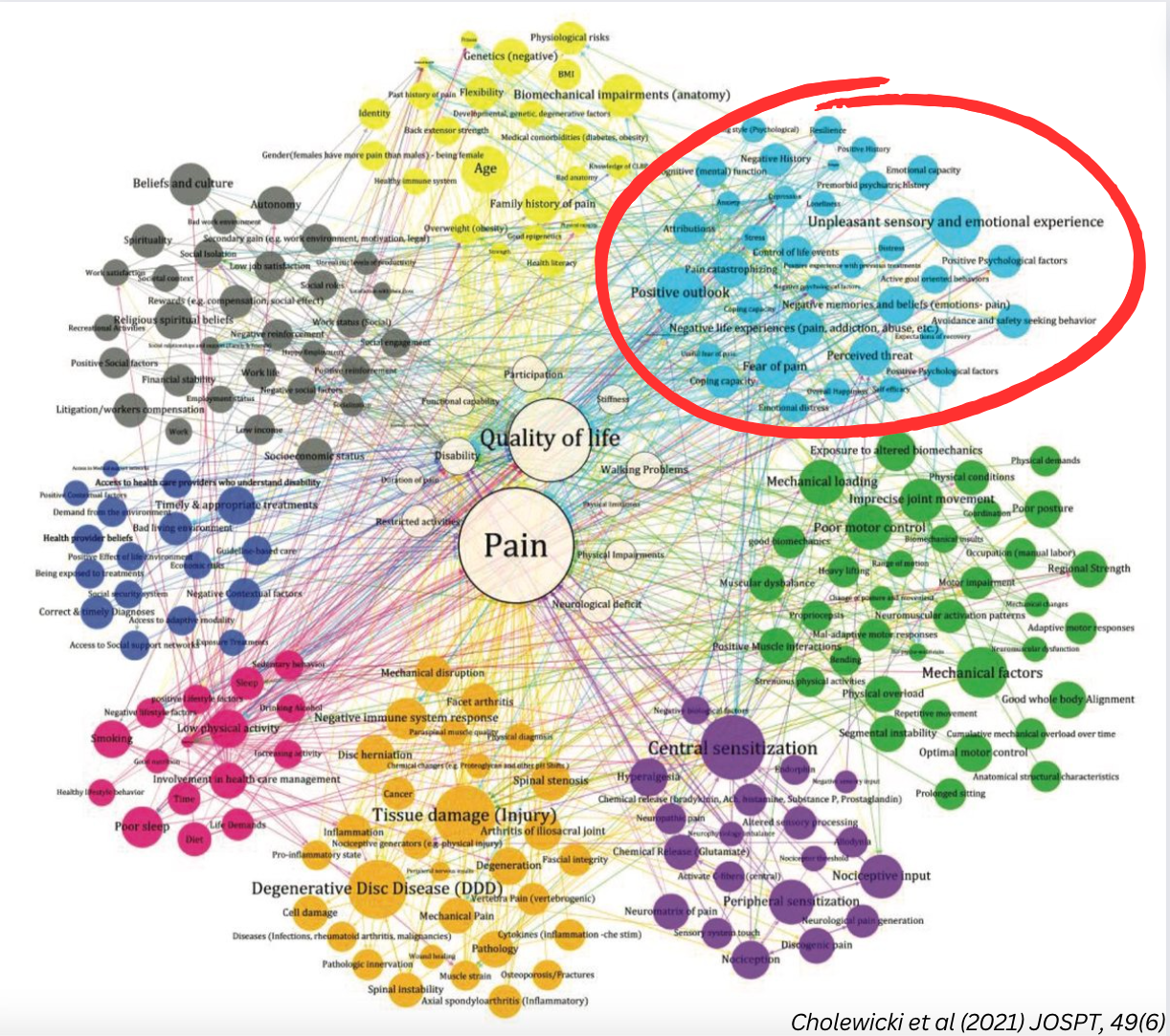
If you look closely, you’ll see things like:
- Fear of Pain
- Perceived Threat
- AND, Positive Outlook
What this shows is: Mindset matters! A lot!
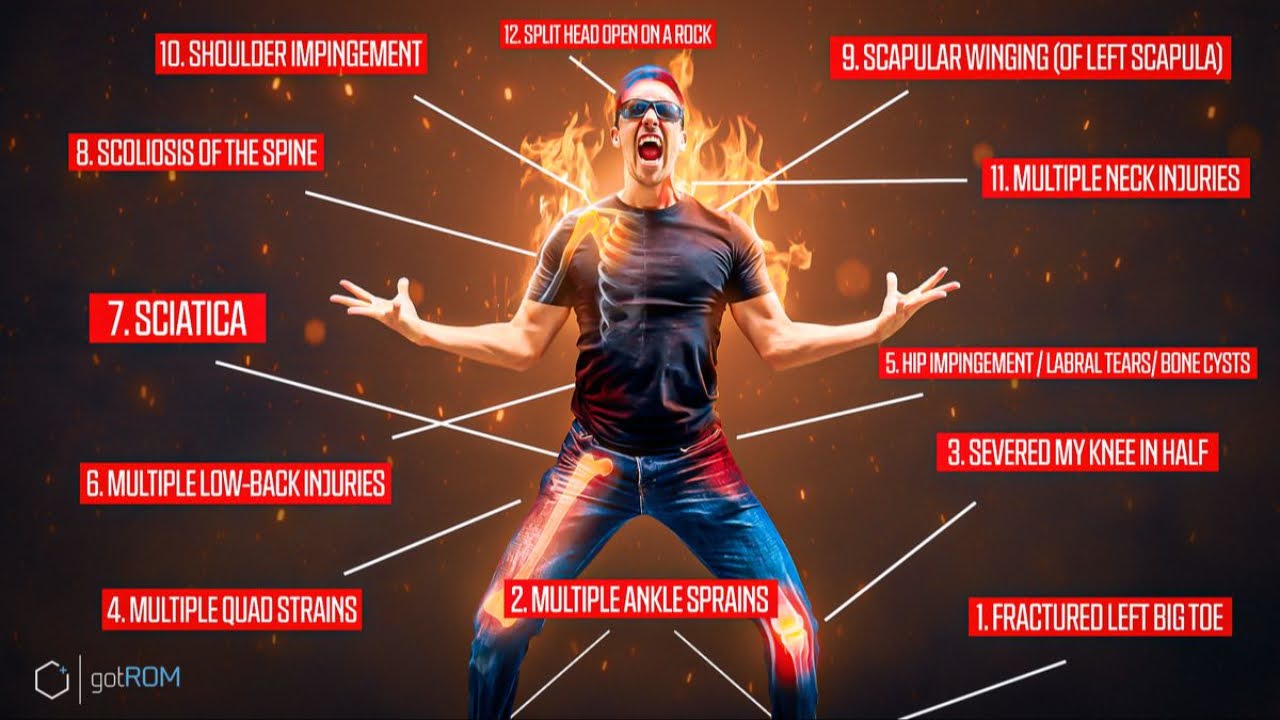
Of course, any of us who have dealt with chronic pain and multiple injuries could have told you that… but it’s always nice when science backs up what common sense already knows.
When you're dealing with a condition like FAI, it's easy to get caught up in a cycle of negative thinking. The pain and limited mobility can feel overwhelming, leading to thoughts like...
"I'll never be able to do the things I love again," or
"My body is failing me."
For me, I used to imagine the horrible things that were surely happening in my hip.
The narrowed joint space…
The rough, jagged bone slowly wearing away at my cartilage…
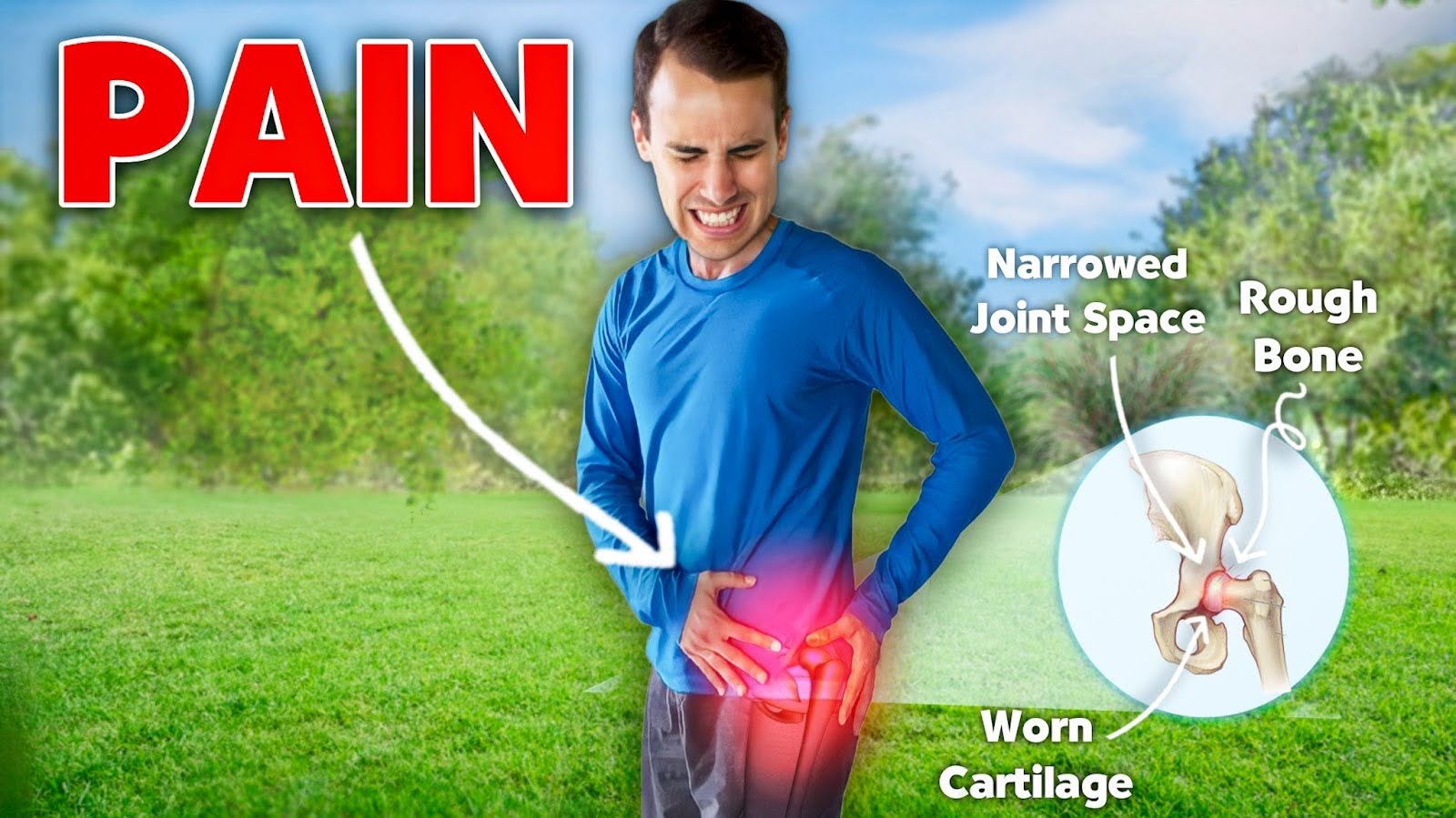
But here's the thing: most of those time, those things aren’t actually happening. It just feels like that! So, those thoughts aren't serving you.
In fact, they're likely making your symptoms worse…
By shifting your inner dialogue to a more positive, empowering narrative, you can start to break free from that cycle. Focus on what your body CAN do, rather than what it can't.
Celebrate small victories and signs of progress, no matter how minor they may seem. Remind yourself that healing is a journey, and that setbacks are a normal part of the process.
If you want to see 2 videos about my own journey, check out this video and this video to learn more.
Harnessing the Power of Belief: The Tale of Two Athletes
Let's consider a realistic scenario. Imagine two athletes, both diagnosed with FAI and facing the prospect of surgery.
Athlete A constantly tells himself, "I'm never going to recover from this," "Surgery is my only option," and "My athletic career is over."
Athlete B, on the other hand, adopts a different mindset: "This is just a temporary setback," "I trust my body's ability to heal," and "I'll come back stronger than ever."
Which athlete do you think is more likely to have a successful recovery? Athlete B, of course.
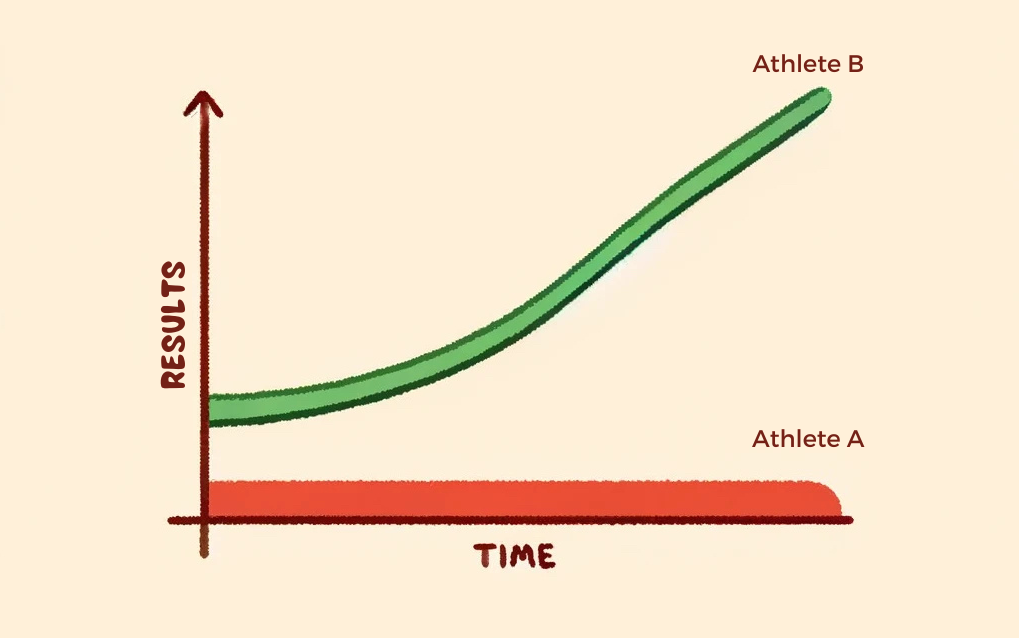
By believing in their body's resilience and focusing on a positive outcome, they're setting themselves up for success. They're more likely to stick with their rehab program, push through tough days, and maintain a sense of hope and determination.
Now, this isn't to say that mindset alone will magically cure FAI. Physical interventions like targeted exercises, manual therapy, etc are still important pieces of the puzzle.
For example, see what one of our clients, Melissa was able to accomplish in just 1 year:
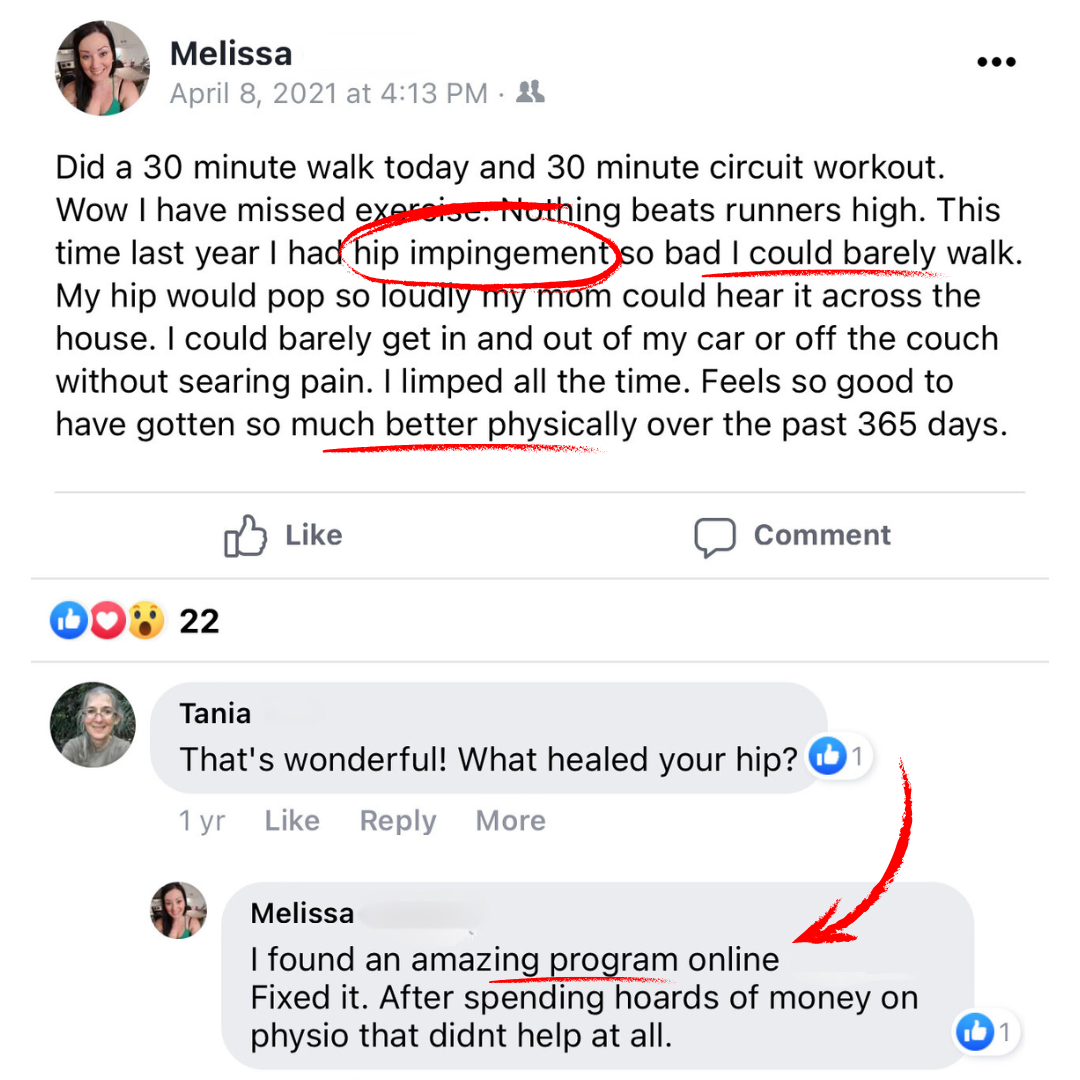
By combining the physical strategies we taught her, with a strong, positive mental game, she gave herself the best possible chance of overcoming FAI and getting back to the activities she loved…and so can you!
Putting It into Practice: Actionable Steps for Shifting Your Mindset
So, how can you start harnessing the power of your mind to overcome FAI?
Here are a few practical strategies:
- Strategy #1: Be mindful of your self-talk. Pay attention to the words you use when you think about your hip pain and your recovery journey. Are they mostly negative and self-defeating? Make a conscious effort to reframe those thoughts in a more positive light.
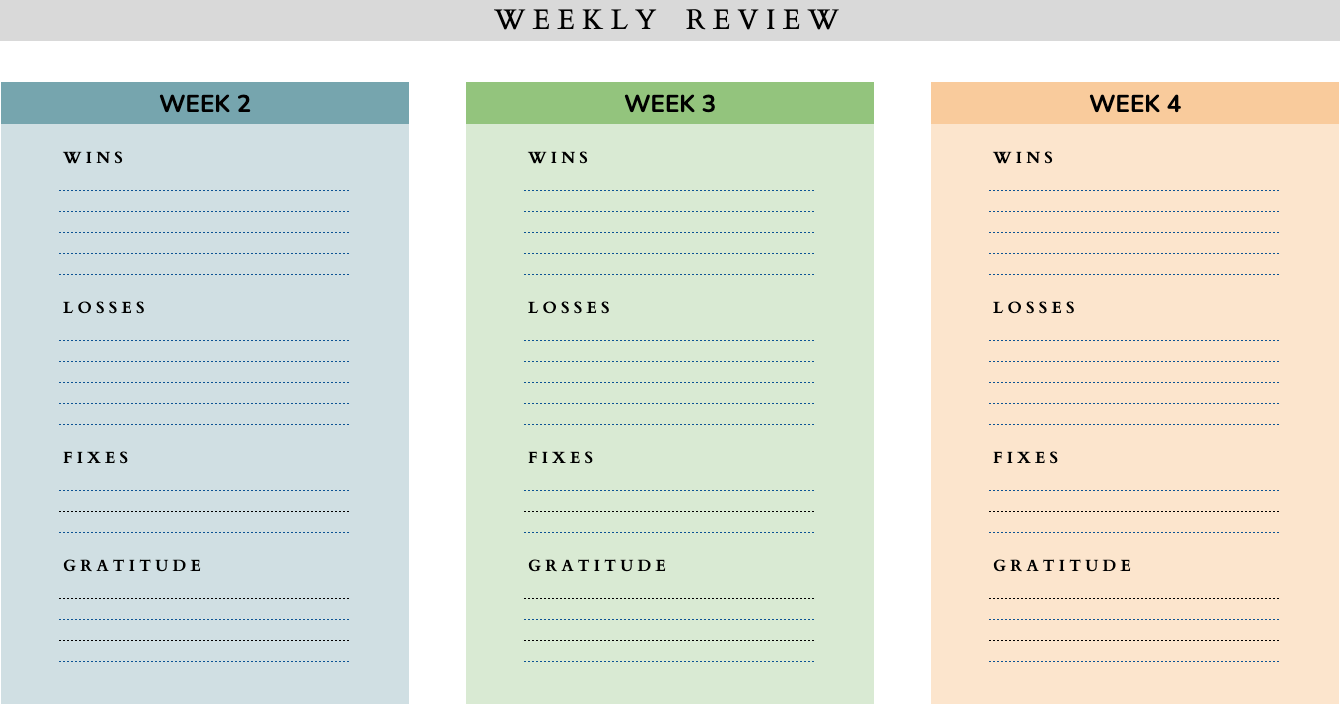
- Strategy #2: Practice gratitude. Each day, take a few minutes to reflect on the things you're grateful for - your support system, your progress (no matter how small), the activities you CAN still enjoy.
Focusing on gratitude can help shift your overall mindset to a more positive place. For me, I practice gratitude before every meal with my wife. I also write what I am grateful for in my Weekly Review as part of my overall “Goal Achievement System” that I have as part of my other business, which is called “The Miracle Year Method.”
- Strategy #3: Visualize success. Close your eyes and imagine yourself moving freely, without pain. Picture yourself doing the things you love - running, dancing, hiking, whatever it may be. Engage all your senses and make the visualization as vivid as possible.
Do this for a few minutes each day as part of your body care routine. For me, I take this to the next level by not only visualizing success but creating specific, measurable goals with milestones: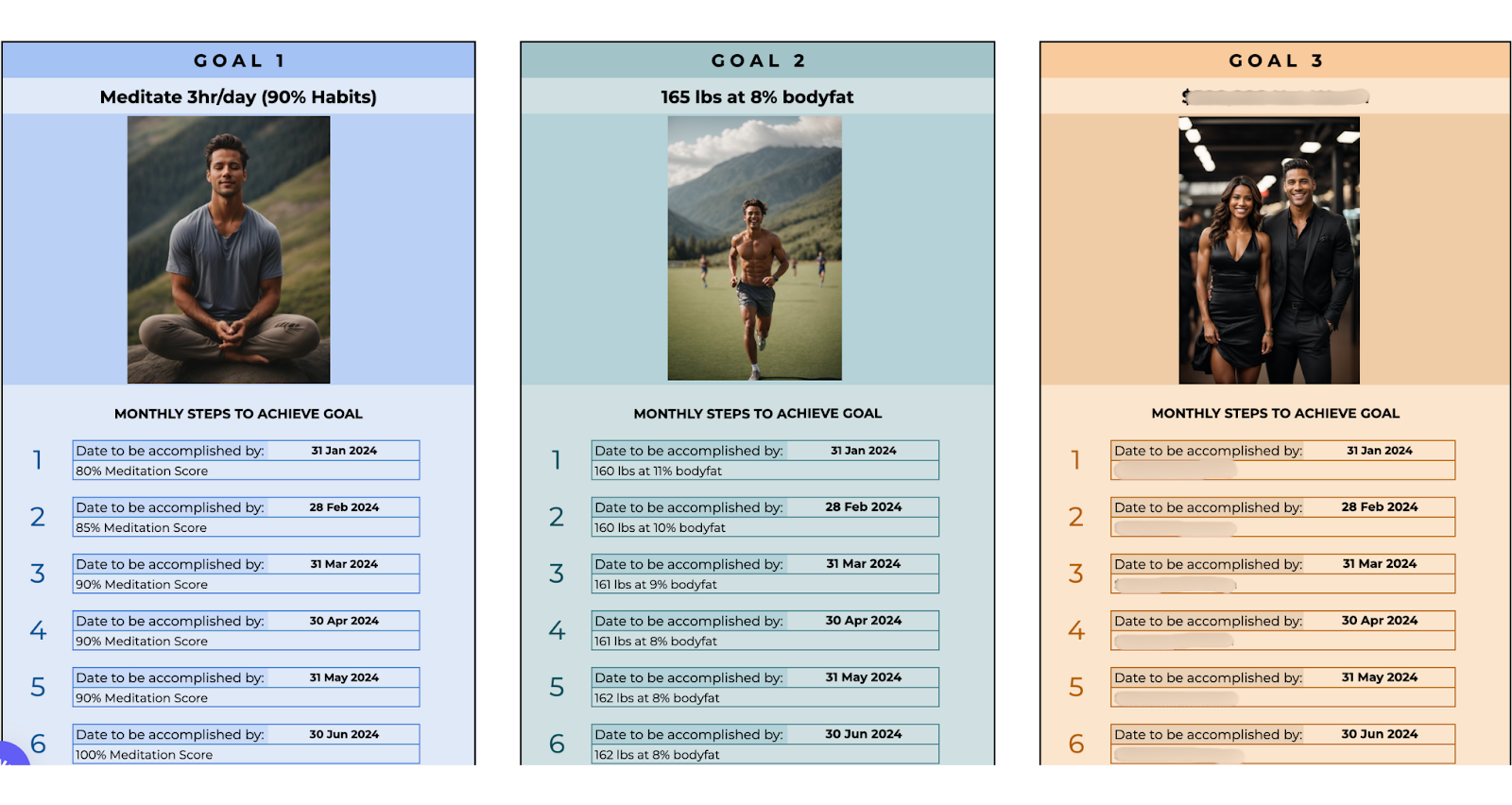
- Strategy #4: Surround yourself with positivity. Seek out stories of others who have successfully overcome FAI or similar challenges. Join a support group or online community where you can connect with like-minded individuals. Choose to spend time with people who uplift and encourage you.
- Strategy #5: Meditate. I’ve been meditating for 2 hours a day for the past 12+ years. There is nothing that has been more helpful in mastering my mind to heal my hips. Nothing. Even if you start with just a few minutes a day, the rewards are worth it. If you want a deep-dive, check out the free 10-day courses at dhamma.org.
- Strategy #6: Celebrate your wins. Did you have a pain-free day? Make progress with a difficult exercise? Celebrate those moments! Acknowledging your victories, big and small, can help keep you motivated and focused on the positive.
The Bottom Line: Your Mind Is Your Most Powerful Ally
When it comes to overcoming FAI and reclaiming your active lifestyle, your mind is your most powerful ally.
By shifting your inner dialogue, focusing on the positive, and believing in your body's resilience, you can create a mental environment that supports healing and recovery.
So don't just rely on stretches and exercises. Start harnessing the power of your mind. Cultivate a positive, empowering mindset. Believe in your ability to overcome this challenge. And watch as your FAI symptoms start to melt away, one thought at a time.
Remember, your body hears everything your mind says. Make sure you're sending the right message.
Also, if you need help on the journey, consider hiring a coach or mentor.
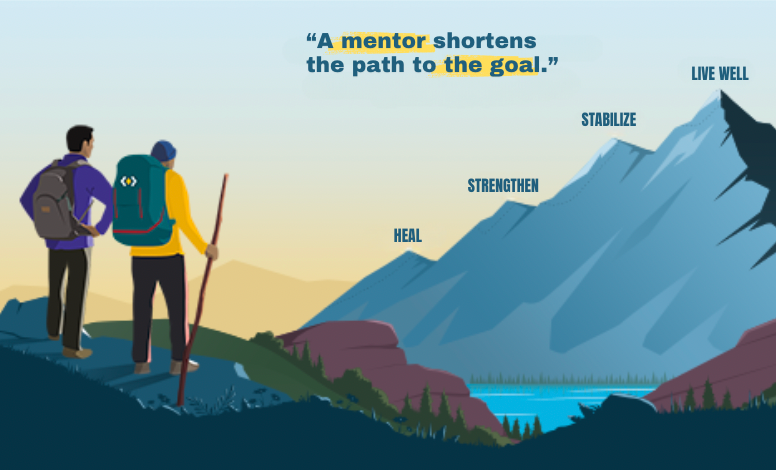
A mentor shortens the path to the goal, because they’ve already hiked that mountain. That’s exactly why The Hip Fix Program exists — it gives you the proven framework we’ve used to overcome serious hip issues and help others do the same.
For those who need more personalized guidance, 1:1 coaching is available as the next step within The Hip Fix Program. That’s where we tailor your hip recovery plan, help you get out of pain, lock in your results, and ultimately build a strong, flexible, bulletproof body for life.
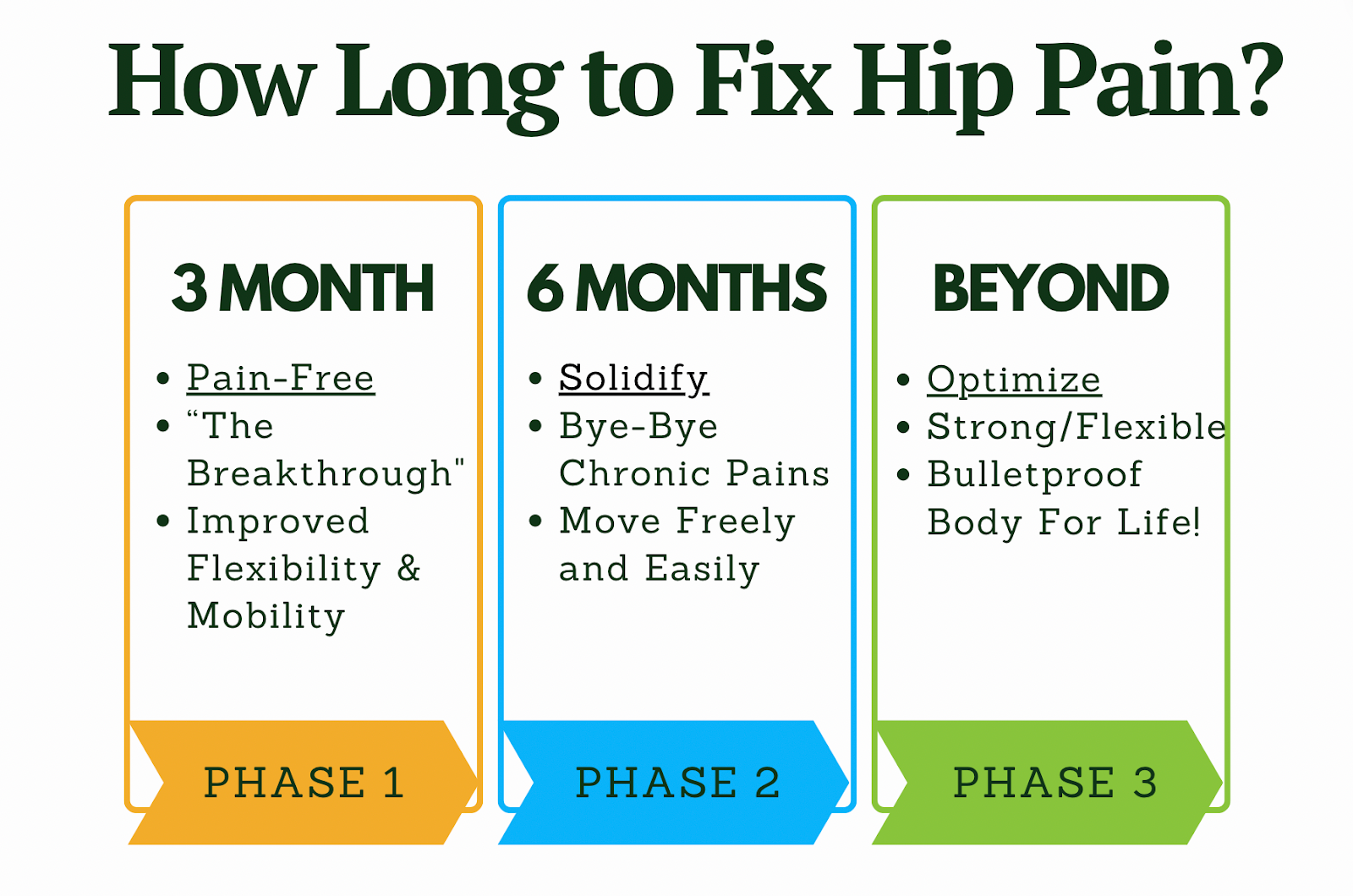
I hope this video/article was helpful. If you got value, please like, subscribe and share, so we can help more people win the inner AND outer game of hip pain.
And, as always, please remember, you’re just 1 step away from building (or rebuilding) your perfect body.
About The Author

Shane Dowd, CES, CMP is the owner/founder of GotROM.com. He is also a sports performance & mobility coach specializing in injury prevention and flexibility for athletes.

Free download for this topic
The Ultimate Guide to Hip Impingement
How To Fix Hip Impingement Without Surgery
GET THE FREE EBOOK


